When Quiet Comes


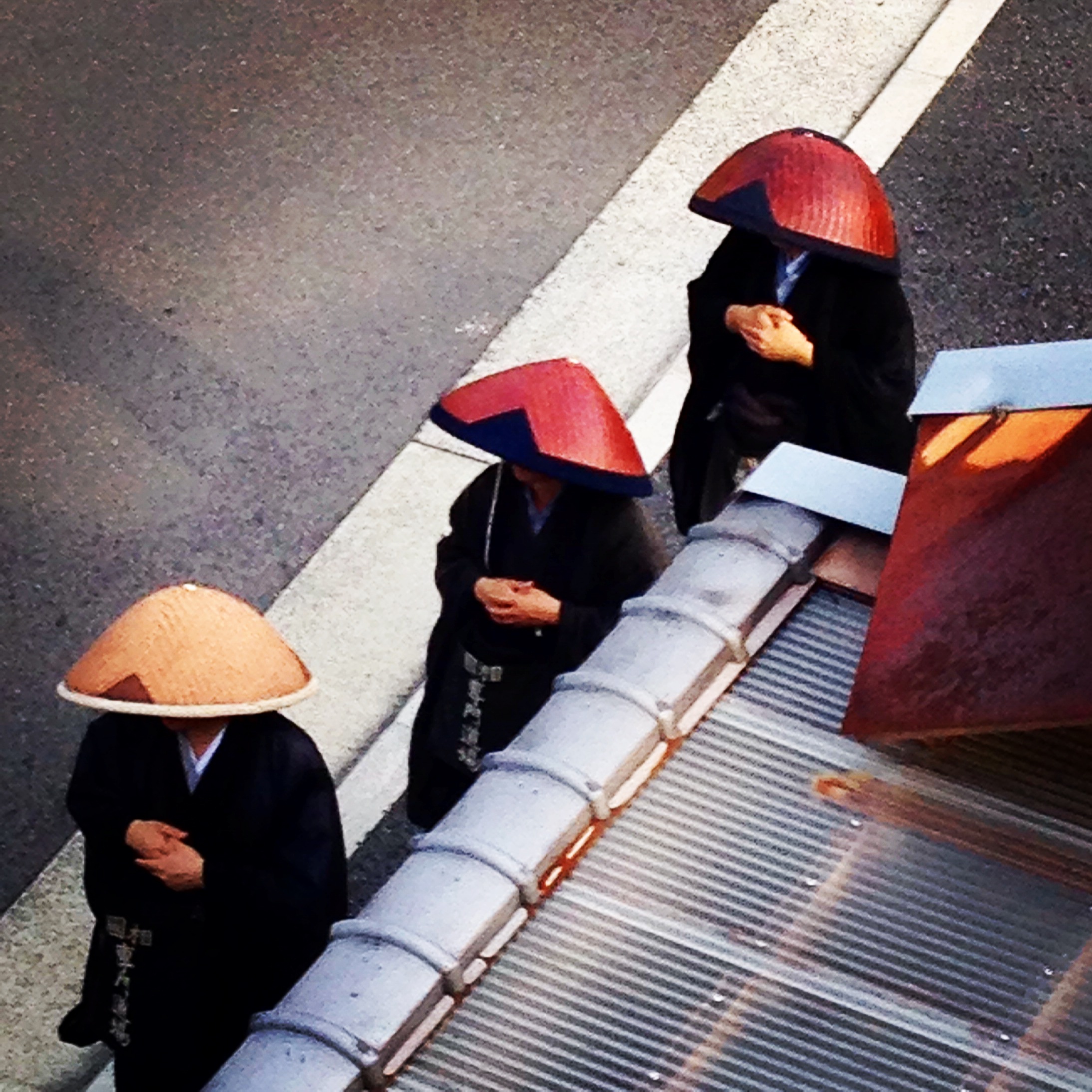
Morning Monks. Demachiyagi, Kyoto, Japan.

Morning Monks. Demachiyanagi, Kyoto, Japan.

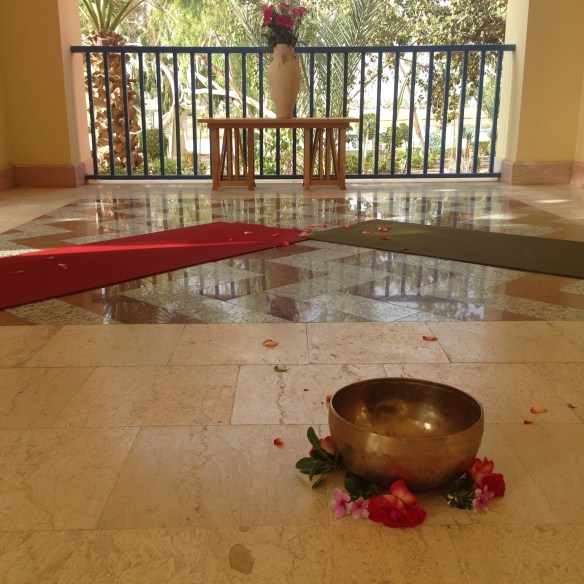
When quiet comes, do not run.
Do not fidget, obsessively filling
the vacuous spaces with this,
with that. None of it matters.
Come into the quiet, though
the world around you continues
its daily churning.
Come into the quiet, though
it pains you with a different
kind of loudness.
Come into the quiet, willingly fold
your hands, lower your head,
look softly on the path before you
and walk on. This too is a gift.
Learn to accept it graciously.

***

When we’re lucky, practice brings us to a stillness that is precious. We finish practice and lay down and surrender. We appreciate it, resting deeply in its embrace for some five, ten or fifteen minutes. And then, we scramble to get up, get dressed so we can jump through the hoops of our daily lives, some we are duty bound to go through but others are scenarios and dramas that we ourselves create. And then we crave for the next quiet moment but when it comes, we hardly allow ourselves to truly feel it, to truly sink into it.

This is so strange. We crave it, sometimes working so hard to attain it, and, yet, when it’s there, we work even harder to ignore it or avoid it. We should learn to enjoy our moments of peace, of rest, of quiet, forming a new healthy relationship with stillness.


Happy Guru Purnima! Celebrating Guruji!

IMG_5541

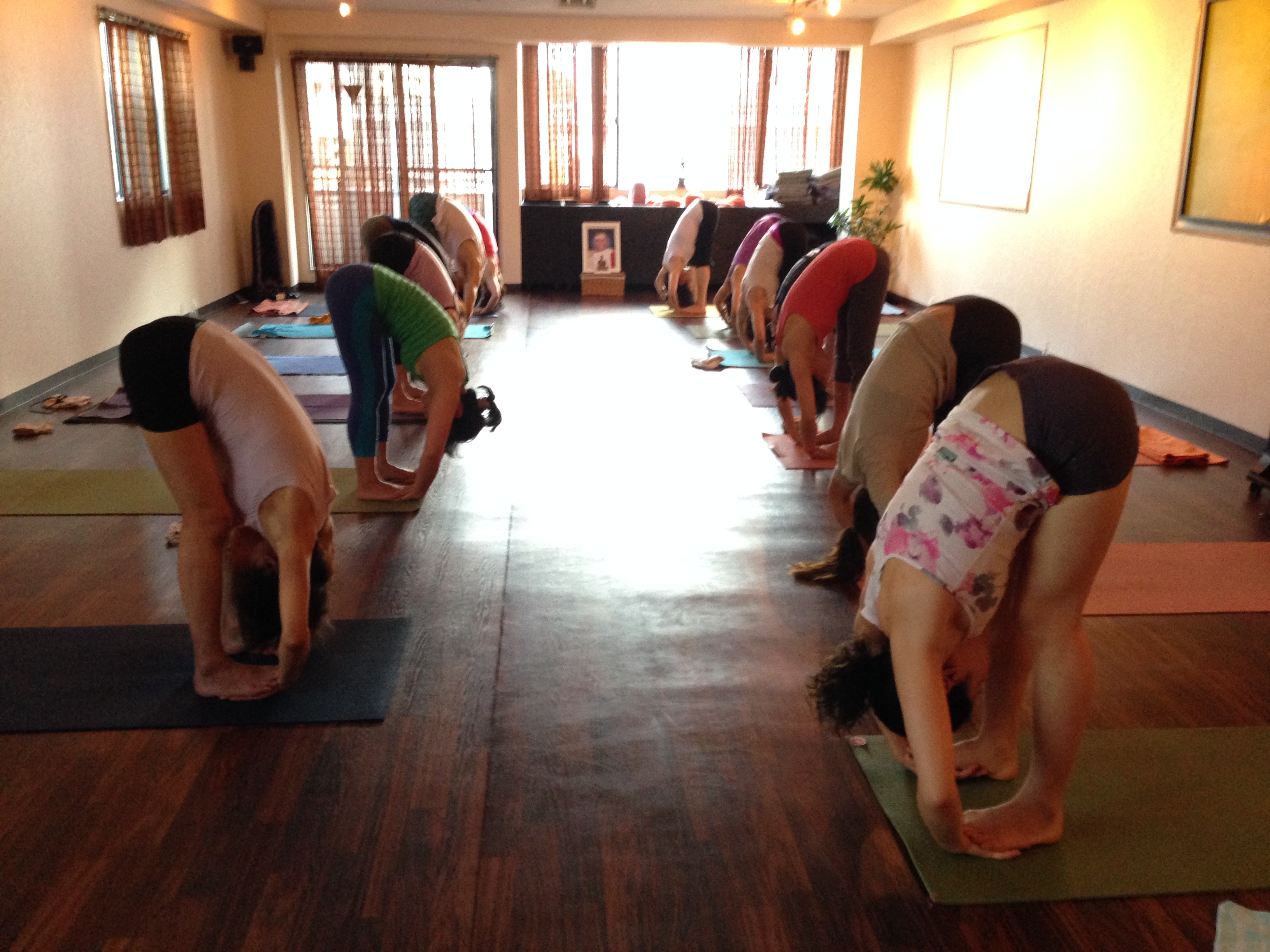
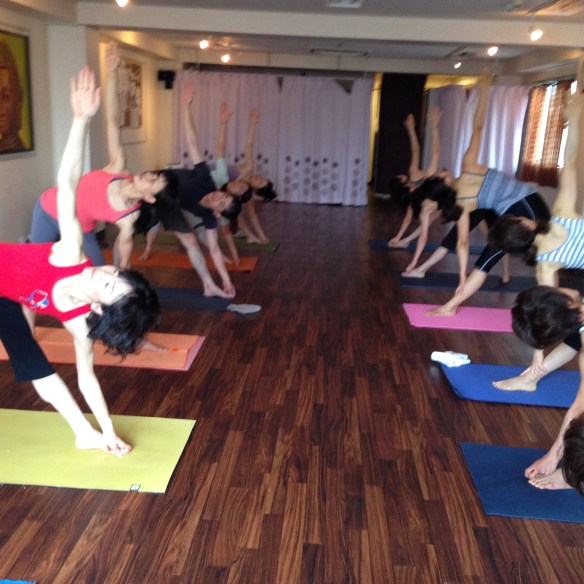
Padahastasana, standing forward bend, in Ashtanga Primary Led class this Friday at Spirit Yoga Osaka. A beautiful posture of humility and surrender. Satsang today is a celebration of Guru Purinam, in which we remember Guruji, Pattabhi Jois.

Friday led class is followed by Satsang, here in the Spirit Yoga Osaka Mysore Program. It’s a great opportunity to open the practice floor for discussion, answering questions, and exploring the practice in a conference setting. 

Last night, in anticipation of the storm that was supposed to hit Osaka, I was all set to speak about “Weathering the Storm of Life” (I know, I have a penchant for drama!) in the yoga context when Veronique Tan (whose program I am covering) reminded me that tomorrow, the Full Moon of 12 July, is Guru Purnima–an Indian festival that celebrates our highest teachers–and that it might be a good opportunity to talk about Sri K. Pattabhi Jois, known lovingly as Guruji.

It was a good call, as this morning, there was no storm. Only sunshine and the light that a true teacher can bring–guru, after all, often translates to the remover of darkness, obscurity or ignorance. 

I did not expect myself to get emotional as I talked about Guruji. But you can imagine where this is going…

I explained in brief his life, his humble beginnings, how he loved to learn Sanskrit and yoga so much so that he ran away from from home at the age of 14, how he was devoted to his guru Krishnamacharya and to his practice, how one Belgian European wandered into his tiny home-based yoga shala in the 1960s, and how by the 1970’s he was touring to teach workshops for his Western students.

I did not have to illustrate how ashtanga yoga has grown, nor did I have to explain in great detail that Pattabhi Jois lives on through us as we breathe and move according to the system that he introduced to the world, nor did I have to touch on how deeply this man’s work has moved each and every one of us–there was no need! I looked around the circle gathered at satsang and I could see the well spring of emotions that the practice has inspired, that Guruji inspired. How I too was teary eyed, feeling his contribution to my life, how ashtanga has changed me. 

So beyond words, we all understood our connection to the yoga practice, to each other, to our teachers and to our teachers’ teachers, to the yoga shala in Mysore, to Sharath, to Guruji, even though he has passed on. Parampara. This is the lineage. We are a part of that beautiful line of student-teacher, student-teacher, Guruji is at one end and we are at another, we are connected. 

We closed satsang by singing a guru mantra in celebration of a truly amazing teacher. Thank you, Guruji! We celebrate you! 

Swimming Lesson


IMG_5067


One of the joys of being a traveling teacher is coming into these communities in yogic flow.

It’s different everywhere: Philippines, Spain, Egypt, Japan…Each is already flowing in its own special way–in a way that suits it, that suits the culture and the needs of the practitioners there, whether it’s swiftly or slowly, softly or intensely…

It’s been a process of discovery, understanding my role when I come into these Mysore spaces for two-three months, finding a balance between being authentic and respecting the the existing stream.

How to contribute to the stream of things flow, respecting that it is not my place to change the currents, to meddle with nature, to build dams and redirect the water. Instead: diving in, swimming with the locals, playing in the water.

It reminds me that practice has its own flow. That when we respect it, when we surrender to it, it opens up to us, and we start a process of recovery, discovery…understanding practice itself as much as understanding ourselves.

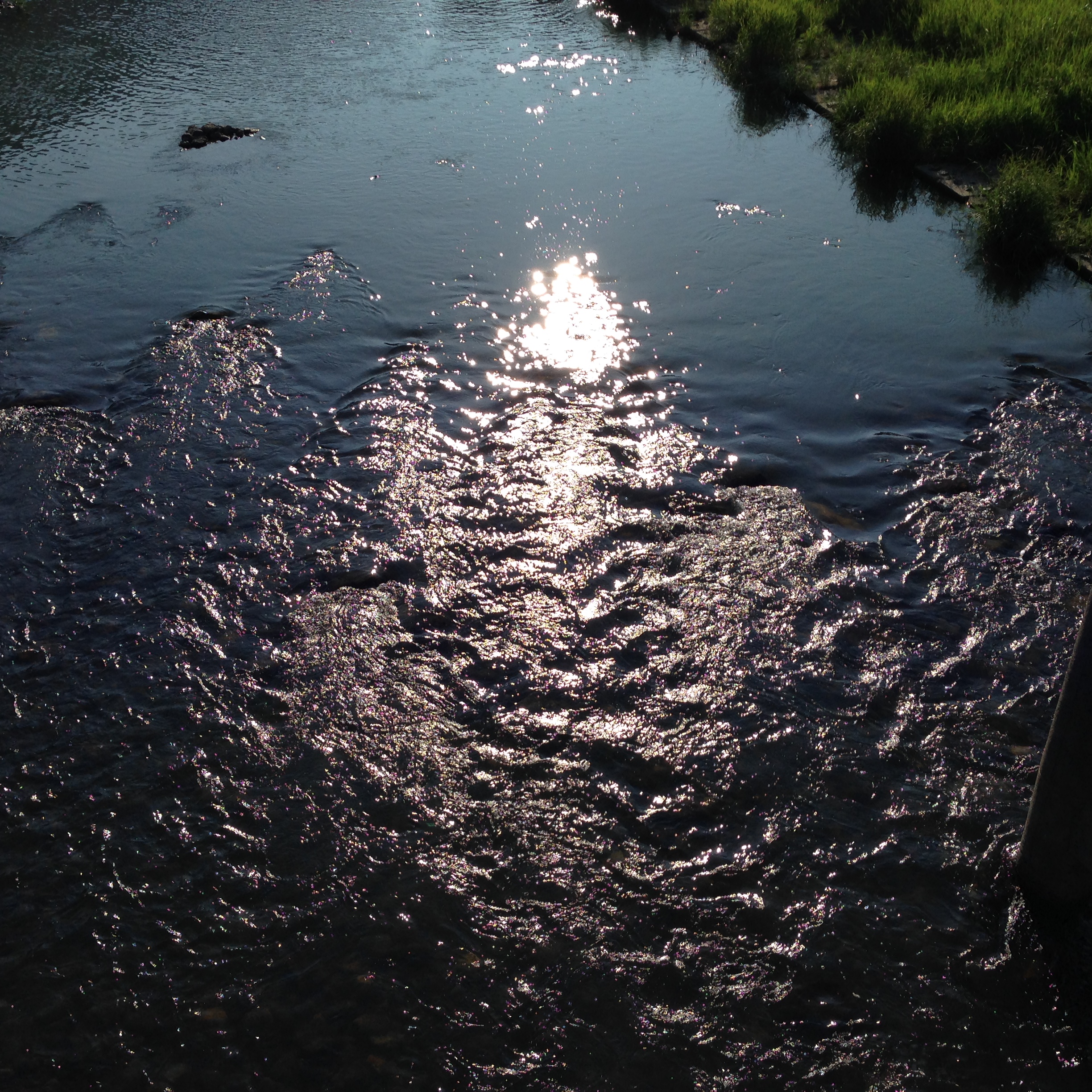
PHOTO: Water flowing. Arashimaya, Kyoto.


Gambatte! Do your Best!

IMG_5108

Friday morning led class is followed by Satsang here in Spirit Yoga Osaka. This is a time when the Mysore group can meet to practice other aspects of ashtanga yoga, whether it’s chanting or discussing yoga philosophy. Yesterday, July 4, 2014, was my first Friday here. It was a full power led primary; and I actually had fun counting the vinyasa-s! I particularly looked forward to discussing the Japanese word “ganbatte,” often translated as “Do your Best!” — which I realize can differ slightly in meaning depending on context. I wanted to explore “ganbatte” in the context of yoga and how I mean it when I say it in class. Here is a written expansion of yesterday’s talk.

I ask the circle of students (with the help of Naoko-san translating) gathered after Friday’s led class what they feel when someone tells them: “Ganbatte.” Many nod in agreement that it is a motivation, a cheer to go on, to do better. Hiroko-san, sitting across from me, nods too but also adds that depending on the context it can also come with a lot of pressure.

The Japanese are renowned for their work ethic and discipline, it is deeply ingrained in the culture–and beautiful to see when applied to the yoga practice. When taken to an extreme, it has a dark side. In Japan, karōshi, 過労死, or death from work, is legally recognized as a cause of death. People in their thirties have strokes or heart attacks due to working long hours and suffering from extreme stress–they’re just doing their best, right?!

This, of course, would not happen with the skillful yoga students here attending class and practicing with great awareness. Still, it begs the question: What does it mean to do your best in the yogic sense? What does ganbatte mean for the yogi?

Ganbatte is an encouragement, often translating to Do your Best! or Do well! or Be courageous!

It is supposed to inspire courage. In her famous TedTalk on Vulnerability, my favorite researcher/storyteller Brene Brown speaks about how the root of the word courage comes from the Latin “cor,” which is the heart. That in its early form, to be courageous was to speak from one’s heart.

These days we look at courage as bravery, having guts or gumption, daring to do what is difficult. All well and good. But to be truly courageous we must act according to what is true to our hearts as well, and from that place of authenticity we are able to act with greater awareness and equinimity. When we are true to ourselves, then we are in satya, one of the five yamas, the foundation of Patanjali’s ashtanga, or 8-limbs.

Now: what is best exactly? We often confuse what is best for what we think of as what is perfect. We often look towards some future ideal or goal. In our yoga practice, we often think of perfection as the final expression of the posture the way we see it in some yoga video, on YouTube or on Instagram.

Patanjali’s first sutra in the Yoga Sutras is “atha yoganusasanam.” Yoga is happening now. It does not look towards the future. It exists in the present moment.

Never does Patanjali outline the particularities of what an asana looks like, he doesn’t go into degrees or alignment, but rather on each individual’s feeling in the pose. “Sthira sukha asanam,” The posture is both steady and easy. And this will depend on the truth of each and every person, as they discover the balance between strength and flexibility, steadiness and comfort.

So wherever you truly are in your practice, so long as your put the right effort into finding that “sthira” and “sukha,” the right presence and awareness, no matter what the asana looks like, it is perfect for that particular moment.

So: Gambatte! Gambatte!!! Practice with true courage, practice from the heart! That is already the best practice.

PHOTO: Friday’s Led Class here at Spirit Yoga Osaka.



Blooming Lotus

IMG_5095

When we look at a lotus in bloom, we see its beauty, its color in full flush, its petals open, flowering out of a sea of green, so serene, so quietly majestic.

We forget sometimes that it has had its own journey. That it was once a seed in the mud, obscured from our vision. How it has traveled and grown in murky water, how it has sought out sunlight, which called it from shadowy depths, until it peeked out into the surface and breathed its first full breath. How it emerged, a tight bulb, before it unfurled its petals, and shone its light into the world.

Perhaps a lotus does not know the meaning of struggle, that it knows and is fully in harmony with its nature and the nature of the world it lives in, that it accepts itself in every stage.

We humans are not so. We are both keenly aware of life’s journey and caught up in our ideas of an end goal. We look towards how things “should be” rather than embracing how things are. And in that space, we create tension.

Sometimes, we want to perform postures, asanas, as if we were a lotus in full bloom, forgetting that practice, like life, is a process. And when it doesn’t look as it should, we get disappointed.

There are many stages in the life of a lotus. Regardless of whether it is a seedling in the mud, a bud in the murky water, a flower in its fullness or at its decaying end, it’s essence is the same. Everything comes in stages, the cycle of life and death is inevitable.

The question is not how do we blossom into fullness but rather how do we embrace the fullness in each every stage?–in our lives as well as in our practice.

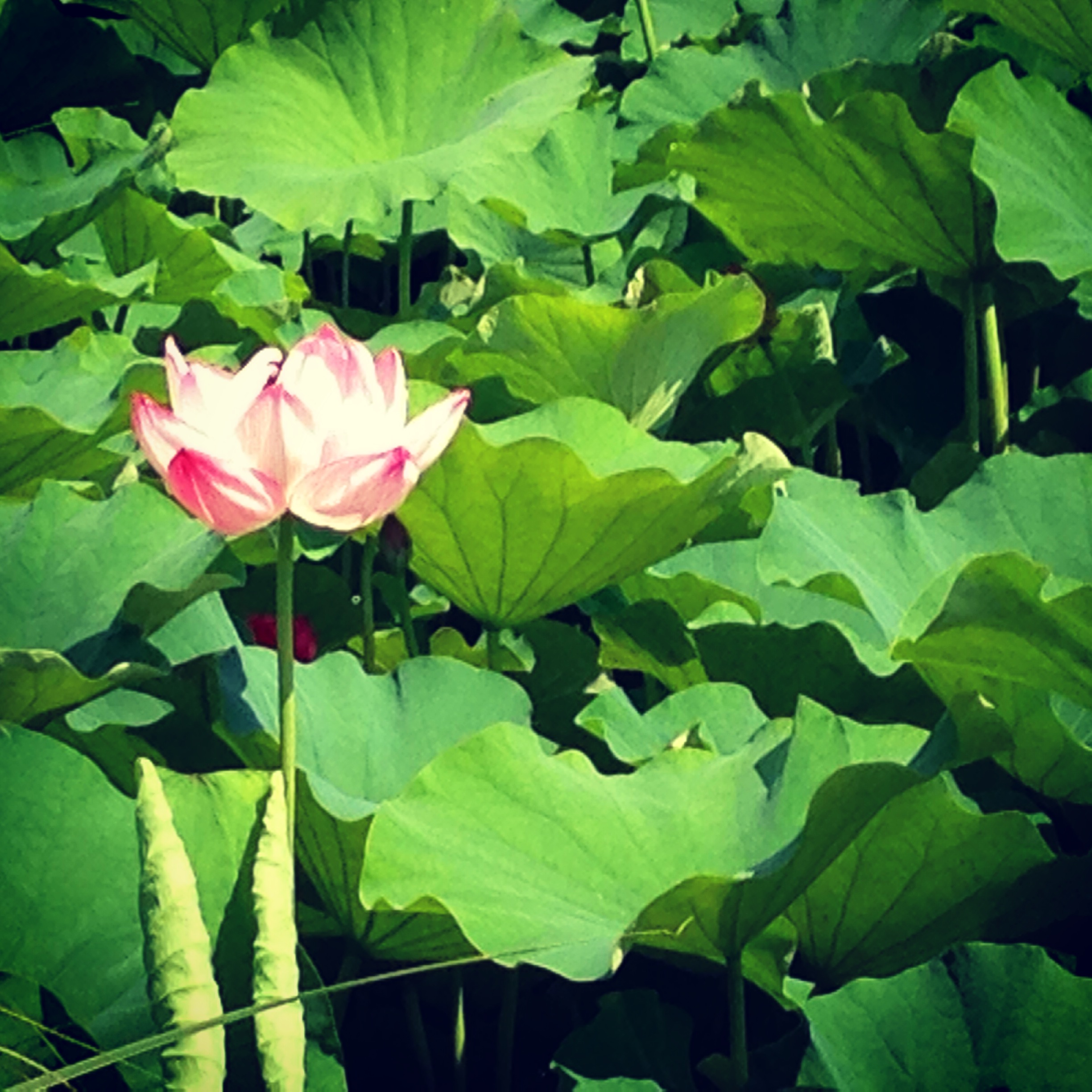
PHOTO: An image can say so many things. I’ve already used this photo–just yesterday–to illustrate the Yama “Satya” for Lara Land’s All Eight Limbs project on Instagram. Looking at it this morning, it conveyed new message. Happy to receive. Happy to share. Lotus blooming at Tenryu-Ji Zen Buddhist Temple in Kyoto, Japan.

Do Your Homework

Image

Kaz Castillo assists Veronique Tan at Spirit Yoga Morning Mysore

Kaz Castillo and Veronique Tan with the dedicated practitioners at Spirit Yoga Morning Mysore.

Last week, Veronique Tan, whose program I am covering here in Osaka, distributed a sheet explaining “homework” to each regular student. I was with her, as she explained to each student what she recommended they work on over the next two months that she is away in Mysore. And how I would be here to help.

On Thursday, one student, Akemi-san noticed that I had my own sheet–actually, sheets plural! A neat stack stapled together, on each page was the profile of two students, each a regular Mysore pass holder, their current posture, their work in progress, their challenges and their “homework.” She pointed with delight and laughed!

“Yes,” I smiled and laughed too, explaining that I also had my own “homework” from Veronique-sensei!

And so work begins. Homework in tow, I will be going to Spirit tomorrow morning, my first day of a two month covering stint here at Spirit Yoga Osaka.

The Mysore program here is not new to me. Past teachers that have taught here are friends. The first to hold the program, Ursula Scott was instrumental in inspiring me to make my first ever trip to Mysore, India. Then, last year, I became the interim covering teacher here between August and September. Returning now after nearly 9 months of teaching in Egypt and in Spain, of traveling and having what I can best describe as an epic romantic adventure with myself, I feel a little like I’m returning to the classroom after having done quite a bit of homework myself.

Sure, it’s been a little “off book.” There’s been a lot of practice–but a lot of the prime yoga  experiences lately have happened off the mat. Self-study is not an isolated activity that is happening at home, it is happening all the time in life.

One never really knows what to expect or what our practice will be like or what the class will bring each morning. And it’s best not to have any expectations. But we certainly can come to class, to our mats, to our lives a little more prepared each and every morning…

The Schedule of Morning Mysore: Monday-Thursday 6:30-10:00am. Friday 6:45-8:45am Led. Sunday 7:30-10am.

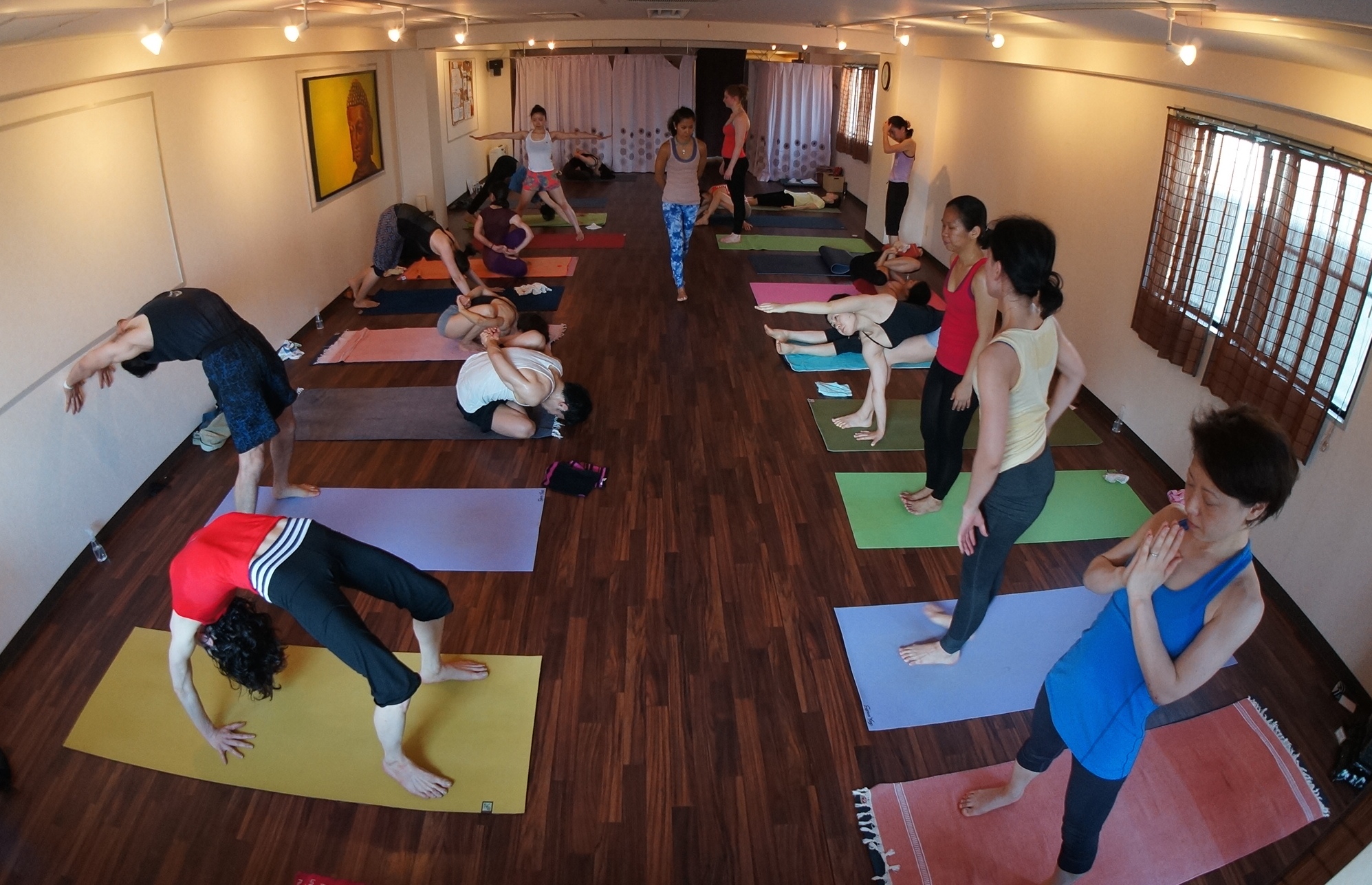
PHOTO: Spirit Yoga Morning Mysore. Photo by: Veronique Tan.

Dance Like Shiva

Image

20140626-040542-14742802.jpg

We are all dancing.
We are always dancing.
We are dancing with ourselves.
Dancing with our friends, colleagues,
family, even strangers we meet on the
streets.
We are dancing with our work.
We are dancing with our practice
and in our playtime.
We are constantly dancing with this/in this
Whirling Wonder we call Life.

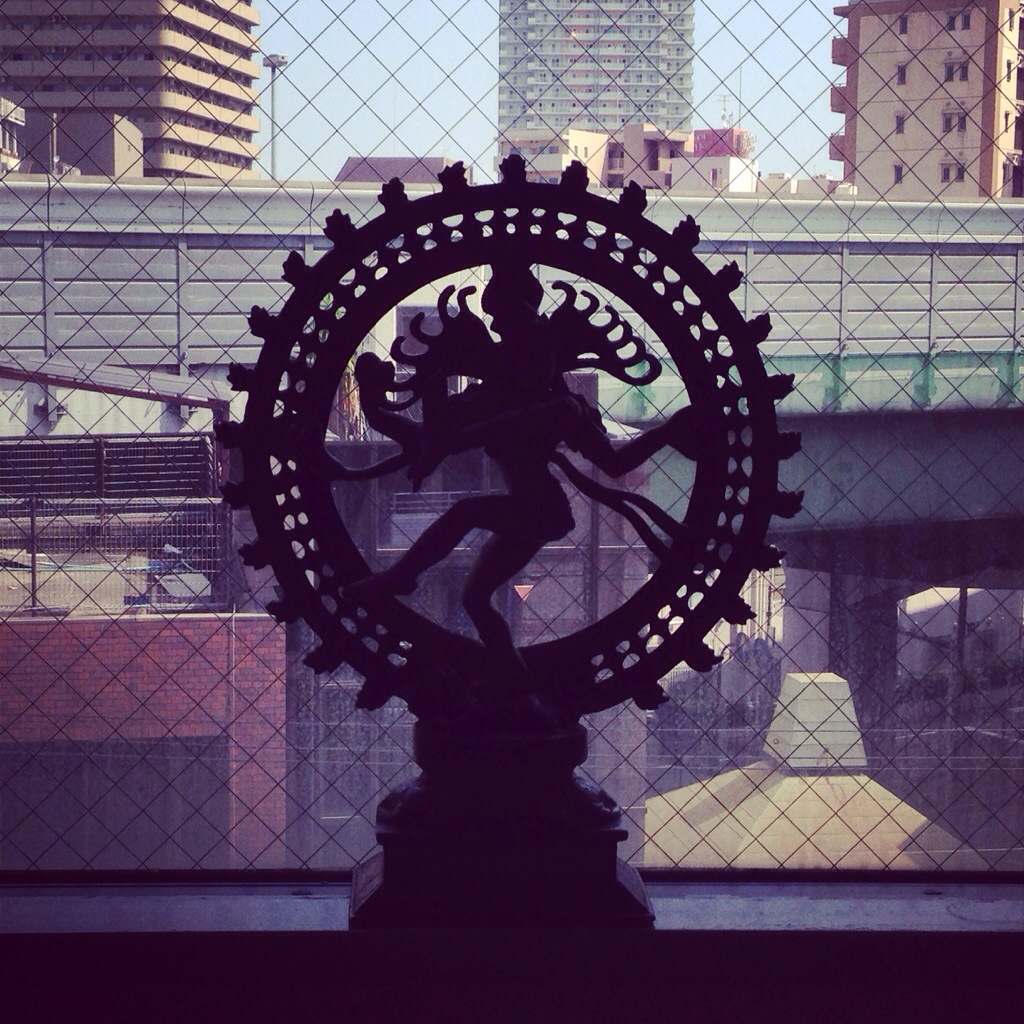
PHOTO: Nataraja, Shiva dancing with Osaka City in the background. It’s a pleasure to be back in Japan. I will start teaching for Veronique Tan here at Spirit Yoga on Sunday as she goes to India. Will be teaching the Mysore program here until the end of August.

No schedule yet for Inner Dances but am excited to offer the moving meditation and healing modality as well!

Finding of Treasures

Image

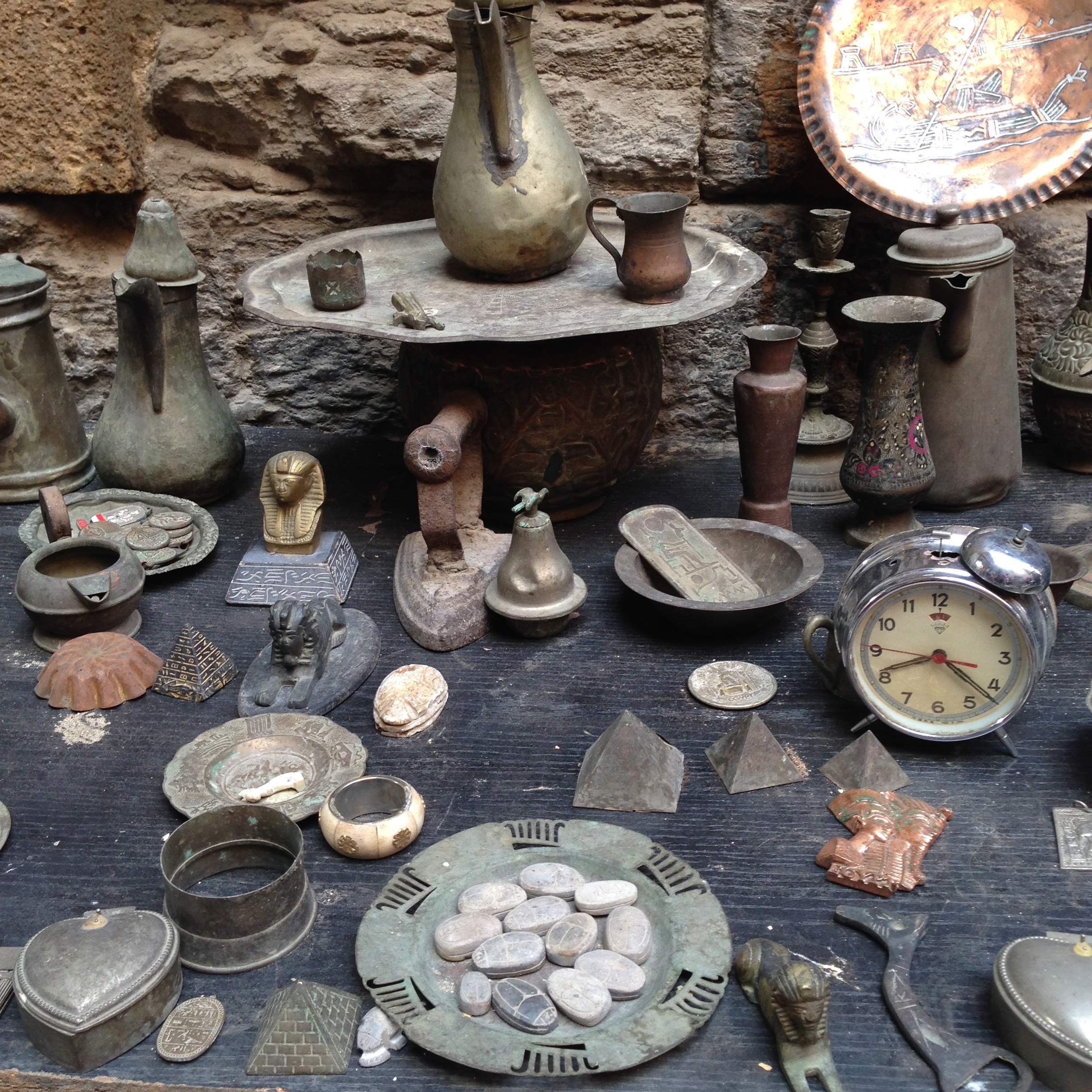
IMG_4150Last day and I weave my way in and out the vibrant souk Khan el Khalili in Old Cairo. There is a lot to see and it’s easy to get lost. I have a particular goal, buying presents for family members, but along the way there are many distractions. Lots of shiny things. Glitzy miniature pyramids, faux pharaonic treasures used to bait tourists. Store sellers calling our attention in English, in Spanish, in all sorts of languages except the local Arabic. I am happy to have a guide, who knows her way around.

There’s a delicate balance to be maintained. Focus enough to keep to our main purpose–in this case, belly dancing costumes for my nieces–but with an openness, spontaneity enough to allow the magic of the souk to happen, wherein the unexpected treasures hidden there may also be revealed.

It takes skillfulness to navigate a bustling market place, teeming with possibility, with novelties and antiquities. It is exciting and inspiring. It can also be exhausting and frustrating if wondered haphazardly.

There is a need to be centered, so that you can spend time, energy and money wisely. Likewise, there is a need to simply be in the moment. To enjoy the souk, which in itself is a delight and a treasure.

Reminds me of (guess what!?) practice! Practice is a bustling souk, full of everything, amazing finds, incredible energy, but also dead-ends and traps. Navigating it can be tricky. It’s good to know our way around (as in self-practice) or to have guidance (with a teacher). It’s also good to go for a wander, to allow ourselves to get lost a little, because this is how we learn.

We aim to practice with concentrated effort. Too much focus on any one particular thing, and we may miss the unexpected treasures along the way. Too little focus and we allow ourselves to get caught up; we get distracted from the main goal, deep connection through practice.

Practice like going to the old souk demands/inspires a balance between skillfulness and surrender, the two facilitating the finding of treasures.

PHOTO: Alley-side stall with an array of old and new trinkets and treasures. No trip to Cairo is complete without diving into the dynamic old Islamic Quarter. So blessed to have such a great guide and companion on my day out at Khan el Khalili. Thank you, Sumaya!

End is the Beginning

Image

End is the Beginning

It’s surreal to be back in Manila, an entire year since I first set off. Again, coming to full cycle.

So ends an incredible journey of both teaching and learning, which has taken me to North Yorkshire, the Spanish Pyranees, Barcelona, Japan, Egypt, Barcelona again, London, and Cairo for a second time. So ends a series of sharing in Egypt, so begins new opportunities to share and grow. So ends a year of travel, so starts a new adventure. Always: the end is the beginning.

Over a week ago, I was leading a retreat in Gouna, Egypt through Nūn Center. There, away from life in Cairo, overlooking the Red Sea, we found respite from the day-to-day madness. We were coaxed deeply into process: the detox diet coupled with yoga and inner dance facilitated some deep purging. Some kilos, tears, and a lot of old limiting ideas were shed. We were all sad to see this special time come to an end.

In truth, however, the end of the retreat marks the beginning of the real work ahead: the challenge of how to bring the lessons and impressions of that week into our “real” everyday existence. Returning “home” carries the weight of our old samskaras, our old patterns.

Sometimes, these cycles may make us feel like we are on some strange loop, things interminably repeating. And we struggle when we see that we ended up exactly where we started.

But nothing stays exactly the same. Change is inevitable–even if we appear to be revisiting a similar place or moment. One teacher/friend likes to point out that these cycles become more and more refined over time. It’s true; as I sit in my old room here in my family home, where nothing appears much to have changed, I cannot help but notice the biggest difference: me! I am different, and through me, things will continue to change.


PHOTO: Closing Circle for the Ashtanga Yoga & Detox Retreat with Nūn Center in Gouna, Egypt.

Shadows Surface

Image

IMG_3780Yesterday, just past the halfway mark of the Yoga and Detox Retreat here in Gouna, a retreat participant shared her surprise at the emotions which were coming out of the process (juice fast, bodywork, yoga…). Some issues she had thought she was well past. I could not help but smile a little. Yes, I thought, this is also a part of the process.

I will always remember my first trip to study ashtanga in Mysore, India and how subtly and dramatically it worked on me. It was a breakthrough, with emphasis on “break.”

I recall how the months passed softly, beautifully undramatic. And then, quite suddenly, close to the end of my third and final month, I found myself crying over my favorite Indian breakfast, triggered by one little question: how are you today?

Not much had changed really. Life was still good. The practice was amazing–somehow, however, it had facilitated crucial movement, it had stirred some very old stories. And these old stories continued to cast their shadow…

How this usually obscure shade on the ground, when I looked properly, was quite a telling reflection of me, triggering what was the beginning of an epic healing journey.

We all cast some kind of shadow. It is a reflection of us, but not who we are. When we notice these shadow sides, it is an opportunity to recognize who we really are as opposed to what we are not. And as we change, so do our shadows.

PHOTO: Today, I love my shadow, as pictured at a pier here in Gouna, Egypt. It’s been a very special time here at the Nūn Center Yoga & Detox Retreat. I am totally inspired by these group of participants, who are taking this opportunity to shed unnecessary weight in the body, mind and spirit. It’s been wonderful supporting this process with yogasana, meditation, pranayama, chanting and inner dance.