Diving into the Depths

Image

Diving into the Depths

A lot of times, we think we’re in deep, but really we’re just skimming over the surface. We’re pretty sure of ourselves, that we’re on top of things. We feel good. We feel steady and secure.

Then something shifts. The ground is pulled out from under. Inevitably we slip down deeper.

And that calm that was so easy to maintain up top, isn’t so easy anymore.

Last weekend, I went diving–and I was terrified! This is an old fear, one that I hoped had eased since I last tried to confront it.

It was early on in our second wall dive that water started to leak into my mask. If there was a panic button I would have hit the hell out of it. All I could think of was “abort mission, abort mission” and it took a great deal of coaxing by Hassan, our patient dive instructor, to calm me, to bring me back to a steady breath, so we could go on with our 45-minute (!) underwater tour.

I did manage to to get back on the program, however, bungling up the ascent as I bobbed up quite uncontrollably to the surface, missing the required decompressing safety stop. I came out of the water disappointed in myself–not to mention, (irrationally) paranoid about decompression sickness.

How could I be so brave in so many ways and yet be such a scared-y cat in the water?

What I recognize is that fear is so very deeply entrenched, that it is there, lurking in the depths. That if i look carefully, it is also there in the shadows of my practice, that my own hesitance to confront it has kept me, at times, from diving deeper.

After the dive last Saturday, one of the divers consoled me, he said that all I needed was a lot more practice–emphasis on “a lot”… But, of course!

Pattabhi Jois sagely advised time and time again: “Practice, practice, all is coming.”

PHOTO: Ras Muhammad, Sharm El Sheikh, Egypt. Iman Elsherbiny and I joined Cairo’s B Diving Community Easter weekend. Yoga practice on the beach was a great compliment to the diving program. We head to Gouna this weekend to offer ashtanga yoga and inner dance–April 24-26.

Move to Your Own Beat

Image

When you really give yourself space, when you give yourself room to breathe, something magical inevitably happens, something moves and flows.

It may be spontaneous dancing, a sigh, a cry or a song. It may be very quiet, a tear drop rolling off the cheek. Whatever it is, let it come and then let it go…

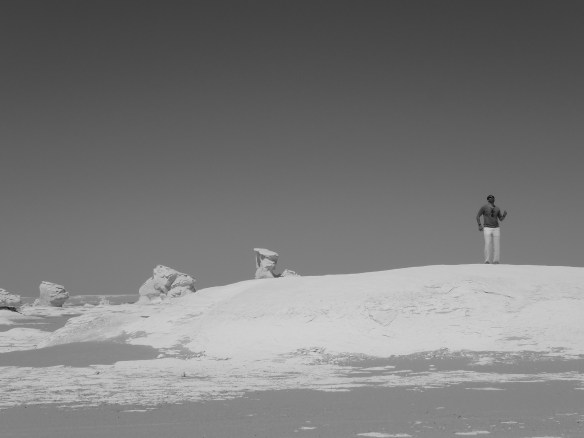
Photo: Shifo enjoying a solitary boogie during our Ashtanga Retreat in the White Desert a couple of weekends ago.

Iman Elsherbiny and I are in Cairo this weekend, teaching Ashtanga and Inner Dance workshops near City View. To join or for more information please contact Mariam Sobhy on 01001188660. 

Road With No End

Image

Road With No End

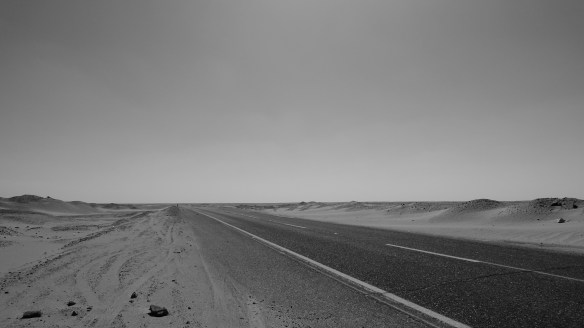
On this desert road, the path disappears into the horizon, but I know it just keeps on going, that the further I travel, the stretch of road will continue to expand before me.

This is the same with practice. There is always more beyond what the eye can see.

Once upon a time, this would have been frustrating. The desire to get to an end, to reach a goal, to finish, is so compelling…

These days, however, am relishing the continuity of practice. How getting better at one posture, for example, means seeing that there’s more work to be done elsewhere. How it flows and flows without end, how there is somewhere else to get to, something else to experience, even when I don’t know what it is because somehow there’s a feeling that I know where it’s all going: home, where the perceived end is only another beginning.

Photo: The road into the White Desert, Farafra Desert Oasis, Egypt. Offerings this Weekend: Inner Dance in Cairo, April 11-12, 8:30-9:30.

Going into the Desert

Image

In two days: a new journey.

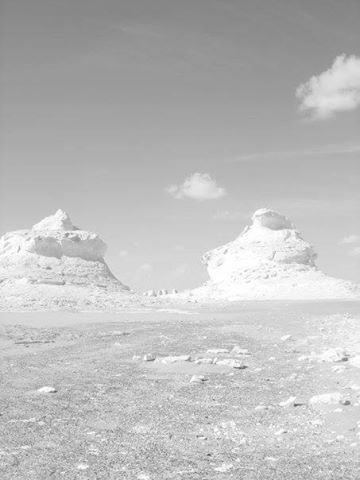
Farfara Oasis with it’s famed White Desert is known for the expanse of chalk white and curious rock formations sculpted artfully over time by the rough desert winds. Once a sea-bed, and then a savannah of lush green with herds of roaming gazelles, giraffes and elephants, it is now a living monument of ever changing time–a fitting place to practice yoga.

Free of distractions, the wide open areas of the desert, is a symbol of the clarity and purity that can be achieved by regular yoga practice. Slowly day by day, we are clearing away the debris of stress and tension, attachment and expectations, of our own preconceived ideas and cultural conditioning.

Going into the desert can also be tough, a harsh landscape, full of trials, bringing out the most innate of survival instincts. This is also true about the yoga practice. It can be full of struggle, pushing one to his/her limits, initiating one into the process of birthing and dying, of receiving and releasing, finding that oh-so-difficult balance between holding one’s center and simply letting go.

And so we plan…There’s no harshness built into the program as we have excellent guides, only one day of camping, a very modern, very comfortable trek into the desert, but the foray into the Great White is built into the yoga practice, into the asana-s, into the meditation, inner dancing and the satsang, each in its own way an opportunity to observe who we are in this liberating landscape.

PHOTO: Care of Freedom Travelers, who are expertly organizing this trip. Ashtanga in the Desert: A Yoga Retreat is on Thursday March 27-30. Co-teaching with me is the lovely Iman Elsherbiny.

Yoga of Climbing

Image

Yoga of Climbing

For a moment there is only the mountain and me.
No, not even the mountain, not even Montserrat, epic as she is.

Just the rock. And me.
There is no hard place.

Just deep concerted presence,
the sensation of hanging by the edge,
and the complete absence of all else.

Nothing is important. Not the distance below,
not the incredible expansive landscape behind me,
not the meters above to the top, reaching the end of the line.

There is no space or time for thoughts,
or assessments or judgements.
There is no room for fear.

There is only the rock. And me.
There is no hard place.

These are the moments in which yoga happens.


Practice on and off the mat. IN-studio classes still ongoing. Will continue to cover for Paz Muñoz of Pazzifica Ashtanga Yoga until March 7, Friday, this week. 

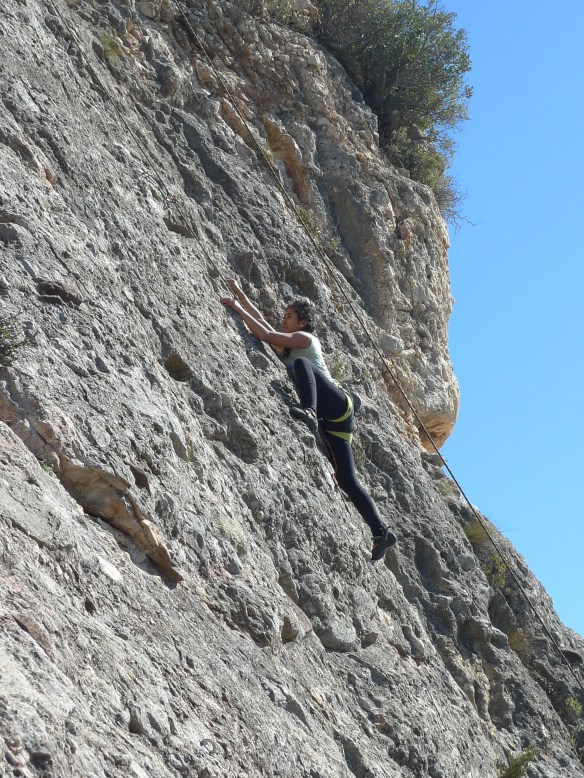
Photo: Taken by my friend and first-ever climbing coach Joan de Arcanye. So grateful to him and his friend Micki for taking me to Montserrat two Saturdays ago (went up a 6a+, up to 22 meters, yikes!). Gracias, Muchas Gracias! Me encantada!

Letting Go

Image

P1230587Letting Go

I am walking down from one of the short walks (Camino de San Miguel) right off the monastery in Montserrat, at the top of which is a crucifix overlooking the Basilica and Monastery, when I see the embellished trash bin. It makes me smile, this bit of graffiti.

Practice is like this. We all have our crosses. We bear these things, carrying it laboriously up the mountain. And then we mount them, making them into monuments of our suffering, reminders of our sacrifice–which is, to a point, fine, when it’s all part of a process.

Because we must eventually come down from these peaks and return to where we and others live. And when we do, we must ask ourselves, is there more to leave behind, what subtle energy or feeling is piggyback riding its way down with me?

Up or down, this road of surrender is not easy, but it is also littered with opportunities to let go, to throw away that which is no longer necessary, and to lighten the load on the long walk home.

Full-ness

Image

Full-ness

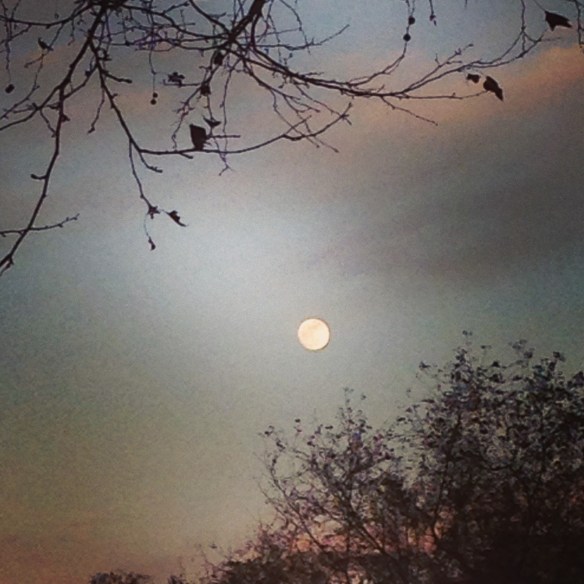
This is a time to fill your cup and drink.
Drink as much as you want,
feel free to quench your thirst.
Like the moon, this cup is
is always full,
is never empty.
PHOTO: 14 Febrero 2014, Full Moon & Valentine’s Day. Fitting for a day of fullness to come during a celebration of love. Full on, full power Mysore-class schedule this week. Mornings are Monday-Friday 7am-9:30am. Evenings Monday/Wednesday 6-8pm; Tuesday/Thursday 6:30-8:30pm.

Practice: The Lonesome Road

Image

Practice: The Lonesome Road

Yesterday, Full Moon Day/Valentine’s Day, I took a day trip to nearby Montserrat, famed mountain of Catalan dotted with sacred sites, hermitages and churches, as well as the beautiful Basilica of Santa Maria de Montserrat. I got up the easy way, taking the Aeri, which just zipped a cable car full of us tourists up the mountain.

In the late afternoon, an hour and half before sunset, I decided to walk down to the pueblo of Montserrat, where I could take my train back to Barcelona. Easy enough, I thought.

It’s interesting how I little understood the hugeness of Montserrat, the height of it, until I took the time to walk it.

Not even a quarter of the way down on a narrow, zig-zagging dirt path on edge of the cliffside of the venerable mountain, looking at the dot-like municipality of Montserrat far far down below, I start to freak out just a little bit. I start to wonder: can I get there before sunset? What if something happens to me, what if I trip and twist my ankle? I am out here on my own and have not seen another soul on this little road.

I debate whether I should scale back up the path, take the Aeri or the furnicular down, like the rest of the reasonable tourists–none of whom seemed to hatch up the same plan as myself.

This is when the yoga kicked in for me. This is when I start to breathe slowly, when I start to bring mindfulness back into every step. I reason with myself: isn’t this, after all, what I wanted when I set out that morning, to spend time with myself, myself and the mountain?

Like yoga practice, some paths are meant to be walked alone. There are times when we have companions and times when we have guidance. Then there are the other times: when practice is a lonely road. It is useless to panic and counterproductive to back track. We simply need to move forward and enjoy the gift of isolation.

Had I not moved forward, I would not have seen the view from the side of the mountain, not seen the beauty of the world below, not understood the scale and grandeur of Montserrat or have developed the reverence I have for it now. And then, there’s the relationship with myself, with my self-belief and trust in my own abilities…

Practice can be a wonderful community experience, one connected to the collective. But it can also be a lonesome road. When that time comes–and it is a sacred and precious time–we must be brave to walk that path alone.

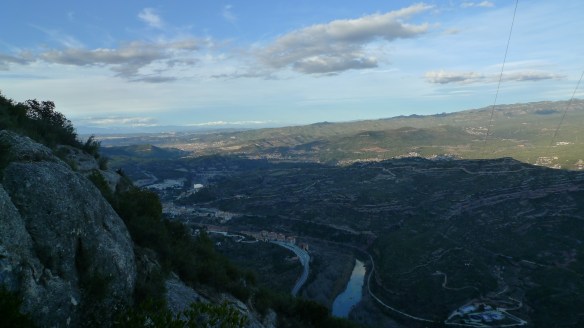
PHOTO: Spectacular view from Montserrat, as I start to make my way down this awesome mountain.

The Leap

Image

The Leap

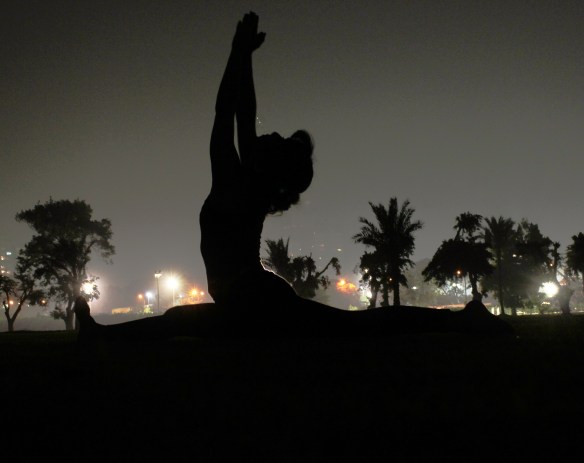
Take the leap! Hanumasana in Cairo’s Gazira Club.
Photo by Zeinab Lamloum.

On my first trip to India, I didn’t quite get the fascination with Hanuman. Here was this monkey man looking somewhat supercilious to me. Everywhere I went, there he was. At the corner store, there were stickers for sale. And at kirtan, chants for the legendary character in Indian mythology. What was the big deal, I wondered?!

Then, over time, as I heard and read more about him, my love for him also grew. He captured my imagination, not so much for his incredible super powers, but for his incredible humanity.

It’s been over (as of this writing) a week since the recent bombings, demonstrations and arrests in Cairo marking the anniversary of the revolution in Egypt. Seeing the resulting sadness and frustration that the not-so-past and all-too-recent events have caused  friends and students in Cairo, it feels like a good time to share his story. 

This is not just for the folks in Egypt, this is a story for all of us. Its themes are universal. We can all learn a thing or two from a not-so-little monkey called “Hanuman.”

(I’ve taken some artistic license, here, piecing this together from stories I’ve heard and read.)

** ** ** **

There once was a time when aspects of the divine walked on Earth and humans were not exactly the way we are now and, well, monkeys, hmmm, monkeys were not like the monkeys we know today…

The vanaras were mostly bipedal, human-sized or larger, they could be incredibly strong, they were intelligent and educated, and some–descending from some celestial beings– had very interesting powers that we might today call supernatural. They had complex organized societies, at the top of the social strata was a monarchy. In all, they were an extraordinary people–I say people, because they were more like people than our idea of monkey.

One particular valorous vanara was extra extraordinary, though he would be the last to know and, if he did know, would probably be the last to admit it.

Hanuman was a strong soldier, a born leader, a loyal friend, a devoted student, a kind and thoughtful being. True to his monkey nature, he was also fun-loving and mischievous when it was appropriate. And sometimes, when not entirely appropriate. Those around him, valued his presence deeply, they saw in him a brilliance, though, some would argue that he had not yet come to his full shine.

When he was a wee little monkey, Hanuman was a great deal bolder than he was in adulthood. As a little sprout, he had no concept of the constructs that often define and limit one. He had a whole lot of wind in him–literally, too, because without him knowing the Wind himself had sired him and was constantly blowing on his sails.

One day, young Hanuman, noticed an orange, so juicy and bright hanging above him. Oh, how his mouth watered at the sight of it. He had never seen such an orange! It seemed so ripe! So full of the blazing flavor of summer! His vision narrowed. Hanuman was determined to taste it.

He reached up but found that the orange was beyond his reach. Hanuman hadn’t learned the so-called scope of what one could or could not reach. He took to his toes and stretched his arm as high as he could, but no, he could not touch the fruit. I will jump for it, thought Hanuman. He was a good jumper, the best amongst his playmates. And so he hopped up, but still could not reach.

Hanuman, however, was not dissuaded. He crouched down and sprung up so lightly, so very high. But not quite high enough.

Undeterred, again and again, he pulled in and leapt up and up and up. He was getting much higher, much, much higher each time he jumped.

Hanuman did not notice that he was jumping higher than the tops of the tallest trees, then higher than the neighboring hills, then higher than the tallest peaks of the biggest mountains. So high was he that he was jumping into the clouds.

Indra, the King of the Heavens, however, noticed and was first amused, then perturbed, then affronted.

Why this babe of a monkey was trying to reach for the Sun! And if he let him go on, would most likely pick it out of the sky! The Sun, Surya, himself was getting anxious because he could see clearly that Hanuman was getting closer with each attempt. Surya looked to Indra with alarm, asking him for assistance.

Now, Indra ruled his domain with a great deal of gravity and was not impressed by this crazy little monkey. Known for his thunderous personality, and occasional quick temper, Indra drew on his bow, and struck Hanuman down with a bolt of lightning.

Now if Hanuman were an ordinary monkey with no heavenly connections, then that hit would have been fatal–and, it was for the most part. The bolt hit his jaw and knocked him down, and Hanuman’s lifeless body fell back to earth with a thud.

His father, Vayu, the Wind, sensing that his son was in trouble, flew frantically to his side. Indra, upon realizing the trouble he would have with Vayu, quickly apologized and breathed life back into the struck down monkey.

Hanuman gasped, not quite understanding what had just come to pass, just that his jaw was broken; it hurt badly. He must have fallen from a tree or somewhere…he could not rightly remember.

Over time the pain in his jaw faded, and the already fuzzy details of the incident sunk into the deep recesses of his memory.

In truth, more than Hanuman’s jaw was broken that day. A part of Hanuman’s true nature has been shocked and silenced. He forgot, not just about his great desire for the bright juicy orange in the sky, but also of his natural ability to leap, to reach for the sun, the stars, anything he put his mind/heart/soul/body into.

Until one day, when the brave varana was all grown up, he met the honorable Prince Rama, who inspired in him such great kinship and devotion. For Rama was also not an ordinary human either, but an avatar of great Vishnu, the Preserver of all things, sent down to live a human life so he could vanquish the great 10-headed demon Ravana.

Ravana had just kidnapped Rama’s wife Sita. And the vanaras offered to help Rama recover his beloved. Hanuman especially pledged his support to the young prince and went off with a troop of monkeys and bears–yes, bears, too, were different as they are today, following the faint trail left behind by Ravana, which led them to the great sea. Somewhere out there, beyond the water, was Lanka, the island domain of this great demon, and hidden within its walls, Rama’s other half, Sita.

At present, Hanuman was beside himself. Someone had to cross the ocean. But who? Who could continue this search? There were several very talented varanas among the group and they discussed who might be able to cross the ocean to Lanka. Some could make themselves really small, some very big, and many could jump incredibly high and far. But each one’s strength and prowess seemed to fall a little short of the task.

Now, among the bears, there was a great, wise old bear, who had seen Hanuman in his youth, and who saw the monkey as he really was. He cleared his throat and said with authority that he knew of one varana that was up to this huge task, because he was just as great as the task at hand. No, the bear corrected himself, for in fact, he was even greater. Hanuman looked at him eagerly, full of hope!

“That vanara is you, Hanuman,” the wise bear said. Hanuman was taken aback.

“Yes, you,” the bear, prodded. “Think back, dear friend. Remember who you are, remember yourself. You can make this leap. You have the power within you to do this. But you need to have courage.” Hanuman’s eyes glistened. Courage he could muster.

“And you need to believe…” Hanuman’s gaze faltered. “You need to believe!”

Hanuman took a breath. Closed his eyes, and looked within himself. He remembered a deep sense of joy and freedom as he leapt into the air; he could see clouds. Clouds!

The old bear was right. He had forgotten. He had let external forces and his own fears and failures dull his sense of self. He had buried his own power deep within his being. But it was there. He may have forgotten it, but nothing could take away what was always his.

It was up to him now. He would not let Rama down, he would help reunite the husband and wife. He had the courage and he had the vision. Hanuman decided: Yes, I will make the leap….

Thus, Hanuman drew back, making himself very very small, and then launched himself into the sky with such force that parts of the mountain behind him also swept into the air, a spray of trees, and dirt, and flowers following Hanuman, as if they themselves were reluctant to be without him.

A now very large, almost giant-like, Hanuman was flying! Flying over the sea of forgetfulness, overcoming various obstacles threatening to steer him away from his goal. His airy path, albeit filled with friend and foe, was clear: he would unite Rama with his Sita, the masculine with the feminine, bringing together that which had been wrongly separated. And this is how Hanuman leapt over the sea to the island of Lanka, where egoic Ravana held Rama’s beloved Sita hostage.

** ** **

Life can be tough on us and we might loose sight of who we are. Certain events, people, powers might cut us down, frustrate our hopes, make us feel small or helpless. The story of Hanuman reminds us that yoga is about remembering who we truly are. And from that place of authenticity, we can start to make the leap towards better integration/union, lasting peace and harmony.

And the great epic giant leaps… they do come–but they come with practice; with diligent whole-hearted work; with dogged perseverance, with dedication, with–at times, wavering, but ultimately–well-grounded belief that whatever it is we have lost or forgotten, whatever dream or goal deferred, it is there, waiting for us to reclaim it, waiting to boost us up into the air. 
Little Lights

Image

Little Lights

In the morning class, I start with minimal dim lighting. An alabaster lamp in the corner, one overhead in the back by the doors, and the candles and fairy lights on the altar. Not a lot. Yet over the last two mornings with the room’s electricity not working, I realized how much illumination we had.

Monday, I arrived to find that power was out, luckily Paz had left me with a bag of tea lights and I resorted to sprinkling some 10 candles around the edge of the room. It was amazing to see the room glow, dim as it was. The lights just popped out in the early morning darkness, reminding me that it’s in the darkest moments that we most appreciate the smallest glimmers of light.

And then as dawn comes, streaming inside through the windows, these little lights cease to work in the bright and then they are forgotten. But by then, they’d already lived out their purpose.

These times, when you are given little light, do not fill your mind with worry or frustration that you cannot see clearly, instead allow yourself to see differently. Allow yourself to go into the quietness of such precious little light.

Photo: Pazzifica Ashtanga Yoga at Vacio Espacio by candle light. Happy to report that power is back on as of this evening. We may continue to play with candle light practices but heating will most definitely be on tomorrows’s agenda!