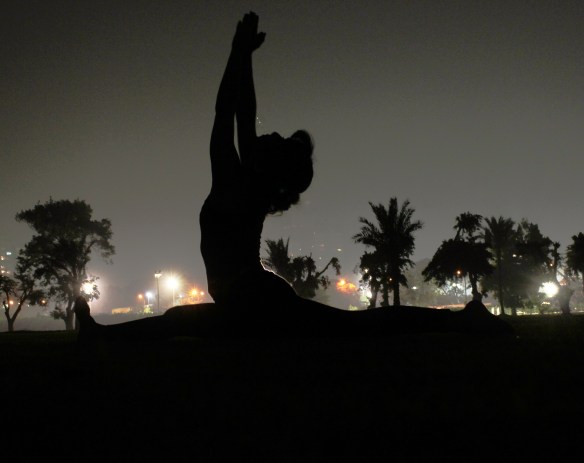
Going into the Desert

Image

In two days: a new journey.

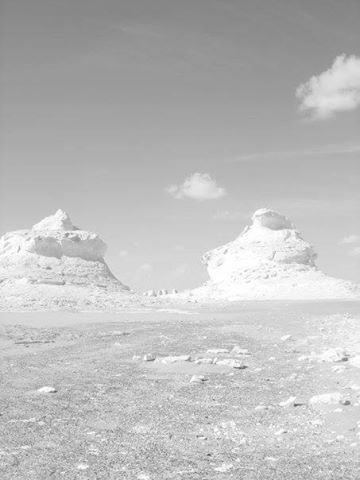
Farfara Oasis with it’s famed White Desert is known for the expanse of chalk white and curious rock formations sculpted artfully over time by the rough desert winds. Once a sea-bed, and then a savannah of lush green with herds of roaming gazelles, giraffes and elephants, it is now a living monument of ever changing time–a fitting place to practice yoga.

Free of distractions, the wide open areas of the desert, is a symbol of the clarity and purity that can be achieved by regular yoga practice. Slowly day by day, we are clearing away the debris of stress and tension, attachment and expectations, of our own preconceived ideas and cultural conditioning.

Going into the desert can also be tough, a harsh landscape, full of trials, bringing out the most innate of survival instincts. This is also true about the yoga practice. It can be full of struggle, pushing one to his/her limits, initiating one into the process of birthing and dying, of receiving and releasing, finding that oh-so-difficult balance between holding one’s center and simply letting go.

And so we plan…There’s no harshness built into the program as we have excellent guides, only one day of camping, a very modern, very comfortable trek into the desert, but the foray into the Great White is built into the yoga practice, into the asana-s, into the meditation, inner dancing and the satsang, each in its own way an opportunity to observe who we are in this liberating landscape.

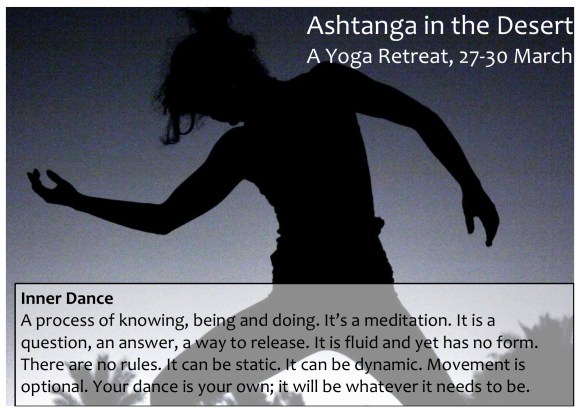
PHOTO: Care of Freedom Travelers, who are expertly organizing this trip. Ashtanga in the Desert: A Yoga Retreat is on Thursday March 27-30. Co-teaching with me is the lovely Iman Elsherbiny.

Take the Practice into the Streets

Image

Take the Practice into the Streets

After some time, after regular practice, something strange, different may happen…Before you know it your practice has gone beyond the four corners of your rubber mat.

I arrive Thursday evening. Al Cairo, the crazy city that somehow has drawn me back.

I found myself a little anxious as I boarded the plane. Was this an act of insanity, was I really returning to this crazy city? I worried about life on the road there, the gridlock, the hot tempers and near misses that characterizes life in Cairo.

My friend and fellow teacher, Iman Elsherbiny, has arranged for someone to pick me up. Ashraf is on a yoga study-exchange and only started with visiting teacher Sonja Radvila in February. He’s been going regularly ever since, and he tells me right away how much he loves it.

Not ten minutes out of the airport, a car full of people nearly back into us–we are on a highway. It’s a near miss, but horns are honked, and windows are rolled down and I am expecting the exchange of harsh words.

Ashraf surprises me. He smiles, speaks jovially across to the other driver.

For a split moment there is a sense of dismay; this is not supposed to happen. And then the whole thing shifts. Tension melts away as the other driver laughs as well, goodwill traveling between two cars in the middle of a bustling highway. Then we go our separate ways.

Something in me relaxes. All is well.

I commend Ashraf in his good humor, his ability to change what could have been an ugly situation. And he laughs and credits the ashtanga yoga practice. He says that he can feel the change.

I love this. I love how the process works, how the care, calm, consciousness cultivated in yoga practice inevitably spreads into daily life.

LIVING IN CAIRO & INTERESTED IN YOGA: Iman Elsherbiny (0122371729) and I (0101348097) are offering privates in Maadi. Iman’s regular class schedules can be found in Ashtanga Yoga Egypt’s FB page. We are taking a group into the White Dessert this weekend, March 27-30 for a special yoga retreat, if you’re interested, call or email me kaz.castillo@gmail.com. More details on FB, look for Ashtanga in the Desert.

PHOTO: On the road with Ashraf and Iman, sunset along the Corniche in Cairo.

Inner Dance in the Desert & in Cairo Saturday 22 March

Image

Inner Dance in the Desert & in Cairo Saturday 22 March

Very excited to return to Egypt. Before going into the desert, will spend a week in Cairo and offer Inner Dance and privates.

First offering is on 22 March, 5-7pm Inner Dance Workshop at Ashtanga Yoga Cairo in Zamalek.

To reserve a spot for either the desert retreat or Inner Dance, message me at kaz.castillo@gmail.com.

If you are ready to pay for your deposit for the Desert Retreat, contact Yasmine Rifaat, our Cairo coordinator, on Facebook.

Event Teaser… Ashtanga in the Desert: A Yoga Retreat

Image

Event Teaser... Ashtanga in the Desert: A Yoga Retreat

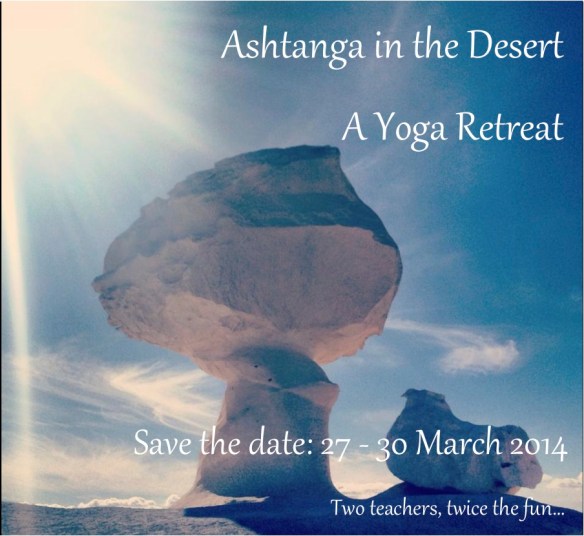
PHOTO: White Desert, Egypt. Save the date announcement was posted today on Facebook. Very excited to be planning my trip and class offerings,not to mention the chance to reconnect with students, friends, and adopted family. More details to follow soon!

The Leap

Image

The Leap

Take the leap! Hanumasana in Cairo’s Gazira Club.
Photo by Zeinab Lamloum.

On my first trip to India, I didn’t quite get the fascination with Hanuman. Here was this monkey man looking somewhat supercilious to me. Everywhere I went, there he was. At the corner store, there were stickers for sale. And at kirtan, chants for the legendary character in Indian mythology. What was the big deal, I wondered?!

Then, over time, as I heard and read more about him, my love for him also grew. He captured my imagination, not so much for his incredible super powers, but for his incredible humanity.

It’s been over (as of this writing) a week since the recent bombings, demonstrations and arrests in Cairo marking the anniversary of the revolution in Egypt. Seeing the resulting sadness and frustration that the not-so-past and all-too-recent events have caused  friends and students in Cairo, it feels like a good time to share his story. 

This is not just for the folks in Egypt, this is a story for all of us. Its themes are universal. We can all learn a thing or two from a not-so-little monkey called “Hanuman.”

(I’ve taken some artistic license, here, piecing this together from stories I’ve heard and read.)

** ** ** **

There once was a time when aspects of the divine walked on Earth and humans were not exactly the way we are now and, well, monkeys, hmmm, monkeys were not like the monkeys we know today…

The vanaras were mostly bipedal, human-sized or larger, they could be incredibly strong, they were intelligent and educated, and some–descending from some celestial beings– had very interesting powers that we might today call supernatural. They had complex organized societies, at the top of the social strata was a monarchy. In all, they were an extraordinary people–I say people, because they were more like people than our idea of monkey.

One particular valorous vanara was extra extraordinary, though he would be the last to know and, if he did know, would probably be the last to admit it.

Hanuman was a strong soldier, a born leader, a loyal friend, a devoted student, a kind and thoughtful being. True to his monkey nature, he was also fun-loving and mischievous when it was appropriate. And sometimes, when not entirely appropriate. Those around him, valued his presence deeply, they saw in him a brilliance, though, some would argue that he had not yet come to his full shine.

When he was a wee little monkey, Hanuman was a great deal bolder than he was in adulthood. As a little sprout, he had no concept of the constructs that often define and limit one. He had a whole lot of wind in him–literally, too, because without him knowing the Wind himself had sired him and was constantly blowing on his sails.

One day, young Hanuman, noticed an orange, so juicy and bright hanging above him. Oh, how his mouth watered at the sight of it. He had never seen such an orange! It seemed so ripe! So full of the blazing flavor of summer! His vision narrowed. Hanuman was determined to taste it.

He reached up but found that the orange was beyond his reach. Hanuman hadn’t learned the so-called scope of what one could or could not reach. He took to his toes and stretched his arm as high as he could, but no, he could not touch the fruit. I will jump for it, thought Hanuman. He was a good jumper, the best amongst his playmates. And so he hopped up, but still could not reach.

Hanuman, however, was not dissuaded. He crouched down and sprung up so lightly, so very high. But not quite high enough.

Undeterred, again and again, he pulled in and leapt up and up and up. He was getting much higher, much, much higher each time he jumped.

Hanuman did not notice that he was jumping higher than the tops of the tallest trees, then higher than the neighboring hills, then higher than the tallest peaks of the biggest mountains. So high was he that he was jumping into the clouds.

Indra, the King of the Heavens, however, noticed and was first amused, then perturbed, then affronted.

Why this babe of a monkey was trying to reach for the Sun! And if he let him go on, would most likely pick it out of the sky! The Sun, Surya, himself was getting anxious because he could see clearly that Hanuman was getting closer with each attempt. Surya looked to Indra with alarm, asking him for assistance.

Now, Indra ruled his domain with a great deal of gravity and was not impressed by this crazy little monkey. Known for his thunderous personality, and occasional quick temper, Indra drew on his bow, and struck Hanuman down with a bolt of lightning.

Now if Hanuman were an ordinary monkey with no heavenly connections, then that hit would have been fatal–and, it was for the most part. The bolt hit his jaw and knocked him down, and Hanuman’s lifeless body fell back to earth with a thud.

His father, Vayu, the Wind, sensing that his son was in trouble, flew frantically to his side. Indra, upon realizing the trouble he would have with Vayu, quickly apologized and breathed life back into the struck down monkey.

Hanuman gasped, not quite understanding what had just come to pass, just that his jaw was broken; it hurt badly. He must have fallen from a tree or somewhere…he could not rightly remember.

Over time the pain in his jaw faded, and the already fuzzy details of the incident sunk into the deep recesses of his memory.

In truth, more than Hanuman’s jaw was broken that day. A part of Hanuman’s true nature has been shocked and silenced. He forgot, not just about his great desire for the bright juicy orange in the sky, but also of his natural ability to leap, to reach for the sun, the stars, anything he put his mind/heart/soul/body into.

Until one day, when the brave varana was all grown up, he met the honorable Prince Rama, who inspired in him such great kinship and devotion. For Rama was also not an ordinary human either, but an avatar of great Vishnu, the Preserver of all things, sent down to live a human life so he could vanquish the great 10-headed demon Ravana.

Ravana had just kidnapped Rama’s wife Sita. And the vanaras offered to help Rama recover his beloved. Hanuman especially pledged his support to the young prince and went off with a troop of monkeys and bears–yes, bears, too, were different as they are today, following the faint trail left behind by Ravana, which led them to the great sea. Somewhere out there, beyond the water, was Lanka, the island domain of this great demon, and hidden within its walls, Rama’s other half, Sita.

At present, Hanuman was beside himself. Someone had to cross the ocean. But who? Who could continue this search? There were several very talented varanas among the group and they discussed who might be able to cross the ocean to Lanka. Some could make themselves really small, some very big, and many could jump incredibly high and far. But each one’s strength and prowess seemed to fall a little short of the task.

Now, among the bears, there was a great, wise old bear, who had seen Hanuman in his youth, and who saw the monkey as he really was. He cleared his throat and said with authority that he knew of one varana that was up to this huge task, because he was just as great as the task at hand. No, the bear corrected himself, for in fact, he was even greater. Hanuman looked at him eagerly, full of hope!

“That vanara is you, Hanuman,” the wise bear said. Hanuman was taken aback.

“Yes, you,” the bear, prodded. “Think back, dear friend. Remember who you are, remember yourself. You can make this leap. You have the power within you to do this. But you need to have courage.” Hanuman’s eyes glistened. Courage he could muster.

“And you need to believe…” Hanuman’s gaze faltered. “You need to believe!”

Hanuman took a breath. Closed his eyes, and looked within himself. He remembered a deep sense of joy and freedom as he leapt into the air; he could see clouds. Clouds!

The old bear was right. He had forgotten. He had let external forces and his own fears and failures dull his sense of self. He had buried his own power deep within his being. But it was there. He may have forgotten it, but nothing could take away what was always his.

It was up to him now. He would not let Rama down, he would help reunite the husband and wife. He had the courage and he had the vision. Hanuman decided: Yes, I will make the leap….

Thus, Hanuman drew back, making himself very very small, and then launched himself into the sky with such force that parts of the mountain behind him also swept into the air, a spray of trees, and dirt, and flowers following Hanuman, as if they themselves were reluctant to be without him.

A now very large, almost giant-like, Hanuman was flying! Flying over the sea of forgetfulness, overcoming various obstacles threatening to steer him away from his goal. His airy path, albeit filled with friend and foe, was clear: he would unite Rama with his Sita, the masculine with the feminine, bringing together that which had been wrongly separated. And this is how Hanuman leapt over the sea to the island of Lanka, where egoic Ravana held Rama’s beloved Sita hostage.

** ** **

Life can be tough on us and we might loose sight of who we are. Certain events, people, powers might cut us down, frustrate our hopes, make us feel small or helpless. The story of Hanuman reminds us that yoga is about remembering who we truly are. And from that place of authenticity, we can start to make the leap towards better integration/union, lasting peace and harmony.

And the great epic giant leaps… they do come–but they come with practice; with diligent whole-hearted work; with dogged perseverance, with dedication, with–at times, wavering, but ultimately–well-grounded belief that whatever it is we have lost or forgotten, whatever dream or goal deferred, it is there, waiting for us to reclaim it, waiting to boost us up into the air. 
Happy Chinese New Year: Unleash the Horse Within

Image

This Chinese New Year, Unleash the Horse Within

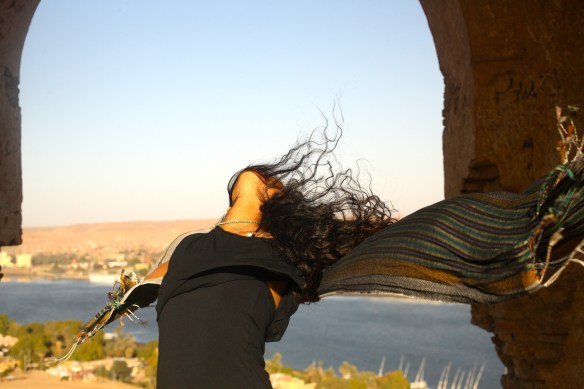
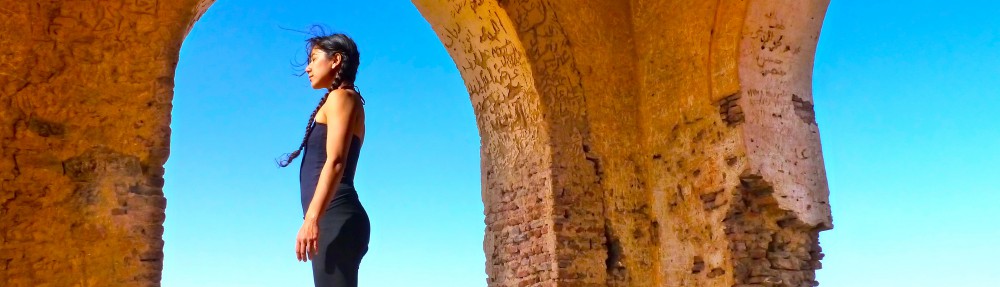
Photo: Untether the horse within. Sweet surrender to the wind, Aswan, Upper Egypt.
All Rights Reserved Karina Al Piaro Ⓒ

I wrote last night, at the eve of the Chinese New Year:

“I enter the year of the horse
hair loose, heart singing,
wild imagination running
free with possibility…”

en Español (un traducción simple):

“Yo entro el año del caballo
pelo flojo, corazon cantando
imaginación salvage corre
libre con la posibilidad…”

I was going to start this post with Kung Hei Fat Choi, which loosely translates to “well wishes, may good fortune come your way,” which is the standard greeting during the Chinese New Year festivities. All well and good, but not actually what I want to say.

Whether you put any credence in Chinese Astrology or not, the horse is a rich archetype that has a deep resonance in many cultures around the world.

We think of the horse as strong, willful, loyal, courageous and fast. It can be gentle and it can also be dangerous.

Carl Jung identifies the horse archetype as our unconscious, animal side. This great beast symbolizing passion unbridled, the powerful forces buried deep within our psyche.

So, in this, the start of the Wood Horse Year, let’s celebrate the wild Earth spirit within us that wants to run free. Let us face this great beast of our own passions, of our hidden desires, of our hopes and our dreams with the same courageous spirit. Let us bridle it with great love, attention and tenderness; and ride! Ride with speed–finding the joyful “yoga,” or balance, between control and surrender.

Artful Ashtanga Yoga Cairo

Image

Ashtanga Yoga Egypt evening mysore program in AYC.


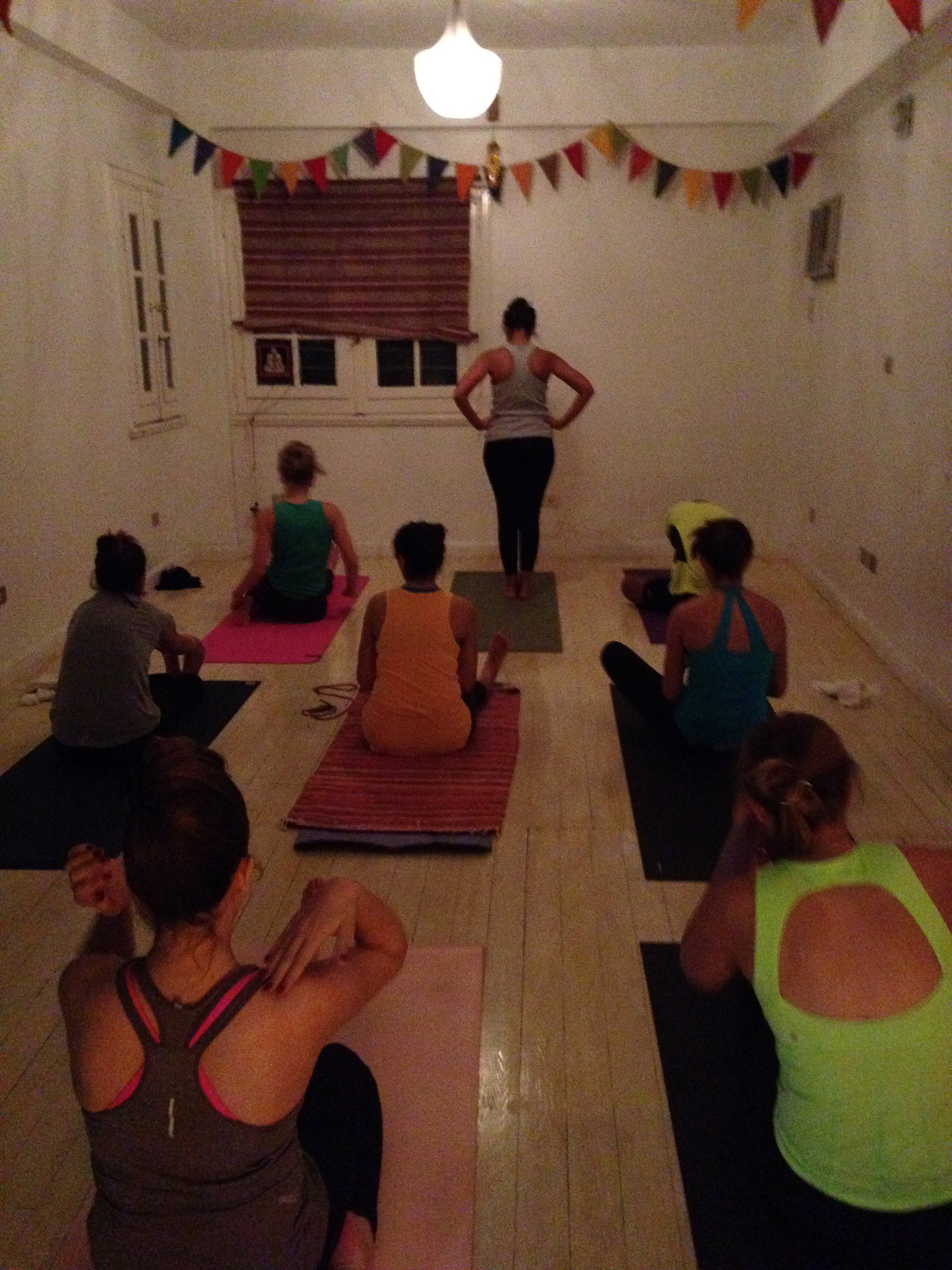
There’s a certain quality about the artfully decorated Espacio Vacio, where Pazzifica Ashtanga Yoga classes are being held here in Barcelona, with it’s bursts of delightful design elements and color set against the spacious whiteness, that reminds me a little of one of the spaces where I was teaching in Cairo: the Zamalek studio Ashtanga Yoga Cairo–a beautiful little yoga oasis in the desert of crazy city life that is Cairo.   

Each practice space is different and unique. With studios that are mostly dedicated to a particular school of yoga, the energy of that system has an energetic stamp on the interior. Each spot also vibrates with the energy of its locale, its stakeholders (the students and the teachers) and especially of its owner–particularly when that person is a yoga teacher themselves. 

Image

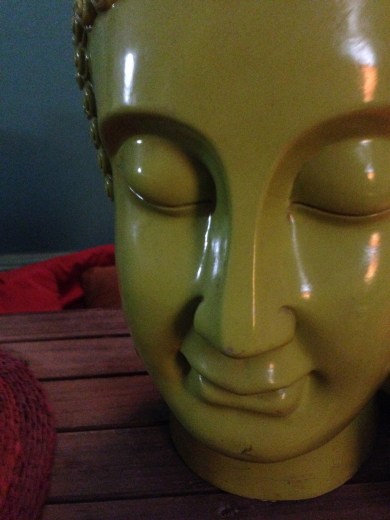
Serene life size Buddha bust on the table.

Image

ImageBefore even meeting Mira Shihadeh, who sits at the helm of this yoga vessel, I met her yoga space. 

My friend Iman Elsherbiny (Ashtanga Yoga Egypt) teaches a 3-day-a-week evening Mysore program at Ashtanga Yoga Cairo. She set up a workshop for us to co-teach at AYC just as I’d arrived in Egypt. As we took the taxi into Zamalek, she said she was sure I would like it, that it was a very special space. 

It was day 3 in Cairo. As we zoomed onto the Loop Road–my first trip out of El Maadi, it was a Friday and traffic was fairly light–I felt the massive scale of urban Cairo. Huge buildings emulating the dusty, rocky landscape. With the exception of a few brightly painted balconies and hanging laundry, there seemed to be an absence of color. 

So, for someone like myself, who has either been living in India or squatting in various yoga spaces and alternative communities for the last three years, entering AYC was like taking a breath of fresh air.

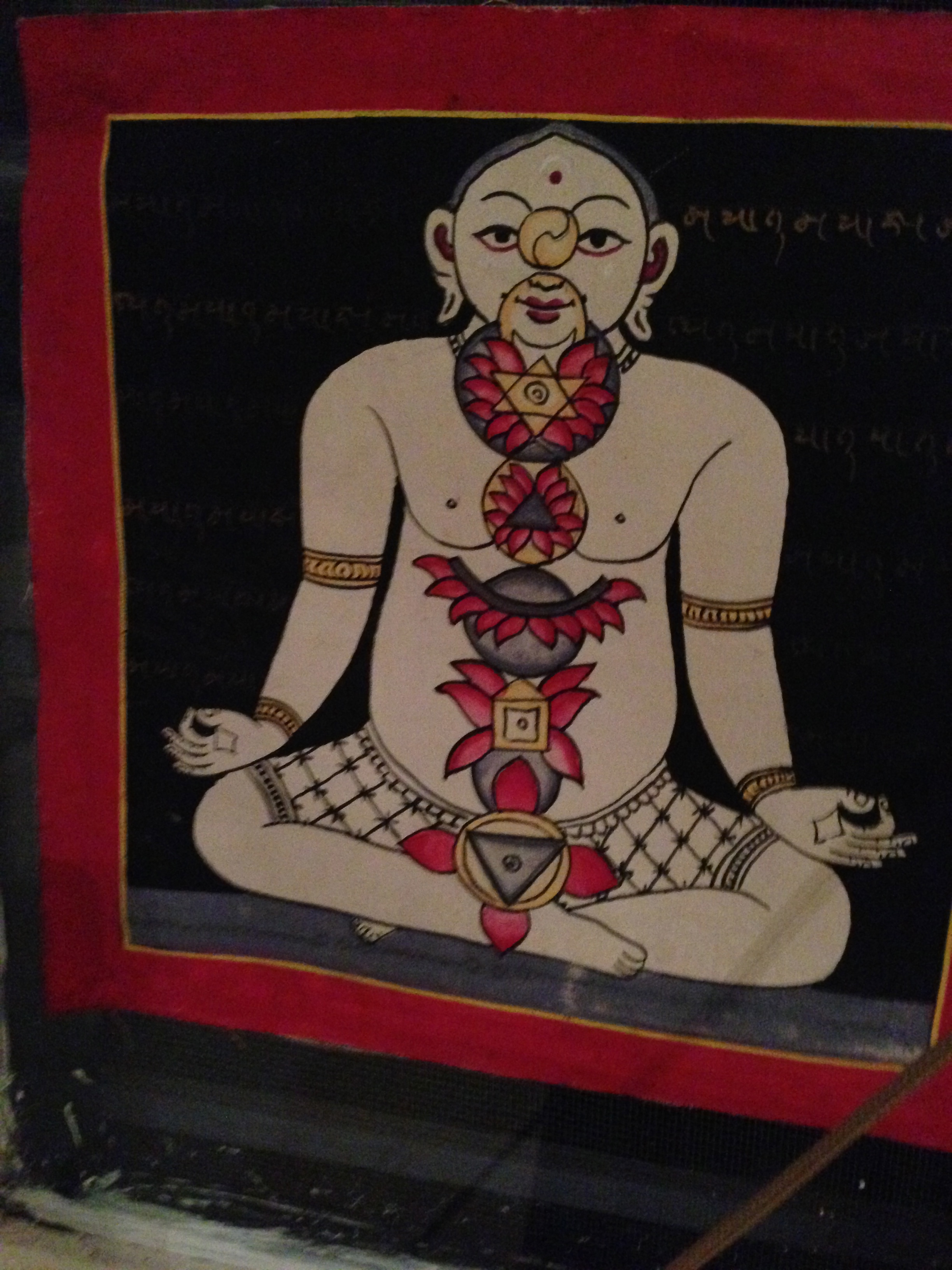
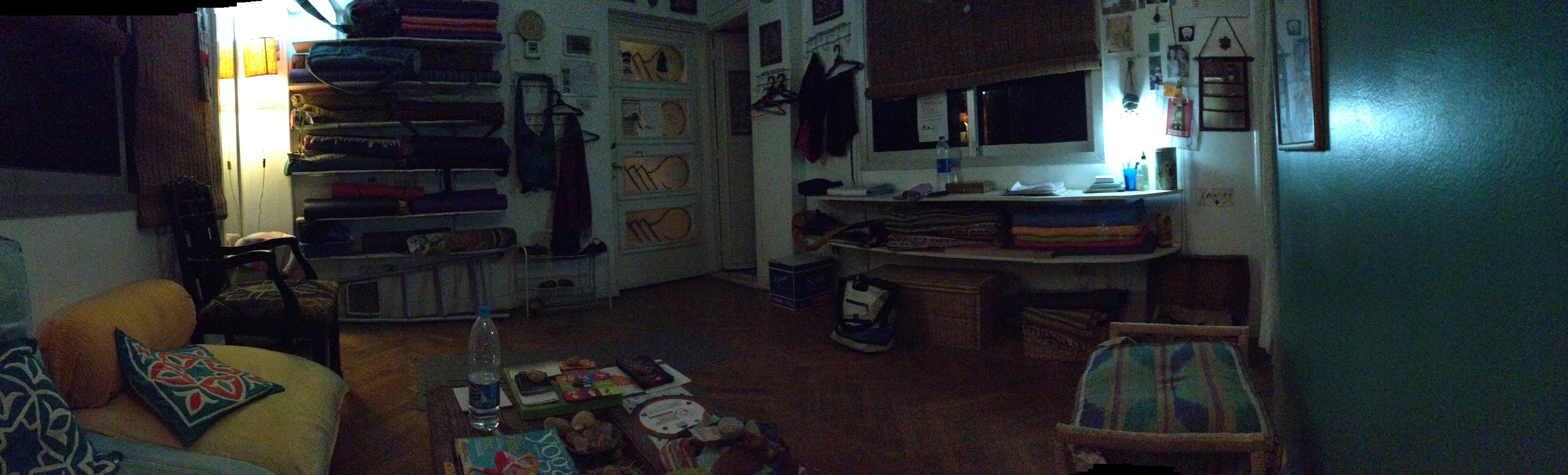
It was a splash of India squeezed into a studio space. Color everywhere. In the front room, the waiting area/changing room/gathering place, the top of the walls were bordered with  the pantheon of Indian deities, all dramatic and colorful. Everywhere there was some kind of eye-candy. Lots bright colors. Lots of art. Lots of quirky little treasures hanging on the walls or peeking out of nooks and crannies. Lots of everything. So very India, but also so very … I didn’t know exactly, but something else. 

And then I met Mira and understood that she had infused her own artistic sensibilities into the place. A street artist, this spunky woman has been teaching ashtanga yoga in Cairo for nearly a decade. For me the space feels most complete when Mira and her dog Bindi are also present. 

When possible, I would come and stay overnight after my own class on Monday night, so that I could practice with Mira the following Tuesday morning and enjoy the benefits of being a student, which after months of solitary self-practice is like manna from heaven. It makes me smile now to think of those too-few mornings enjoying Mira’s adept assistance along with her quirky sense of humor and natural yet very Mira-brand of motherliness. Bless her, she always offered me bananas and dates after practice. 


Image

The front room of AYC, cozy and inviting, serves many purposes: waiting lounge, locker room, hang out. I’ve slept in this room a number of times. I sleep very well here.

And Bindi…well, Bindi would always make an appearance towards the end of practice. Sometimes insisting on sitting on my mat as I went for an inversion. Once, she lay down with me in shavasana and Mira draped a blanket over the both of us. Those were blissfully sweet and deep practices in Cairo, mornings that I could focus on my self and have someone as lovely as Mira support me.

Mira teaches mysore-style self practice Sunday to Thursday at Ashtanga Yoga Cairo. For updates on classes, see Ashtanga Yoga Cairo on Facebook. 

Iman Elsherbiny will restart evening classes at AYC in February, see Ashtanga Yoga Egypt on Facebook for updates. 

Image

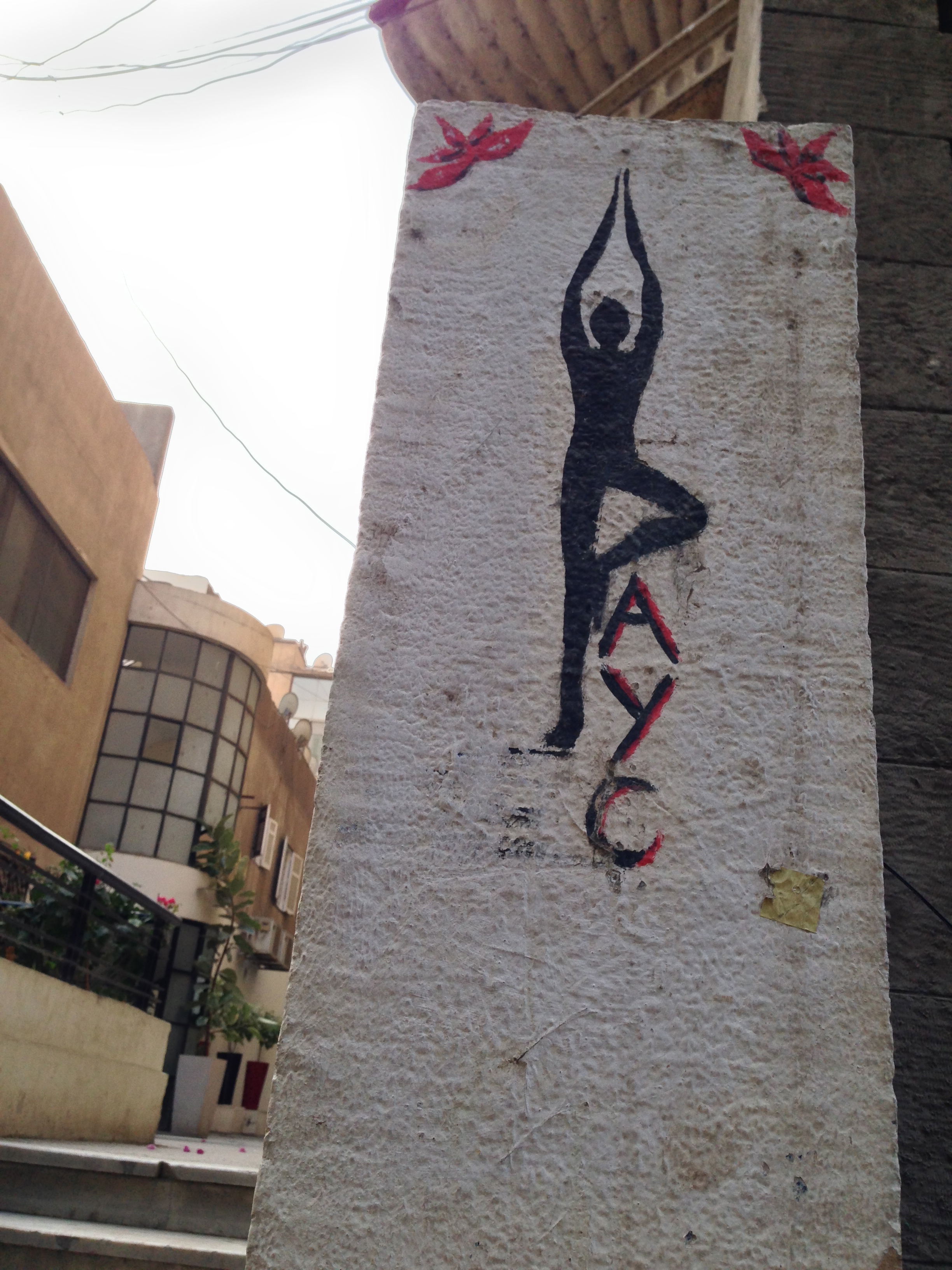
AYC is low key. There is no grandiose signage. Just a little silhouette of a practitioner in tree pose beside the stairs leading up to the building. It’s not about the fancy signage, it’s about the practice!

Yoga, Egyptian-style…

Image

IMG_7826
Since I started traveling last year, Pazzifica Ashtanga Yoga is the third mysore program I’ve subbed for. It’s been a full season for me: Osaka, Cairo & Barcelona. It’s fascinating to see how, although the essence is the same everywhere, the yoga practice adapts to to the different needs and cultures of the people in each place. The character of practice changes according to the personality of the people and the flavor of the place.

My time in Japan, confirmed what many teachers shared with me. My students in Osaka were incredibly keen, present, disciplined and attentive, especially to their teachers. They worked hard to deepen their practice and got the results to prove it. I miss them still, it was a real joy to work with them.

And Egypt…well…how to explain…

Needless to say, Egyptian students are not the same as Japanese students. This was apparent in the first workshop, which I co-tought with Iman Elsherbiny. Some students had interrupted the flow of the class to negotiate their way out of doing a certain posture. Iman and I locked eyes. She smiled and shared with the class that she had just briefed me on how Egyptian students were unique and here we were in negotiations, right in the middle of class. Everyone laughed, the students especially, they seemed to agree that they would sort of be a handful and, in their way, were consoling me about it.

Fast-forward to the end of my trip as I led the Aswan retreat, half peopled by regular students, some I met on that very first day. Already, my first morning of silence was thwarted. Everyone agreed to it, sure. But no one seemed to remember come morning. For this group of 17, I could sense that their combined energy didn’t make for silence, so I just rolled with it.

And then, on the final evening, just as the bonfire was being stoked into existence, I’d just barely turned around to fetch a cup of tea when a giant speaker was brought out. Before I knew it, students were taking turns playing smartphone DJ–attention deficient ones at that, we’d make it through halfway or maybe two-thirds of a song before someone changed the track. Still, everyone was up and dancing! Really joyfully dancing!

On one hand, I wondered: how had I so completely lost control of the group, how would I maneuver them into the thoughtful sharing at the closing circle and soulful kirtan that I had planned?!

On the other hand, it’s pretty freaking hard to get people’s energy up in this manner! And here they were just clapping and singing and laughing and dancing because that’s what Egyptians do at a party. And our retreat had become a party, a celebration, a gathering of new and old friends, who had seriously bonded over three days of yoga classes, meditations, great food and amazing sightseeing. We genuinely loved each other and reveled in each others’ company. I had to admit, I could not have done better.

There’s more to that evening: a yoga retreat theme song that was improvised at the spot and a special Egyptian style warrior pose that I can’t even begin to explain…so totally fun and awesome, yet so totally wrong and outrageous at the same time—a feeling that replicates for me when I think of Egypt, so totally indescribably strange and also very eerily perfect.

Yoga, Egyptian-style…It is what it is, so much like the people there and Egypt itself, it’s got its quirks but it’s got a lot of heart! I look forward to returning!

Today, just finished my second week here in Barcelona. Starting to get to know the students, a mixture of the global community that make up this very unique city. I look forward to getting to know this magical place through this group of students. So far: Me Encantada!

Photo: Wall art carved into Philae Temple walls in Aswan, Upper Egypt.

Playful Spaces

Image

Playing Outdoors

Yes, there are such things as ideal conditions for practice: a windless place, even floors. If you’re going to get all picky about it, you can go for wood floors and a temperature-controlled environment that duplicates the degrees produced by 65 bodies practicing in the shala in Mysore, India between the fall and winter months of the year.

Wherever you practice, you want to be able to cultivate focus and create a healthy platform for the body.

Recently, however, as I traveled between Aswan in Northern Egypt and Naweiba in Sinia, I found that outside the constructs of the “yoga studio”, spaces have a life of their own. They were often outdoors where cold, wind and sunlight  invariably come into the practice. Objects, passers-by, animals come into view, tugging at the focus. Noise calls for attention. In Naweiba, the most even ground was carpet atop gravel.

During the retreat I was teaching, there was one day we thought we had sneakily secured a chance to practice at a sweet spot in the Philae Temple in Aswan. The floor was stone, hundreds of years old. And even. I rejoiced at the flat surface on which we could go over the finer details of jumping forward and back in the vinyasa. That was until the guards totally panicked as they saw us get started on our colorful mats and we were only just standing and breathing. They freaked and ran us (infidels) out of the temple.

As a teacher, I wanted to be able to provide my students with the best learning experience. The space is a crucial part to that experience. And so far, we had no space and our poor logistics had resulted in unnecessary drama. As we chugged along in our boat to another island on the Nile River where our local guide said he knew a spot, I wondered whether I was failing my students in some way.

Said island was amazing. And sandy. Unevenly sandy! I tried not to panic. Instead, we started where we’d left off in Philae, “Aummmm,” getting on with the afternoon workshop program.

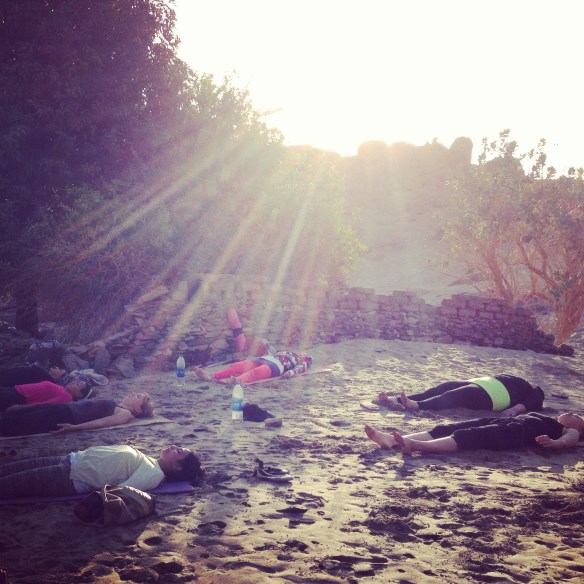
It wasn’t what I had planned–as I’d planned for having a nice stable ground to work with. But the result was so much better than I could have planned or anticipated. We adapted to the environment and adopted a sense of fun and playfulness that you can’t help but feel when you are out of doors, enjoying the afternoon sunlight, feeling the sand at your feet. It was probably the most fun class we had that weekend. It was spontaneous, light-hearted, but also quite challenging physically.

Sometimes the conditions for practice is far from perfect. Try not to scoff at it; for all you know it might be better than perfect!

Photo: So successful was our class in this spot that we planned the same outing for the second retreat in Aswan. This is batch 2 retreat participants enjoying their savasana in the late afternoon sun on the slope of this picturesque river beach.

Masks We Wear

Image

Unmask

We all have different masks we wear. Some, we hide behind. Some, we use as a shield to protect ourselves. These figurative masks can be tools of evasion, of subterfuge, of inauthenticity.

But what of the mask of practice, this mask of yoga which we put on each time we get on the mat? The face inevitably changes as we get into the flow–and at times, some kind of strange, indescribable thing happens. And we call it “yoga.”

What is this? Is this real? Or are we just pretending for the moment, wearing a guise of yoga?

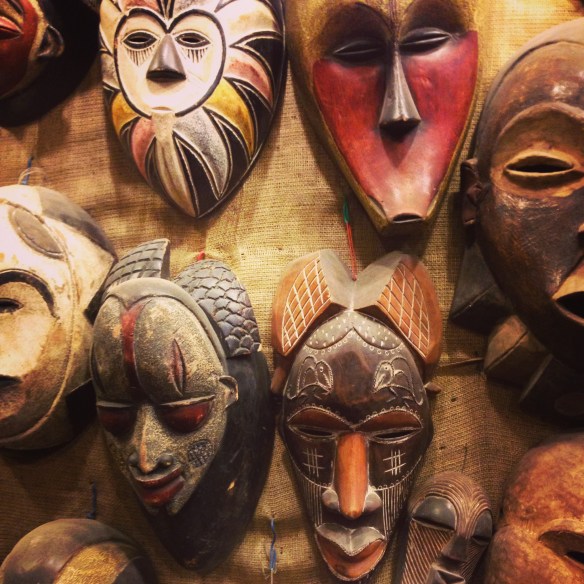
In Africa, traditional masks, such as these pictured above, are used in ritual practices often with music and dance. The mask helps the wearer conceal his human identity and helps him transform into a medium between the earthly and spriritual realms

The mask of practice works similarly.

We come into it, this sacred ritual: the steady gaze and breath, the stoic expressionlessness of the face, only to disengage with our identifications with the self and attachments that come with that self.

And then, we dance. We dance to the most primordial sound, the rhythm of our own breath, communicating, connecting for that brief moment with something that exists beyond ourselves.

Photo: Traditional African mask collection in a shop in Aswan’s (Upper Egypt) souk.