One with World and Practice

IMG_7060

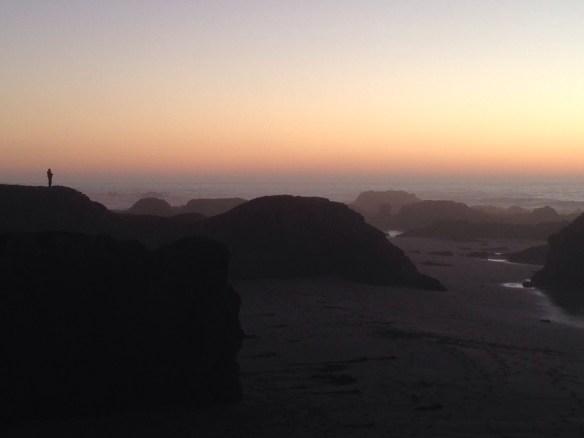
Sunset at Fort Bragg’s coastline in Mendocino, California.

How many times have we looked out into the great big world, taking in one of those breathtaking views, and are awed by all that we are not? We are inspired, our imagination stirred, we are humbled, but these feelings also put us in different places–us and the world.

What would it be like to look out at the greatness that is and see a reflection of ourselves? What would it be like if we saw sameness instead of separation? If we looked out and instead of noting difference, we say: “wow, I’m a part of that,” or “that’s me, too!”

What if we looked at everything, big and small, every person we meet, no matter what the circumstance, every interaction we have in the same manner? Imagine how different life might be.

In the microcosm, this is a challenge we meet in daily practice–at least, I know I do. There’s me and then there’s the room and the people in the room. There’s my practice, and then the practice of others and my idea of an ideal practice. How many times does our drishti (point of focus) slide and we take in through our periphery some excellent (or sometimes, less than excellent) posturing and we compare ourselves to another?

There was a time when I looked upon these thoughts with a great deal of shame; I wanted  to be above it all, thinking that would make me a good yoga practitioner.

When these thoughts come up nowadays, I find more humor in them and more gratefulness for them. For the function of practice is to tease these reflections of the ego up to the surface where they can be seen in the full light of day–that they come up is not a problem but a part of a solution. As we observe them, they come up less and less and they subtly loose their power.

More and more, I have different kinds of moments when I’m teaching  or when I am practicing. Sometimes, I perceive someone who may be dissimilar in practice, body type, everything, and still I think: yup, that’s me! Maybe the current me, or 7-years-ago me, or the me I might be in a few years, but that’s me, that’s my experience also, that’s my challenge, that’s my strongpoint too, that’s my fear–and in these incredibly precious moments, I see sameness, I feel compassion.

There are other times when I see someone doing just the most impossible, gravity-defying, beautiful thing, which I cannot even imagine getting close to, and I feel beyond envy this great sense of incalculable possibility. I am inspired by our shared potentiality, though it will, no doubt, express itself differently for me.

And then, there’s the practice, which is so very personal. Yet, over time, it starts to feel quite impersonal also. Especially in a mysore space, there’s the practice that I feel is mine, (my mat, my body, my motions) and then there’s the practice that is ours, that is shared in the room, and beyond that, a practice that is shared by a global community that is still connected from teacher to student, teacher to student, all the way back to Mysore, India, the way it has been since the beginning. Then there’s the practice that is shared by everyone, which is life…

I know this looking at unity instead of difference is hard to sustain, so conditioned are we to compare or to see our own smallness.

But the photo above had me thinking about this man looking at the sunset. I imagine his awe at the scene before him, the sun setting into the Pacific coloring the Northern Californian coastline. I wonder, is he thinking: “wow, that’s a sight” or “aren’t we just amazing!” From where I’m sitting, I am also in awe and he is as much a part of the magnificent landscape, his presence completes the scene–and I am also a part of it, even though, from where I’m sitting, I might not see it.
When It’s Tough to Practice

IMG_9681

Life is not always so accommodating towards practice. There’s, of course, a work, personal and domestic life balance that needs to be maintained. And we learn to negotiate between them.

There are the other times, however, where it is not a matter of time as much as it is a matter of space–emotional space. When the factors above close in on us, it takes a toll. And the tool, our sadhana, which we so often rely on to help us deal with stress and tension, amplifies our emotions, whether it’s anger, or frustration, or pain, or sorrow, or…the list goes on. At the best of times, practice can be a slow uphill battle. When under emotional duress, it can be total carnage.

What then? The teacher’s answer would be to practice anyway. Easier said than done, I know. But when it’s tough to practice, this is when we need to be practicing the most. The mat, the practice, is a sharp yet subtle mirror, and facing it when times are challenging is difficult but ultimately helpful because it does its job. It allows us to see ourselves and the issues that weigh heavily on us.

Practice anyway.

Practice any way. It may not be your optimum, it may not even be your full practice, perhaps it’s simply getting through sun salutations, maybe it’s just getting on the mat and breathing before the thoughts and feelings crowd in on you. Then, come back and do more the next day, giving your body and breath the space to expand. The sheer guts and determination to show up for yourself can become a wellspring of inspiration and strength.

If you have the courage, the heart for it, watch carefully, observing the places of discomfort and the places where there is space. Each day watch as it gets better because everything changes. The practice itself becomes a vehicle for these small or big shifts. Slowly, what was originally disempowering becomes its opposite. When it’s tough to practice, just practice.

Light Crossroad

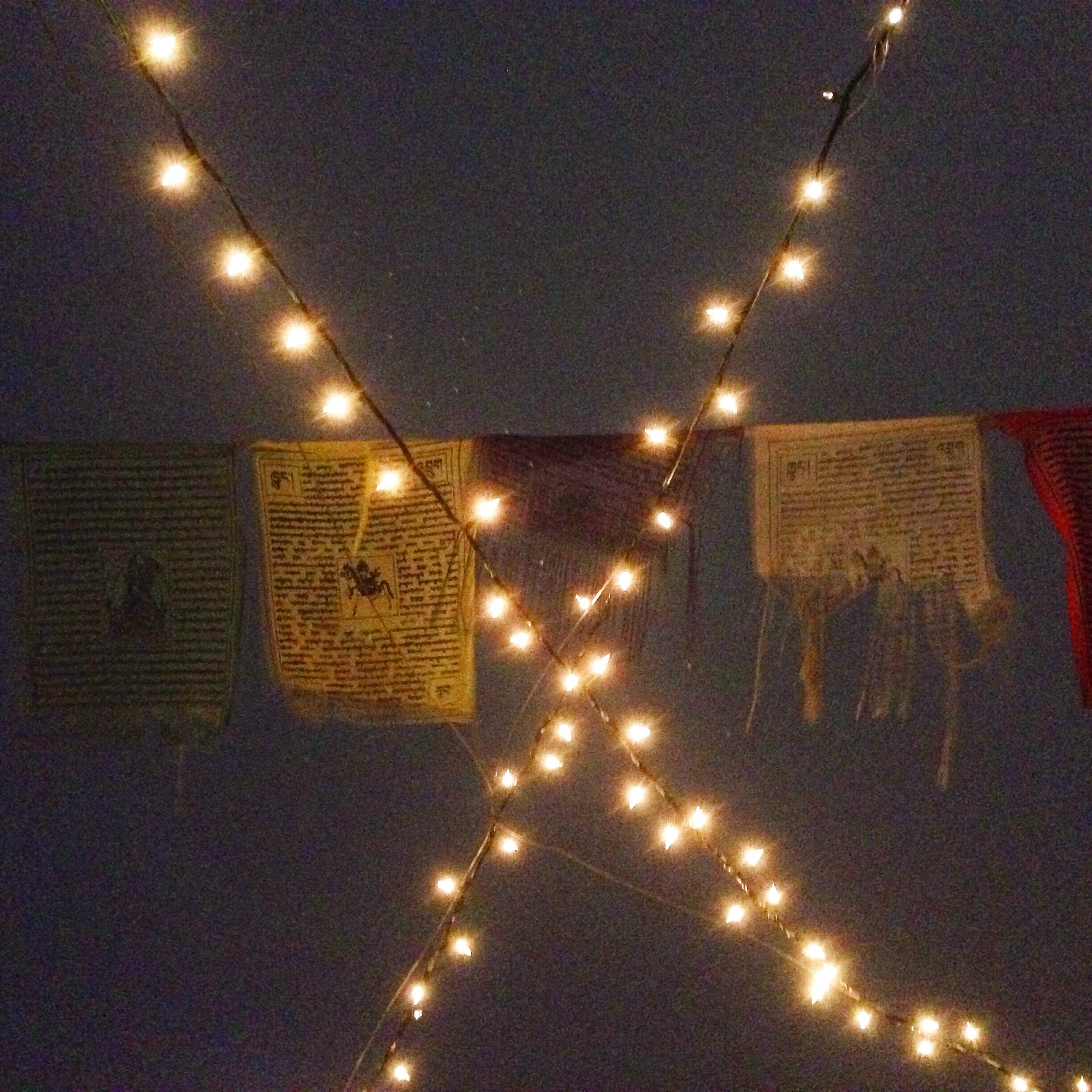
The light crossroad where intentions and the magic of practice meet. Above our heads: fairy lights and prayer flags taking wind.

To think! A million or so possibilities. Probably more. All things, meetings, happenstance, accidents, hard work, chances and blessings that assemble us under such bright stars.

PHOTO: Above: lights and prayer flags. Below: a potluck celebrating the 4 years anniv of Mysore SF; the certification of Magnolia Zuniga, making this strong lady the only certified Ashtanga teacher in San Francisco; and the new teacher…me. Thrilled to be joining both the teacher and the community.

Another World: Mysore SF

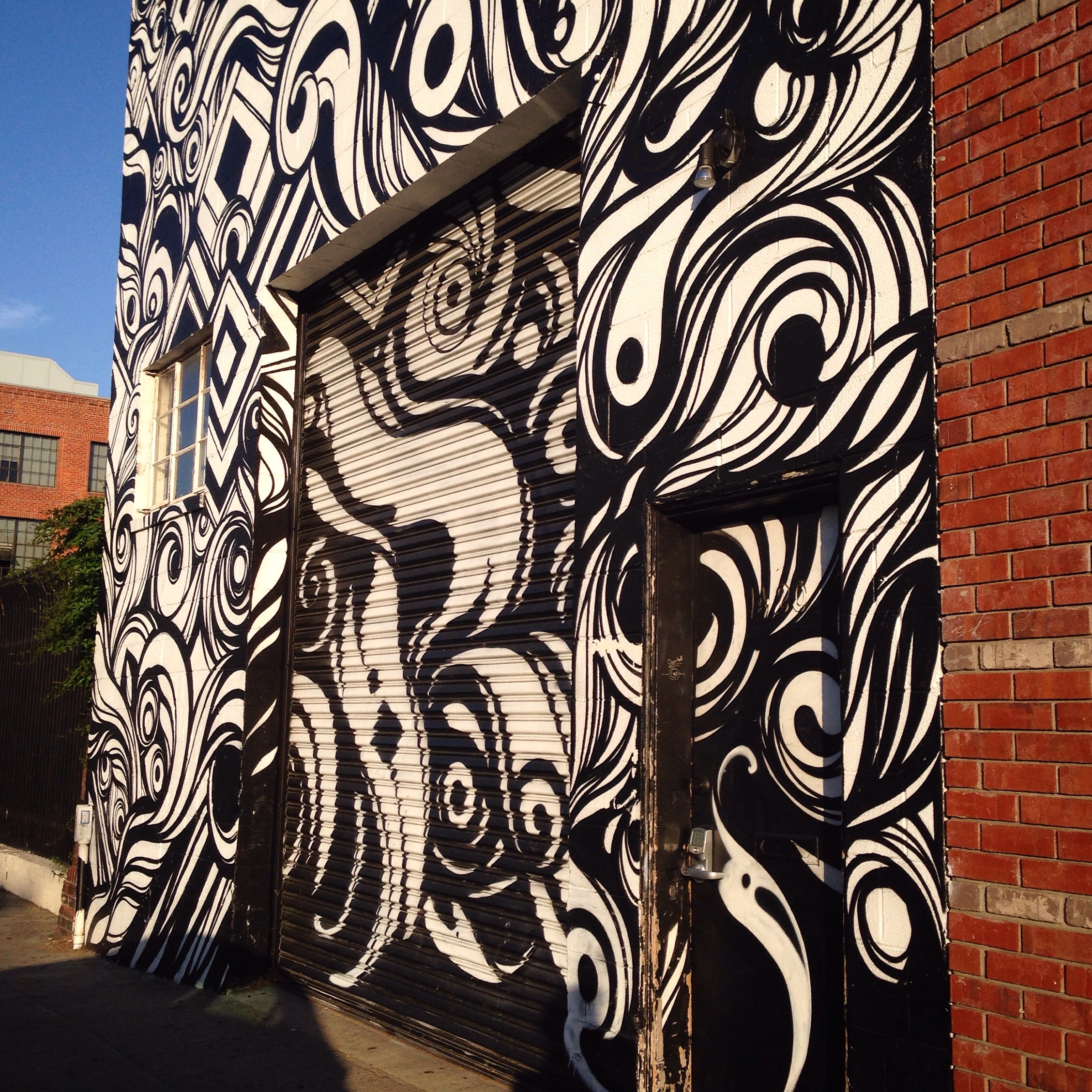
There are no signs here. No glitzy window dressings or clear glass where one might peek through and see yoga bodies. There is no merchandising. There is a door with a push-button code. Ok, the building, a dance annex, isn’t exactly non-descript, but the eye-catching yet abstract design that swirls and flows on the edifice mysteriously pulls one in—just like the practice that is going on upstairs in the early hours of the morning. This is Mysore SF.

Many Mysore spaces that I’ve visited has that in common. It’s low key. Usually not affiliated with a mainstream yoga corporation. It doesn’t dress up the practice. oys got its own energy, attitude. There is usually a great deal of condensation on the windows. The feeling of shanti or peace is not accomplished by burning incense or the sweet tones of new aged devotional chanting; it happens through consistent daily practice, a lot of patience, hard work, and on occasion a healthy dose of struggle just to remind you that you are alive and still well up for fighting the good fight. It is a room where people breathe and move. And if you stick with it, it’s a place where a kind of alchemy starts to happen.

I am always impressed and in awe of how practice evolves and translates in different countries, in different cities and spaces, and in the hands of different teachers–who, especially when they are teaching authentically, are all pretty unique. How distinct it feels and yet how it remains constant and true to the essence of Ashtanga yoga. So it is here, the same as everywhere, and yet also different. 

Like the fog here in San Francisco, students surely but quietly roll in, unfurling their mats like wings, breathing and moving, fogging up the windows, then rolling up their mats, returning the next morning to repeat the process. There is a steadiness to it, it’s substantial but also light. Like the morning fog rolling into the city, you can count on it. For me, coming into work these days is like watching the day break, seeing the world waking.


For more information, visit: http://www.mysoresf.com.

Turning Wheels

Things go round and round. It is a constant, this wheel of life, constantly, surprisingly changing. And yet, there is a cycle to it all. Some motif that repeats, a reminder or a landmark, which often gives us a certain context: this is where we were, this is where we are, this is where we are going.

In many ways, practice is like a wheel in movement. It is the constant in a changing self-scape. It is also the vehicle physically moving us from one shape to another, but also moving us from one state to another.

There seems to be innumerable “wheels” and such out there, tools for transport, for self-exploration, for greater understanding. San Francisco, where I have landed–or, rather, where I am still landing at–feels like that kind of place for me. I arrived here at the age of 10 as a young immigrant with my family. I returned as a university student at Berkeley. Some years ago, I arrived quite lost, an accidental tourist with the sole intention of securing a ten-year visa to India to study yoga, which at that time was all I could think of. And now, here I am again. This time, to do what I love, which is sharing from the rich yoga tradition that has both changed me in so many countless ways and has made me more tuned into who I really am.

It is a sight. When we see these wheels turning. That is a great part of the joy of teaching for me: to see glimpses of other people’s wheels in action through their practice. But to see it one’s life, to observe it, to feel driven by it, and to eventually also take the wheel…

A great part of this new turning is me coming to teach with Magnolia Zuniga at Mysore SF. For more information: http://www.mysoresf.com

Being Builders

IMG_3887

A good question: what are we building today?

The Ashtanga practice teaches us how to be builders, how to build strength, stamina, how to build our focus and a steady foundation on which to stand, on which to live.

Sometimes this building comes with a fair amount of destruction, retrofitting. It is necessary to pull things down in other to build up properly.

But the essence of the work is the making of ourselves, our growing, externally, yes, but mostly a deep kind of construction. How do we expand our breath, our minds, our spirit? How to we grow beyond our perceived limits?

PHOTO: Children really know where it’s at. A lunch with Manila friends and their children in Shangrila-la Edsa led me to this Lego store. We are surely born to build things.

Pre-practice Practice

IMG_3664

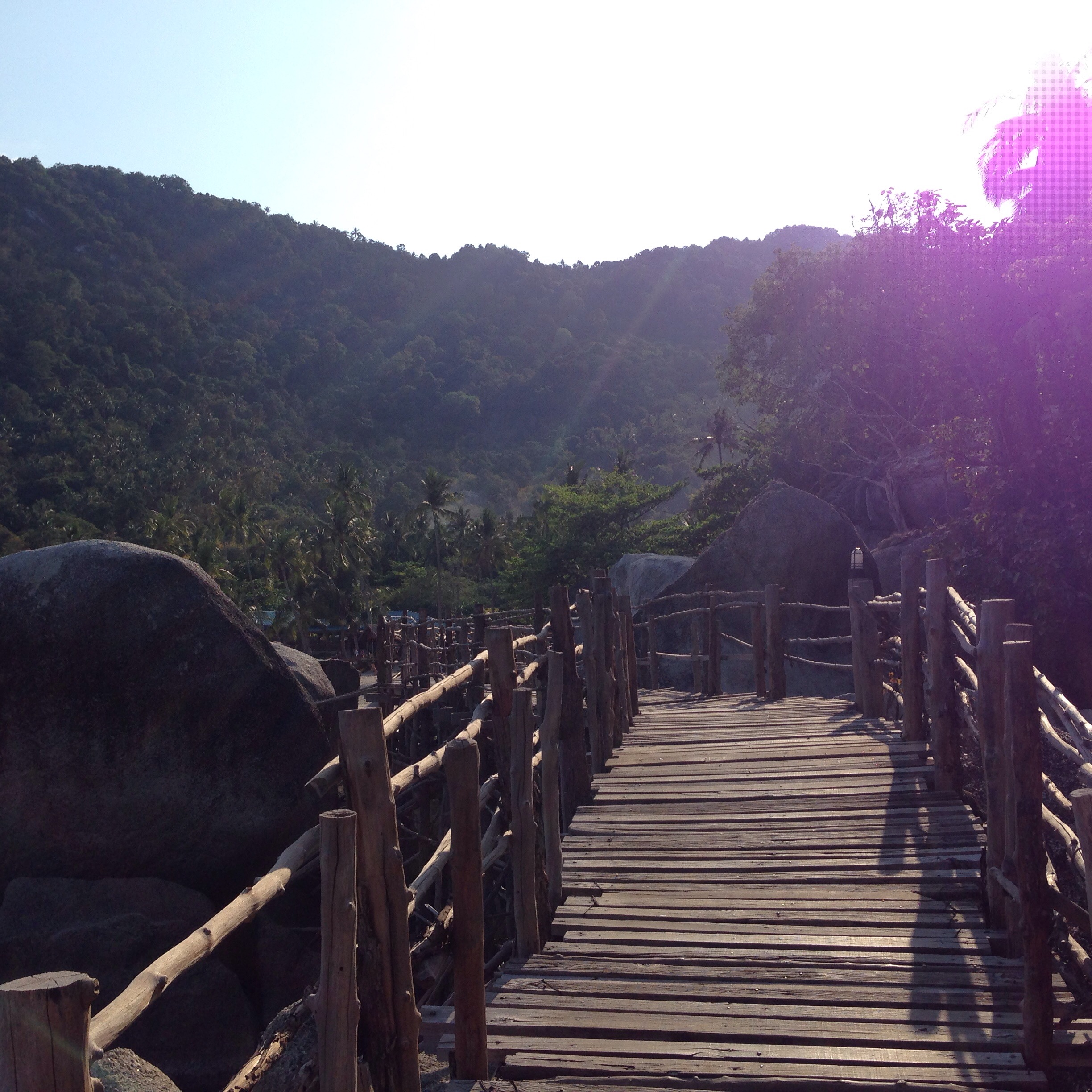
For a week, my friend and I walked from our bungalows in Haad Yuan overlooking the Andaman sea, onto the beach, where we would take off our flip flops and press the morning sand still heavy from the previous evening’s wetting with the pads of our feet. We’d hoist ourselves onto the rocks and the wooden walkway that creaked with weight and wound around the large rocks that lined the corner of the beach. We would then go up the dirt path, up the small hill, then down the small hill, to the next cove where we would stop, take coffee and water at the Sanctuary, before taking the dirt trail that went up another small hill, which would open up to Why Lan beach–sublime and pristine–and the platform that overlooked the shifting waves of blue, where we would finally practice.

A striking change from the first three months of the year, where going to the shala in Mysore, India entailed, hopping on a scooter and taking a 2 minute drive so dark and so early in the morning that most people would consider the hour nighttime. These mornings in Ko Pangyan, that hour of travel between my doorstep to my practice mat, reminded me of how precious it was to go to practice. And how going to practice is one of my favorite times of the day: usually in the morning, when the hour between night and day is shifting, when it’s quiet, not much of the day has yet happened, and everything feels ripe with possibility.

When you practice at home, this transition is so very subtle. Even in India, it happened so fast, there was barely time to note it. In Thailand, however, this process for me was lengthened–not to mention given color and freshness by the natural environs. Something shifts in this time when we go from our day to day (largely automatic) living to doing things concertedly.

By the last couple of days, I was savoring that walk through the elements. Undeniably, it was a beautiful path and I was absorbing the sights of the morning, the sunshine, the beach, the trees and island brush. But I also came to appreciate it as a preparation for practice, where I was moving from the ordinary, everyday world to one that is quite exquisite and extraordinary, where the breath extends time and softens the body, the world quiets, not to mention the mind, and calm presides, reminding me that the getting on the mat itself holds its own journey and process. How when we observe this time before practice, how sacred it is, we start to invite the essence of practice, of mindful loving attention, outside the parameters of our rubber mats. How in this spirit, we feel the sanctity of post practice, of waking up in the morning, of going to bed at night, and an infinite number of other poignant moments…

PHOTO: Wooden walkway, Haad Yuan. Actually nearing sunset rather than morning. So grateful for my dear friend Clara who brought me to magical bay in Ko Pangyan, also to the lovely teachers Kerstin Berg and Mitchell Gold who support the practice so beautifully during the season there. The week on the island was a great reminder of how much beauty there is in the world. There is so much to take in, to love, to appreciate.

The Shala Seeding

20141218-171932-62372945.jpg

It’s my second to last self practice morning in Cairo and I walk through the Shala door, instantly struck by heat–the unmistakable warmth that comes from consciously moving bodies, from that deep breath with sound. I look down and am excited by the numerous pairs of footwear, more than what could fit on the shoe rack behind the door. I cannot help but smile in excitement, “it’s really happening!”

The Shala is the new yoga space, opened by my friend Iman Elsherbiny and her partners Lina Almari and Fadi Antaki, which partly drew me back to Cairo this last time. A little known yoga treasure in this part of Cairo, The Shala boasts of the only regular traditional Mysore program in Maadi (Mysore is a self paced way of instruction that empowers students to own their practice, to move consciously with breath, to learn the practice that is perfect for their body at the present moment) while also offering children’s yoga, TM meditation courses, kirtan, and vinyasa flow classes.

It’s been a joy to see the how each day is different, how the classes are filling up over the months. And then to come into a room that’s heating up, well, it’s pretty exciting stuff.

Of the teachers within the Ashtanga yoga tradition, I fall into a particular breed that move, from one place to another, covering programs, guest teaching–I do my part in the propagation of the yoga practice, spreading yoga dust with my traveling yoga mat.

However, a different kind of work awaits the teachers like Iman, brave enough to open shop and hold space on a regular basis (the gold standard amongst Ashtanga teachers)–they are like seeds, rooting themselves into the ground so that they can build a proper foundation in which a space as well as people’s practices can grow. It means overriding the wanderlust, it means showing up each morning no matter what. This is where the magic of daily practice happens, under the care of those willing to seed.

It’s been a very special time, this seeding of The Shala. It’s been really special to see this space at its infancy, to see it at so many “firsts”. I look forward to seeing it grow.

PHOTO: Mysore mornings at The Shala: seeding, growing! Mysore classes with Iman are 8-11am Sunday to Wednesday. The Shala is located at no 6, Road 200, Maadi.

Found in Translation: Surrender

P1250814

Osaka, Japan. More than one month down, less than one month to go.

Being in Japan, wandering the streets, unable to access the overabundance of information, which translates into–for a foreigner like myself, anyway–white noise, reminds me of Bill Murray in Sofia Coppola’s “Lost in Translation.” How he navigates Tokyo with a charming sort of disconnect.

Despite the language barrier, teaching here, reminds me how universal the language of yoga is. And thank goodness, because my embarrassingly rudimentary Japanese just barely includes instructions on breath and straightening knees.

My moments of Lost In Translation, well, they’re not too bad. If anything, they’ve been great opportunities for greater understanding .

Two weeks ago, during Satsang, we looked at the word “surrender”–quite possibly one of the most overused and often misunderstood words that pours forth from the mouths of yoga teachers. I admit, I am a fan of this word! It works so well at capturing the spirit of letting go, of relaxing into the moment.

In Japan, however, the word doesn’t translate so well.

Telling a Japanese student to surrender can be a little confusing, especially when it translates to “kofuku” or “to give up fighting.” Translated thus, surrendering seems like a strange suggestion. Give up?! But why?!

Another word, I’ve been told, that fits better is “yutaneru,” which means “to let it go.” In the yoga context it is the letting go of our tension and of our expectations and attachments; it is allowing for flow.

In Satsang that Friday, I explained that surrendering is letting go of the ideas and the patterns that do not serve us–that we give up, not a fight, but all the things that limit us, that keep us from expanding.

Truth: understanding surrender isn’t easy for any culture, for any person. We all have our holding patterns. It hasn’t been easy for me personally either. Surrendering is a constant challenge; and learning it has been at the core of my own yoga practice and life journey. Maybe that’s why student/teachers like myself keep going back to it. We know that’s what needs to be done, we also know that it’s pretty damn hard to really do it. We are all just learning.

I always remind myself that surrendering (like yoga) is a process. It’s not about achieving an end goal, but just allowing ourselves to embody the action, allowing ourselves to let go little by little and to flow more and more. Like Guruji said, “Practice, practice all is coming.”


Grateful for the lessons in surrender here in Japan. Thank you to teacher and fab assistant Tomomi Takeuchi for sharing her spot-on translation of “surrender” in Japanese. 

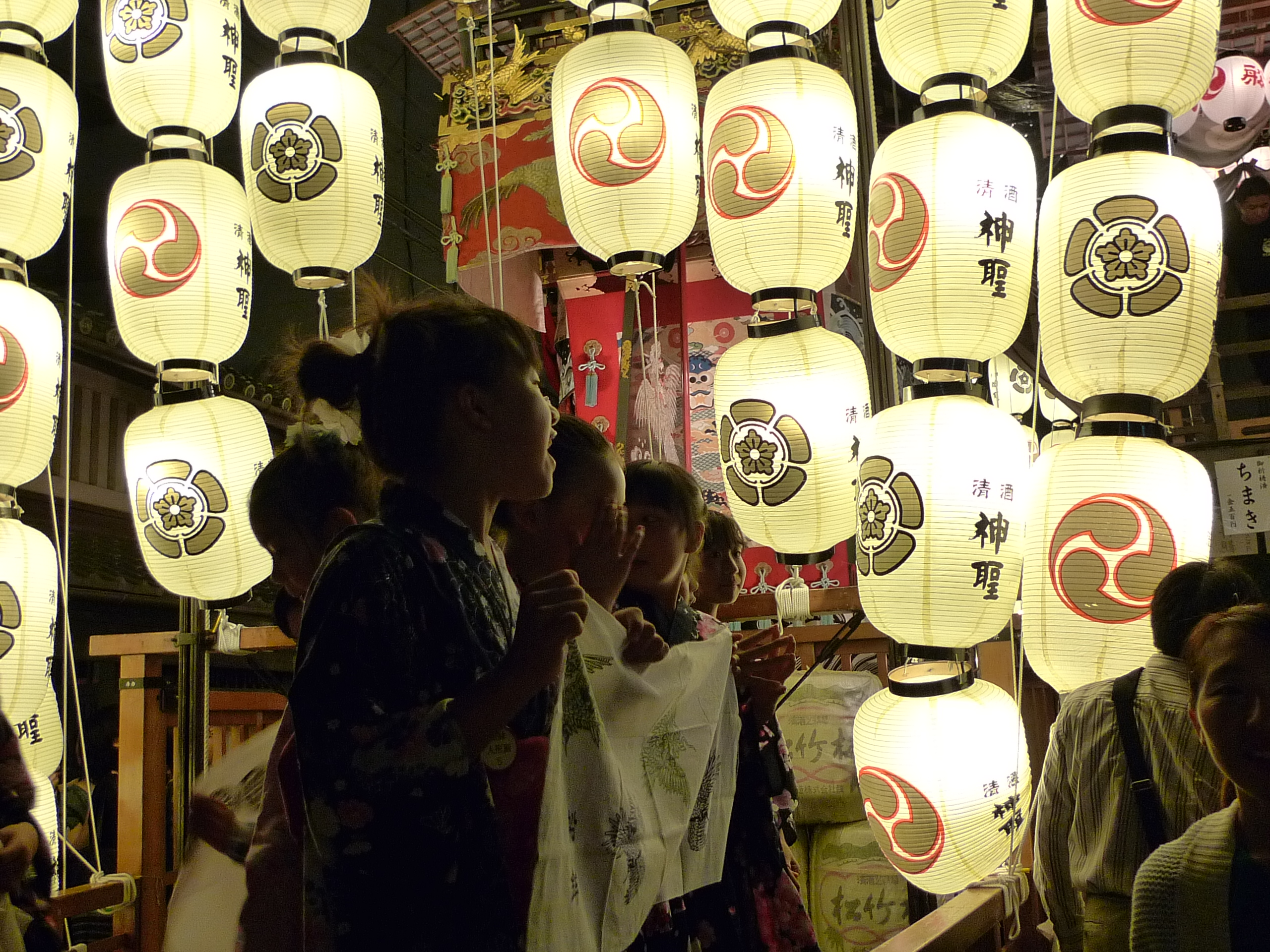
PHOTO: Gion Matsuri, Kyoto, Japan.

Sky Is the Limit

20140803-055917-21557797.jpg

Often, we look at practice as a physical form. We are in the body. We perceive ourselves in both our expanding abilities and our physical limits.

We get stuck, more often than not, in the asana and we identify with the boundaries of our body. We frustrate ourselves. And that “stuckness” spreads into our mind and into our hearts.

We forget that the real challenge is not within the body but to go beyond the body. That true expansion comes through self-compassion, love and acceptance, by learning that the so-called limits of the body are lessons for the soul and the spirit. That going deep within is as much a journey of expanding outside ourselves, breaking down all the walls of separation. 

Like the photo above, the practice is seeing beyond the limits. It is seeing the sky that goes on and on and on…and being struck by the wonder and miracle of it as it transforms dramatically moment to moment.

PHOTO: Sunsets, a beautiful metaphor of the unending cycle that is life and practice, always amazes me. Kyoto, Japan.