In Mystery


img_3366

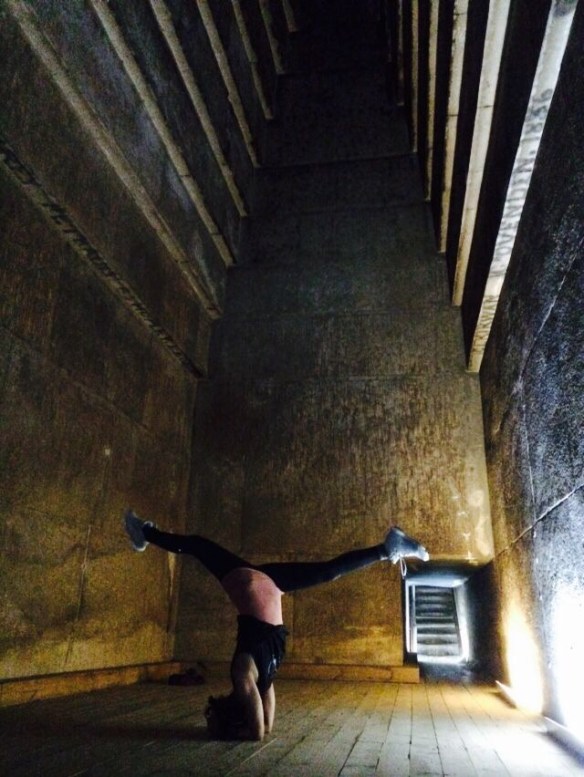
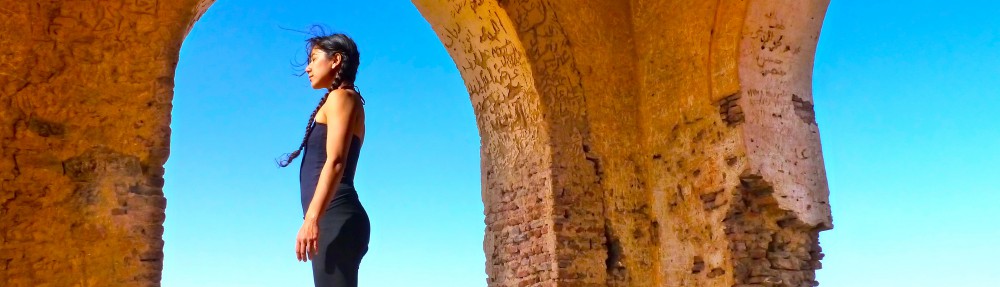
Headstand within the Red Pyramid in Dashour. Photo by Yasmine Abdul Aziz.


We inhale and exhale, sweeping our bodies from one direction to the next, moving from one posture to another, we are making shapes, we are moving energy, we are slowly shaving off the excess with painstaking compulsion, the way an archeologist might excavate ancient ruins with a soft bristle brush, one careful stroke at a time, determined but wary of damaging the unknowable treasures that possibility lie beneath…

At least that’s how I feel on the days that I am patient with myself and with the practice–that each breath is a soft breeze blowing on my massive pile of dirt, gently carving out the me underneath it all, the one I’d really like to get to. The other times, well…I’m actually shoveling away, pushing and prodding, making new mounds of dirt before getting bored and starting at a new spot. It’s tough work this business of personal excavation.

After years of yoga practice, I can honestly say that as much as I’ve uncovered (and the amount of discoveries have been significant!) there always seems to be more underneath the surface, more evidence, more history, and with every find, more questions. I’ve been big on digging deep, on self-inquiry and detective work. And because I can be quite heady and I like to figure things out, I’ve taken it all very seriously.

But even this noble intention of self-discovery has its pitfalls. Expectations are laced with disappointments. To look ahead towards a future destination pulls us away from the journey at hand and, ultimately, the present moment. I often wonder, if by throwing myself so doggedly into “process,” I have also pulled myself away from the spirit of practice, true sadhana.

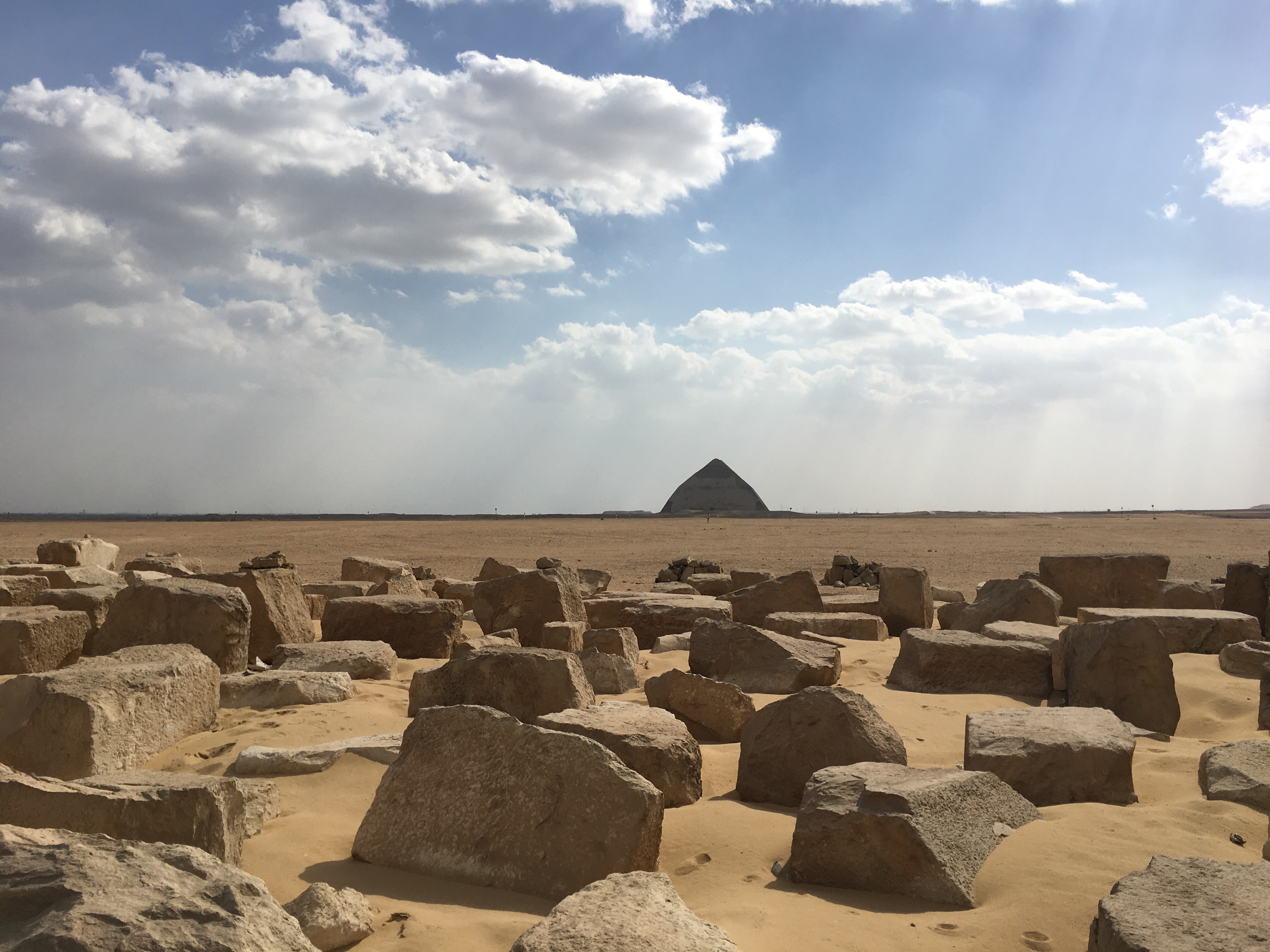
On a recent retreat to Ardi in Dashour, Egypt, a group of us went to visit the nearby Red Pyramid. We went in and walked around, all of us in quiet awe of the 104 meter-tall (341-feet) structure built around 2600BCE, a precursor to the Giza pyramids. Archeologists, historians and Egyptologists have studied the pyramid extensively, they know its dimensions, what it’s made of, who built it and for what purpose, and yet we continue to marvel at the mystery of it, its strangeness, its un-fathomability.

What if practice were less about unlocking the mysteries and more about seeing them and acknowledging them? What if I simply accepted that I am my mound of dirt, my hidden treasures, my ancient stories, my lost city, or that there might not be much there at all, and went on to breathe into the whole lot of it anyway, enjoying the mystery of being, rather than constantly trying to figure it out? What if I looked at myself, not as a problem to be solved but a puzzle to revel in and dive into. The destination might be the same in the end, but I reckon the journey would be different.

Personally, I vacillate between the pull of my own ego and the spiritual practice. I know the lessons, not to grasp and not to reach. But I’ve also been taught to put in appropriate effort, to cultivate discipline and a healthy attachment towards my practice–a little too much effort, however, and I cross a line between willfulness and surrender, and there I struggle. And where is the joy in that?

In the end, practice is practice. We’ll shift and move even if we don’t mean to.

The ongoing excavations are unlikely to stop for me, not only have I been at it a while, I actually like digging. But I also want to cultivate more contentment being In Mystery. I want to understand that I  don’t have to understand everything about myself, that not knowing has a function, that uncertainty contains magic and possibility.  Once again, here is the recurring lesson, think less and just practice; all is still coming.


Resolutions Take Practice

img_2855

Utkatāsana, Led Primary last Saturday at Nūn Center, Zamalek, Cairo.

As we launch ourselves into 2017, we see a lot of the stuff that new year’s are made of: the goal makings of the well-intentioned that gets folks to the gym or to yoga classes, to eating balance meals or quitting longtime bad habits–and it’s all well and good, when we’re in week 3 of January.

As the days and weeks wear on, however, how many of our resolutions will be set aside for difficult schedules, work or life emergencies, or for the more ingrained negative patterns that are themselves fighting for their place in our lives at this point. For whatever reason, prioritizing our health and well-being is a serious challenge.

For just about my entire life, I remember starting the year strong with such intentions only to have them peter out as the days and months wore on. This changed for me, however, some years ago. Without me noticing, I started to manage to stick to new goals–not all, some have continued to be elusive–especially of the creative and administrative nature. However, I saw marked improvements the years that I really started to practice with regularity.

Learning to practice, I realize now, fueled my resolutions. Through the regular practice, I learned the difficult job of showing up for myself, for doing something for me, because it was good for me and I enjoyed it. It wasn’t easy in the beginning, either. Though I knew the benefits, I also felt the difficulties: waking up in the mornings, being without a teacher, being confronted with my lack of coordination and my own belligerent body.

Practicing taught me how to stick to things, even when it was hard. It taught me to be patient and forgiving towards myself when I felt like I failed, especially during those periods that I fell off the practice wagon. And it taught me that the important thing was my willingness to come back to the mat and to try again. And as I learned these lessons through practice, I started to know how to practice the other things that I wanted to manifest and change.

And while yoga may not be the answer to your resolutions, it might actually help because resolutions don’t simply happen when you decide it. They become realities when you practice them with regularity and gusto–and this is something we learn in the ashtanga system. Once again, Sri K. Pattabhi Jois said it best: “Practice, practice, all is coming.”


I continue to teach here at Nūn Center in Zamalek, Cairo. Come if you would like me to help you power up and practice for the new year.

Morning Mysore is Sunday to Thursday 7-11am; Evening Ashtanga Monday and Wednesday 8-9:30pm. For more info on the ashtanga programs at Nūn http://www.nuncener.com. 

World of Magical Transport


It is a world of bright vermillion, emboldened by the afternoon sun, slits of light and forest green flicker through from above and from the sides like an old moving picture. Wooden torii gates of all sizes mark the paths up and down the mountain. And to walk underneath them is discovering an older Japan, a land full of holy places, gods and spirits.

After the main entrance of the shrine, the smaller wooden torii gates are thin, low and narrow, closely bundled together. To walk through them, is like being pulled gently through a tunnel; the transportation into another world begins. This is the rabbit hole in which dear Alice falls and falls and falls, dropping down into a reality in which perspective is suddenly different. The experience here, however, is much gentler, much more wonder-full, without the slightest feeling of struggle. I become small or the gates grow bigger (depending on the perspective) further up the mountain. They vary in size, but never again so small or tightly knit as that first level.
Walking up Fushimi Inari shrine, built in 711AD, in Kyoto, Japan is an experience. It feels magical and out of time. Even with throngs of tourists bustling past or falling behind, the journey up and down the mountain lends itself to quiet isolation.

It becomes more quiet the higher up the mountain–at least late in the afternoon–people are more sparse, simply dropping away, both literally and figuratively, as many turn back, feeling daunted by the seemingly unending torii. I, on the other hand, feel challenged, I want to know where it goes, I want to complete it. (This rationale gotten me to scale some pretty interesting heights).

I have been looking forward to returning here. Some places you can see once and that’s enough. We tourists are always looking for something new to titalize the senses. But Fushimi Inari, the memory of it–I knew I wanted to go up it again.

Torii gates are symbols of the passage between one reality to another, between the everyday to the spiritual world. For me, walking beneath these red-orange gates is a ritual that actualizes a spiritual journey, in a way that the ashtanga practice, aptly “sadhana,” similarly does, as well.

Breathing, moving through the postures, holding a posture those full five breaths–each posture, each breath is a gate, through which our body must move and from which the body emerges more subtle, purified by action, and more fortified too. The physical practice softens the body, and with it the mind. Slowly, these movements in space help move us up and down that deep internal mountain with its sometimes sweepingly gentle curves, other times steep ascents and descents, sharp turns, and, on occasion, fairly flat ground.

Our practice, which starts with surya namaskar, recalls rituals of old, morning prostrations that connect us to nature, the nature that is all around us, but the one within too, all of it connected to the Absolute. By getting on the mat, we engage in a ritual of sublime regularity, it is a transportation device that brings us closer to our spiritual world.

Fushimi Inari, the Ashtanga yoga practice, and other rituals of spiritual transport serve the purpose of softening the boundaries of reality, allowing us an experience of a world beyond the veil, a realm of spirit or magic or God, what have you.

Three years ago, I didn’t make it up to the very top of Mount Inari, turning back to make an appointment in the city proper. This time I was determined to make it to the highest point on the mountain. The odd thing was that I almost didn’t realize that I made it. I stopped to look at the trail map, only to notice a small sign, only slightly bigger than a post card: “Top of the Mountain.” I looked around. I was, in fact, at the top, there wasn’t any more mountain to scale, just more torii gates going down.

The top was barely noteworthy, except for the funny feeling that I nearly missed it. And then, like that, I was simply back on track, on with the trail, more torii gates as I descended the mountain.

Of course, how fitting! What better example of it’s-not-about-the-destination-rather-about-the-journey.

The magic of Fushimi Inari isn’t getting anywhere, there’s no venerable God-like figure waiting up the top of the mountain waiting to give you a certificate of completion and a pat on the back. There’s an old man selling refreshments and snacks from his shop, and, of course, more shrines, more offerings. No one even attends to them, there are no priests of facilitators between you and your Highest. Nor does the path end at the top, the torii gates go on quite a bit, though they become quite sparse towards the bottom, where there are more open spaces between them, more forest, as if the mountain is gently loosening its grasp, helping one exit from its otherworldliness. And we see out beyond the red: trees, nature, the world. Eventually the torii gates peter out completely, without ceremony or fanfare, into shrines interspersed by houses, before you know it, you’re just in the local the community, a short distance from the entrance of the shrine compound.

I realize my own mistake, there is no end, only more journeying, but one that must now be continued in real time, in real life, in the flesh, bone and blood world that we live in.

In our own yoga practice with its clear beginning and end, the spiritual communion seems clear. But those who have been practicing long enough also know that the long arms of our sadhana is not content to stay bound on our rubber mat, that the juiciest bits of transformation happen in our lives, our work, our relationships.

These tools however exist for a purpose, they remind us that there’s more, that there’s more magic, more blessings, more world to love and experience.

The Practice of Flight


Ashtanga has this gravity defying reputation. All over social media there’s a plethora of photos and videos of ashtanga practitioners displaying incredible aerodynamic feats, floating/levitating in and out of postures. All around there are workshops that focus on these technical aspects, of jumping forward and back, of engaging bandha to the point of slowing down time, of achieving this lightness of the body that mimics flight. And why not, it’s fun and looks amazing, and moreover it builds a particular awareness in the body.

I remember in my earlier years of practice, I loved it, I loved the feeling of height, and flight, that moment of suspension as I moved my body forward on the mat, before landing. I remember a fellow student once compared me to a grasshopper. And, if I remember correctly, I rather liked the comparison.

I’m not much of a “flyer” anymore. I’d probably still enjoy it, but over the years of studying with Sharath Jois in Mysore, India, that among other bits and pieces have dropped off the program.

I think for some strong practitioners this comes quite naturally. What I realized, however, for me, it did not. A lot of extra energy went into that one particular inhale, the effort was disproportionate, and practice is about an evenness of breath and effort. And extra effort in jumps, meant extra work for shoulders and arms which then resulted in tighter albeit stronger muscles.

Letting go of it, and for sure attachment was there, was just as much a part of me growing as a practitioner as it might be for someone else who chooses to develop these abilities.

Over recent years, practice has been more about streamlining, taking out the extra flourishes, those dramatic flares, which– when they are effectations–are simply distractions from the meditative flow of sadhana. It’s been about efficient use of mind and body (at 40, I am more concerned with being able to have a healthy and sustainable practice).

With a practice like ashtanga yoga, I think there is more than one way to fly. There’s the kind of flight that’s physical and really stunning to see. Then there’s another kind, and this is the one I find myself more and more impressed with, the practice that glides with such ease it barely registers. These belong to the super heroes in disguise practicing quietly beside you in the shala, so subtle until that one sliver of a moment you note with much surprise that they are doing something quite extraordinary. Likelihood is that there are even more practically invisible yogis who are totally going unnoticed, soaring above us all.

Whatever our mode of flight (I think different ways suit different people), ashtanga simply inspires us to take off to greater heights–and to greater heights we must go, no matter what that looks like.

Inner Dance in Osaka

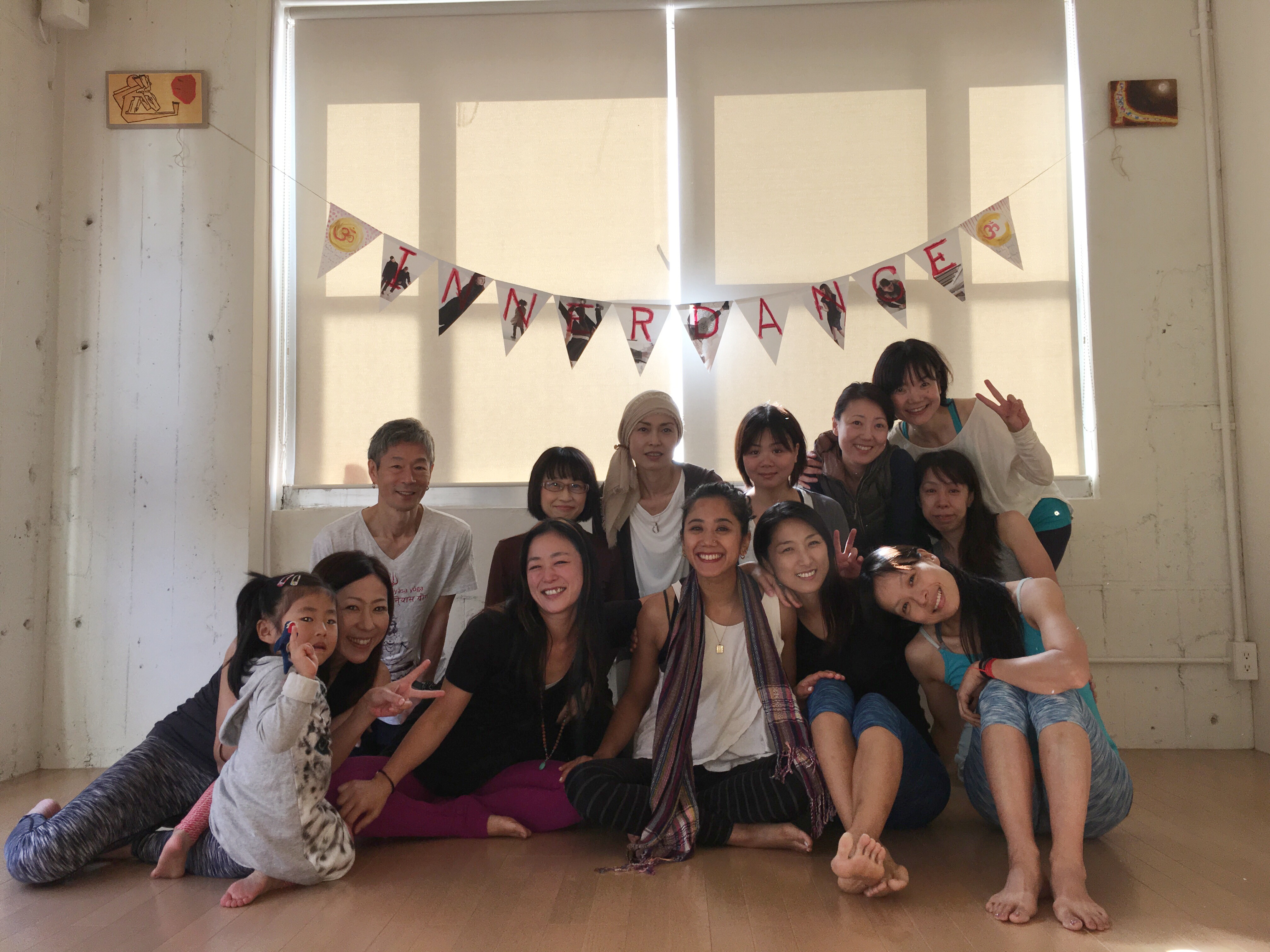
Ashtanga is usually the force that moves me around to different places, I sometimes forget that I’ve shared inner dance as well in most places I’ve been to. And that this little known healing modality from the Philippines has made its own impression along the way. So I was happily surprised to be asked if I had any plans for it again here in Osaka. Why not, I figured, even on the fly, 2-3 folks would make for a good morning. 

I remember feeling uncertain when I first offered ID in Japan; the culture here can be reserved, I wasn’t sure if trance dance states would translate. 

Truth is it’s incredibly easy to facilitate the healing modality here, there isn’t much resistance, surrender comes naturally to many participants. 

I think it says a lot about the the heart and soul of the Japanese. Structure and form is important to this culture, we mistake this for left-brain pragmatism, which it also is. But if we look at the shrines, the old temple grounds, the intricate gardens, cuisine–all designed to touch essence. I think that’s what makes inner dance accessible here, there is a door, it is already open. 

Inner dance is a moving meditation, healing modality, way of personal inquiry–or none of these things. Sometimes, I think I don’t really know anything about it other than it works. There will be one more inner dance in November, if you’re in Osaka and are interested to join, message me at kaz.castillo@gmail.com. 

The Light Is On, Mysore Room KL


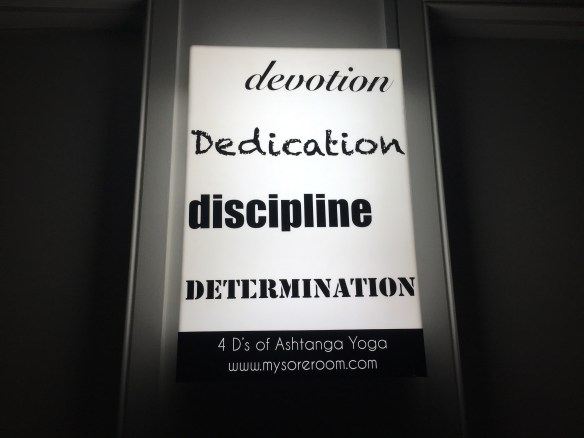
In the mornings that I was teaching there, turning on the lights at Mysore Room in Kuala Lumpur was a bright reminder of what my teacher Sharath Jois calls the 4 D’s of Ashtanga Yoga. “Devotion,” “dedication,” “discipline,” and “determination” would light up the room, which was still dim before sunrise. These four attributes make a good ashtanga student, to be sure. The kind of student who gets up 6-days out of the week to meet their physical/mental/emotional edge sometimes before the crack of dawn, and then get on with the rest of their day. Truth is most students don’t come with these D’s built in.

Practice itself cultivates these characteristics over time. When I started practicing ashtanga yoga, I had no idea what it meant to be devoted to a spiritual method, I certainly didn’t know what it meant to dedicate myself to any one particular thing, nor did I have the discipline or determination to do so. My relationship with ashtanga started with one class, which eventually turned into three to four classes a week, and usually in the evenings after work. I would even take up other yoga styles, once in a while, for fun. Eventually, I was practicing in the morning daily. Over time, I was practicing more and more with devotion, dedication, discipline and determination. They came naturally with practice–sometimes with ease, sometimes with difficulty, but always quite naturally.

So if you’re feeling lacking in the 4 D’s, not to worry, everything comes with practice.

It was a pleasure to cover for my friends Yan Ong and Manuel Ferreira in their school Mysore Room in Kuala Lumpur. These two have created a very special place of learning ashtanga yoga in the heart of the city. Once traveling teachers, their move home to set up shop in Malaysia is so inspiring for me. For information on their classes, see www.mysoreroom.com.


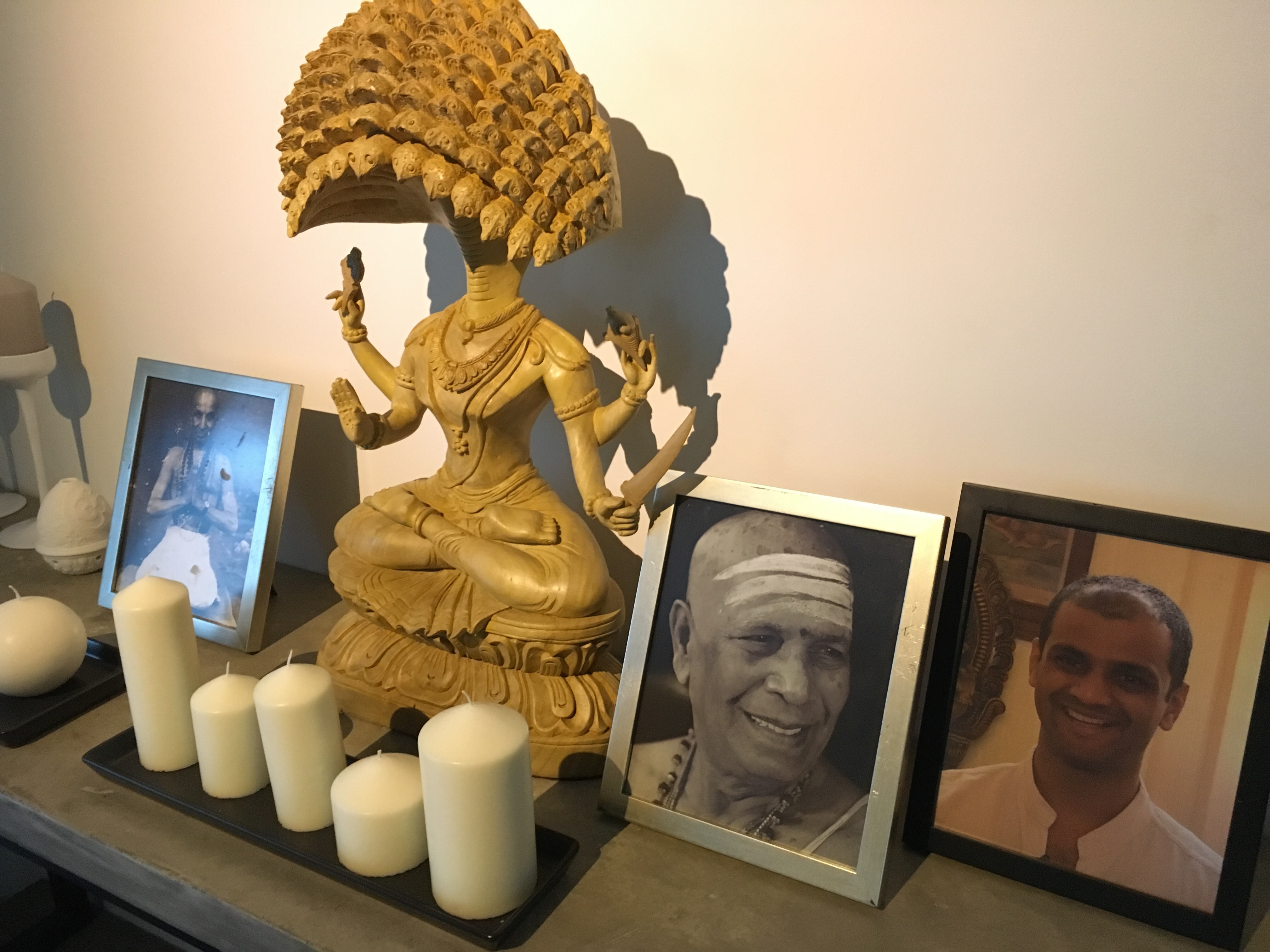
The ashtanga lineage: Patanjali, Krishnamacharya, Pattabhi Jois and Sharath Jois watching over Mysore Room.


Catching Wind, Empowering Practice


So many times I have found myself blown in certain directions. Mostly, though not exclusively, with incredible positive outcomes. Even gale force-like winds and maelstroms, which might have moored me into isolation or thrown me into some catastrophic disaster, would eventually abate and I would land wherever with the softness of a feather. I consider myself blessed to have had such good luck to be propelled so. I also know, that in many ways, I called for it, that I invited the elements myself to move me. Time and time again, I’ve taken myself to some peak, opened my arms in surrender, and like wings unfurled, I would get picked up and thus be transported.

I wondered, however, what would it be like if I participated more in this act of flight? The last year in particular has been about recognizing the difference between flowing with things and flying myself.

It’s been an amazing process, coming to a deeper understanding that all this raw energy can be transformed and directed. That I am not prey or play thing to the forces I perceived to be much greater than myself, but, instead, an active player, instigator, herder of energy.

There is so much in this; the world at large is packed with potential energy, raw, unharnessed. In the microcosm of us, we are likewise full of unrealized vitality and force. When we learn to access this, when we learn to use it skillfully, to move it in certain directions, something huge shifts. We are empowered.

This naturally happens when we practice. There’s this wealth of untapped energy in our bones, our connective tissues, our muscles, our breath, our thoughts and hearts. Our practice helps us soften the gross layers, physical and subtle, emotional and mental, that keep us from connecting with our own physical/metaphysical body.

When we practice with consistency over a long period of time, we start tapping into these energies, which then become apparent in the practice itself. We extract energy from the practice and it fuels us. Our bodies become efficient, so does our breath, we develop an economy of thought and effort and before we know it, we are no longer consuming energy but creating it, so ample that it overflows and drips into our lives causing all sorts of creative bounty /mayhem.

This is my tenth year of yoga practice. It’s not a very long time–I continue to feel like a babe in the woods–but it’s not a short time either. Whatever length it is, it is long enough to observe the effects of practice, how it’s changed, how it’s changed me, how my life has changed because of it.

These days in Cairo’s Nūn Center, there are a number of beginners and some students returning to practice after a substantial break. And naturally the struggles that come with starting an ashtanga practice begin to appear: the body gets tired, the mind wavers, the internal debate on whether to go to class starts when the alarm rings in the morning.

I remember my teacher saying that if you never leave your practice, it will never leave you. I still have those days where doing my own practice is like going to battle with myself. What he said, though, it’s true, and it gets me on my mat, it gets me through the first sticky sun salutation, and, eventually, the practice helps me catch wind.

Mysore Classes here at Nūn continue. Sunday to Thursday, 7:30-10am. This week, we are adding Ashtanga Basic classes Monday and Wednesday at 7pm. These classes can be used as an introduction to the morning Mysore program. Drop ins and all levels are welcome! 

Beginning Practice: Planting Seeds, Finding Flowers

IMG_4890

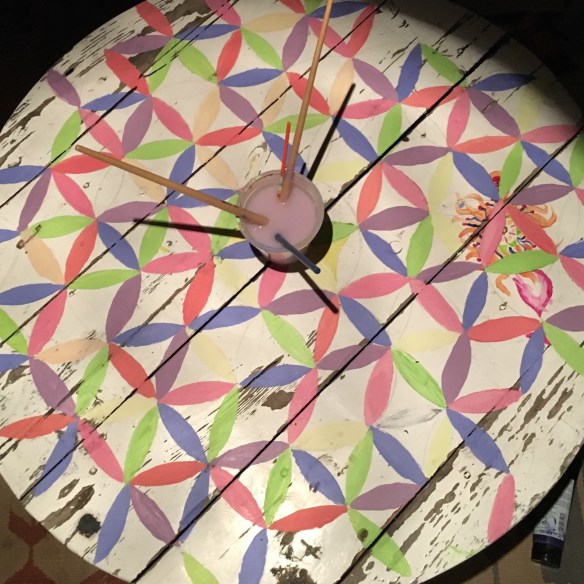
Over the last weekend, I was with friends who had moved into a lovely new apartment, and I got swept into a small project of turning an old wooden table into a bit of homemade art. A compass was purchased, along with a pencil and a selection of paints, the table was portioned into concentric circles, the first seven of which made up the seed, the rest that followed blossomed into what was to be the flower of life–though from my up-close perspective of the table, I couldn’t really see it. I saw the circles, and the folds between circles, I could see patterns, but not the thing itself. Even as I painted, I focused mostly on the surface of each petal that I chose. My vision was narrow, but it needed to be. The few times I tried to look at the entire table, it was disorienting. So, I stuck to the task. I carefully stayed within the lines drawn up in pencil, painting the color evenly in the allotted spaces. It wasn’t until later, when I looked at it from a distance with more of the petals painted that I could see what we were actually working on. I was genuinely surprised and impressed by our efforts. There I was, painting blue petals, spaces between circles, but really we were creating an entire flower.

It’s the beginning of week 2 of teaching in Cairo and at Nūn, here, we have a few beginners, as well as some practitioners who are reviving their practice. These days, I realize, are about painting petals. 

I have asked students to breathe and move with the same sort of methodical brushstrokes, to simply focus and stay within the lines. When they are done, I ask them to do it again, committing it to memory.

Perhaps this is true with our practice in general. When we start learning ashtanga, we have a suspicion that there is a great framework, or perhaps we were told of this alleged intelligent design that connects everything, but we don’t really “know” it, not in a way that we understand it, or can even know what it looks like, not when we’re learning to breathe and not pass out through sun salutations. 

We enter a room and it’s obvious that there’s some sort of pattern that repeats itself, but we don’t really see it as it is, mistaking it too often as its form, asana like acrobatics. It’s probably best that we don’t see the big picture, which is always potentially growing as long as we practice. It’s overwhelming, too much information. Seeing too much, also, we get caught in wanting to look ahead–and then we steal from ourselves the opportunity to participate in the great unfolding. So we learn the practice piece by piece, bit by bit.

This is a great way of learning. Each posture, or even element of a posture, is a digestible module to be learned and digested before moving on to another unit of learning. Still, nothing is ever lost because everything is reviewed and repeated. The body is maintained, the mind is continuously purified. The mind and muscle memory are sharpened together. Before we ourselves know it, we have a pretty full bodied practice. A complex system of breath, attention, movement and postures that all work in harmony with each other. So many seeds grown into a garden.

Whether one is a beginner or a long time practitioner, the planting of seeds, the painting of petals, the growing, the tending of garden never ceases. For me, this is what keeps Ashtanga interesting. I am constantly growing, constantly finding myself surprised to see the ever evolving “big picture.” The practice keeps my focused on the details, invites me into the nitty grittiness of it, gives me work to do in tidy digestible bits that are just the right size for me. It keeps me engaged in that work, just enough, that I don’t get distracted by the usual stuff and, also, don’t get hung up on the big picture itself. 

This is one of the great gifts of this method–also, one of its challenges for practitioners, and, yes, but for teachers too. I am constantly having to check my desire to share, which may be born out of the best of intentions, but may also be feeding off some need to indulge my own ego (that to be a good teacher, I should perform, deliver, yadahyadah…), against the integrity of the practice. 

I may leave my friend to finish painting her table, but I take with me the reminders it has given me in relation to practice: the magic of economy (how less is really more), that seeds grow when properly grounded and showered with patience, attention and love, that everything comes in due time, usually with incredible and surprising results.


Am excited and grateful to be currently sharing at Nūn Center here in Zamalek, Cairo. I will be here for two months, teaching a Sunday-Thursday Mysore, 7:30-10am. For more information: http://www.nuncenter.com. 

Inner Dance in The Shala, Maadi

IMG_6676x

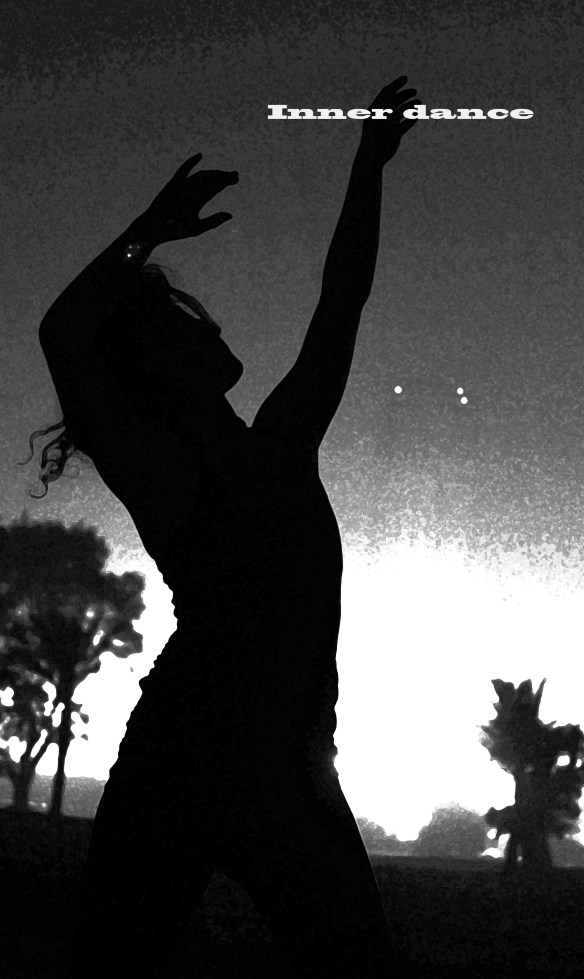
Inner Dance is an experience. I always have a hard time explaining this energy work because it wants to be felt more than observed. It wants to be danced with. Sometimes it’s a slow dance, some times it’s a mosh pit. It might not look like any kind of dance at all. It kind of depends on you, where you’re at, what you’re deep internal music/musings might be at that given moment. And though we are in a room together, it’s kind of like dancing with yourself with, the door is closed, the volume is on high, and you feel free and light enough to go for it. To dance like no one is watching.

Thursday, April 21, 6:30pm, I will be offering Inner Dance sessions in The Shala in Maadi. Excited to return to this space, which has hosted so many ID sessions, and, with it, many personal movements. Thursday Inner Dance will be a weekly offering until early June. (Thursday, 28 April, there will be no class for Easter holidays).

The Shala is located at 6, Road 200 (in front of the South African embassy) Maadi. To book: 01223717729 -01222384498.  The session is 120LE.

Cairo, The Romance Continues

1452411_10151756380441714_654950224_n

Taken at Cairo’s Gezira Club by the late Zeinab Lamloum, a great photographer, devoted ashtanga student and good friend.

There are some places that simply draw us, that holds a place in our hearts and our imaginations, that stirs in us some deep kind of recollection of what it is to be terribly, beautifully human. Since late 2013, that place for me has been Egypt. So, in this year which I’ve dedicated to living more fully, more authentically, making my fourth teaching trip to Cairo feels like a pretty good idea.

Over the last few years, I realize, I have formed an interesting, and ever changing, relationship with the place and its people. My first trip, I subbed for fellow teacher, Egyptian Iman Elsherbiny when she took her own trip to study with our teacher in Mysore, India. That first experience was like stepping into someone else’s life, living in her apartment, teaching her classes, being taken around by her friends. My second trip, I joined forces with Iman to help her open her new yoga space, The Shala in Maadi, during which we did a few retreats together which solidified our own sisterhood; her friends became our friends. The last time, I was teaching workshops and retreats, mostly on my own, I spent practically every weekend away from Cairo, it was beautiful but discombobulating. I started to make my own connections, but it was snippets of a life in a whirlwind.

In a way, over those trips, Egypt and I were having a romance, intense but fleeting, substantial enough that it has kept me wanting more; so risky at times that I wanted to keep myself at a safe distance. Still, the feeling remains, I know that Egypt and I like each other.

It’s been nearly a year and a half since my last meeting with Egypt and I wonder whether we’ll jive or not, whether we can we still top the magic of the first, second, even the third time?! I’m not going to try to think too much or speculate the possibilities. I can’t speak for Egypt, but I know I’ve changed and I have a feeling that in the backdrop of Cairo I will know how much more different I am from the other times I’ve come to visit. I know I have grown there, and I know there is probably more growing to do together.

I have different intentions than previous trips. Instead of seeking adventure, wanting to teach everywhere and spreading myself too thinly, I am concentrating my energy, hoping for a stable two and a half months of teaching and self-study.

This time, I am making Nūn Center in Zamalek my base for two months, while continuing to offer Inner Dance in The Shala in Maadi, where the healing modality grew a steady following by the end of 2014.

Between April 17 and June 10, I will be teaching a Sunday to Thursday Mysore program between 7:30-10am at Nūn Center (pronounced “noon,” Nūn is the symbol for primordial water in Ancient Egypt), along with supplementary weekend workshop classes on Friday mornings that will include “Introduction to Ashtanga Yoga” and various themed explorations paired with the traditionally counted led class. For more information on the Nūn  Ashtanga and Inner Dance offerings, please check out the website http://nuncenter.com. Email or call for bookings and inquiries we@nuncenter.com/+20 122 398 0898.

I will also be facilitating Inner Dance in The Shala in Maadi on Thursday evenings. For information on the Inner Dance schedule please call 01223717729-01222384498 or check out The Shala Facebook Page.

There will surely be more in store, dates are being floated and ideas are brewing. So, please continue to check in for updates.

I can’t say where this romance will take me, but I suspect it’s where I want to be going, deep into the personal work that fuels my own teaching, my hunger for learning, and my love for living. I’m excited to say: Cairo, I’m coming.

For Weekly Mysore Classes & Friday Workshops
Nūn Center
4 Shafik Mansour, Zamalek, Cairo
we@nuncenter.com/+20 122 398 0898

For Thursday Night Inner Dances
The Shala
6, Road 200 (in front of the South Africa Embassy), Maadi, Cairo
01223717729-01222384498