When It’s Tough to Practice

IMG_9681

Life is not always so accommodating towards practice. There’s, of course, a work, personal and domestic life balance that needs to be maintained. And we learn to negotiate between them.

There are the other times, however, where it is not a matter of time as much as it is a matter of space–emotional space. When the factors above close in on us, it takes a toll. And the tool, our sadhana, which we so often rely on to help us deal with stress and tension, amplifies our emotions, whether it’s anger, or frustration, or pain, or sorrow, or…the list goes on. At the best of times, practice can be a slow uphill battle. When under emotional duress, it can be total carnage.

What then? The teacher’s answer would be to practice anyway. Easier said than done, I know. But when it’s tough to practice, this is when we need to be practicing the most. The mat, the practice, is a sharp yet subtle mirror, and facing it when times are challenging is difficult but ultimately helpful because it does its job. It allows us to see ourselves and the issues that weigh heavily on us.

Practice anyway.

Practice any way. It may not be your optimum, it may not even be your full practice, perhaps it’s simply getting through sun salutations, maybe it’s just getting on the mat and breathing before the thoughts and feelings crowd in on you. Then, come back and do more the next day, giving your body and breath the space to expand. The sheer guts and determination to show up for yourself can become a wellspring of inspiration and strength.

If you have the courage, the heart for it, watch carefully, observing the places of discomfort and the places where there is space. Each day watch as it gets better because everything changes. The practice itself becomes a vehicle for these small or big shifts. Slowly, what was originally disempowering becomes its opposite. When it’s tough to practice, just practice.

The Offering

IMG_5439

Honoring Guruji, Sri K. Pattabhi Jois, on his 100th birthday. Of course, Hanuman too.

Today a student brought flowers for Hanuman and Guruji–a beautiful offering. The real offering, however, is the simple and, yet, at times, difficult task of coming to class. The sacred act of showing up, no matter what that looks like, no matter what it feels like, no matter whether we are completing first, second, third, part of standing, turning up on our mats each morning is the offering we make to our teacher, to ourselves, to our deepest purpose. To practice is to bow respectfully as you lay freshly picked flowers before your teacher. It is a kind of work/prayer that is continuous, that doesn’t ask for anything other than to be allowed to be in existence, in gratitude and in love.

PHOTO: Hanuman and Guruji, honored with flowers in Mysore SF. It has been a beautiful and challenging opportunity teaching on my own here these few weeks. I am grateful to all the students who did the simple and yet sometimes so difficult task of showing up. (Guruji would have been 100 years-old this week).

Feet on Ground

IMG_5084

The great art of grounding. It seems like the most simple and natural thing in the world, right? After all, don’t we all stand on two feet? Yet, how many of us find it challenging to be truly steady?

I must admit, having lived the last few years on the road, this is not strong point. But as I ground here in San Francisco, I am rediscovering my land legs and reassessing what it means to be grounded. My relationship with the ground is changing because it is no longer constantly shifting underneath me. For years I sought strength from my center in order to be spry and flexible and to find steadiness in a world of movement. Presently, without all that whirling, I am surprised to find that my relationship with the ground is not what it should be. In this relative stillness, I am finding my feet, the whole feet, the weight, how it engages the legs and feeds into the center–all of which existed before, but now, with solid ground beneath me, I feel both the support and, well, the challenge of it. The ground does not give. Push on it and it pushes back–and that’s even more supporting.

As a result I’ve been on the watch for it, not only in my own practice but in the practices of those who are in my care at present–which I suspect makes me kind of a pain sometimes. I know what it’s like to be standing on two feet and not really interacting with the ground and I’m starting to understand what it’s like when that relationship is strong and active and how it makes a huge impact in the integrity of every pose, of every vinyasa, of walking, of standing.

These days, each time I get on the mat, I ask myself, am I fully grounded, am I fully interacting with the ground beneath me, or am I just going through the motions, my feet and the floor beneath me, just barely touching.

PHOTO: Finding my feet in San Francisco. Mural Room, De Young Museum.

Moon Day Practice

IMG_5176

Today, as I sat having tea with some beautiful devi-friends at the Hagiwara Tea Garden in Golden Gate Park, which was preceded by a lovely morning walk around the grounds, which was preceded by a much appreciated lie-in (anything past 4:15am is a luxurious sleep in for me during the week), I could not be more grateful for Moon Days–full moon and new moon are rest days in terms of practice, thus, I also do not teach on these days.

This New Moon felt both restful and nourishing. The opportunity to engage with the morning differently, to seek out community outside the practice space, to be outdoors and enjoy the summer sunshine–a scarcity here in San Francisco until recently. To observe moon days are a practice in themselves, and an extension of our yogasana practice. It is the practice of rest, of honoring the needs of the body to rejuvenate itself, of honoring the needs of our subtle bodies–the nervous system, the mind, the emotional body–to integrate the information that is gleaned during yogasana practice.

It is a practice to calibrate ourselves with the cyclical nature of the moon–and, thus, with nature itself. This happens naturally when we observe the moon days. We allow for the depth of practice to move beyond the rubber mat into the greater world we live in.

Particularly with this moon falling on a Wednesday, it feels like a holiday midweek. We often return from holidays with more energy, greater clarity, deeper resolve. This is an important part of practice; we ought to observe it, enjoy it, embrace it.

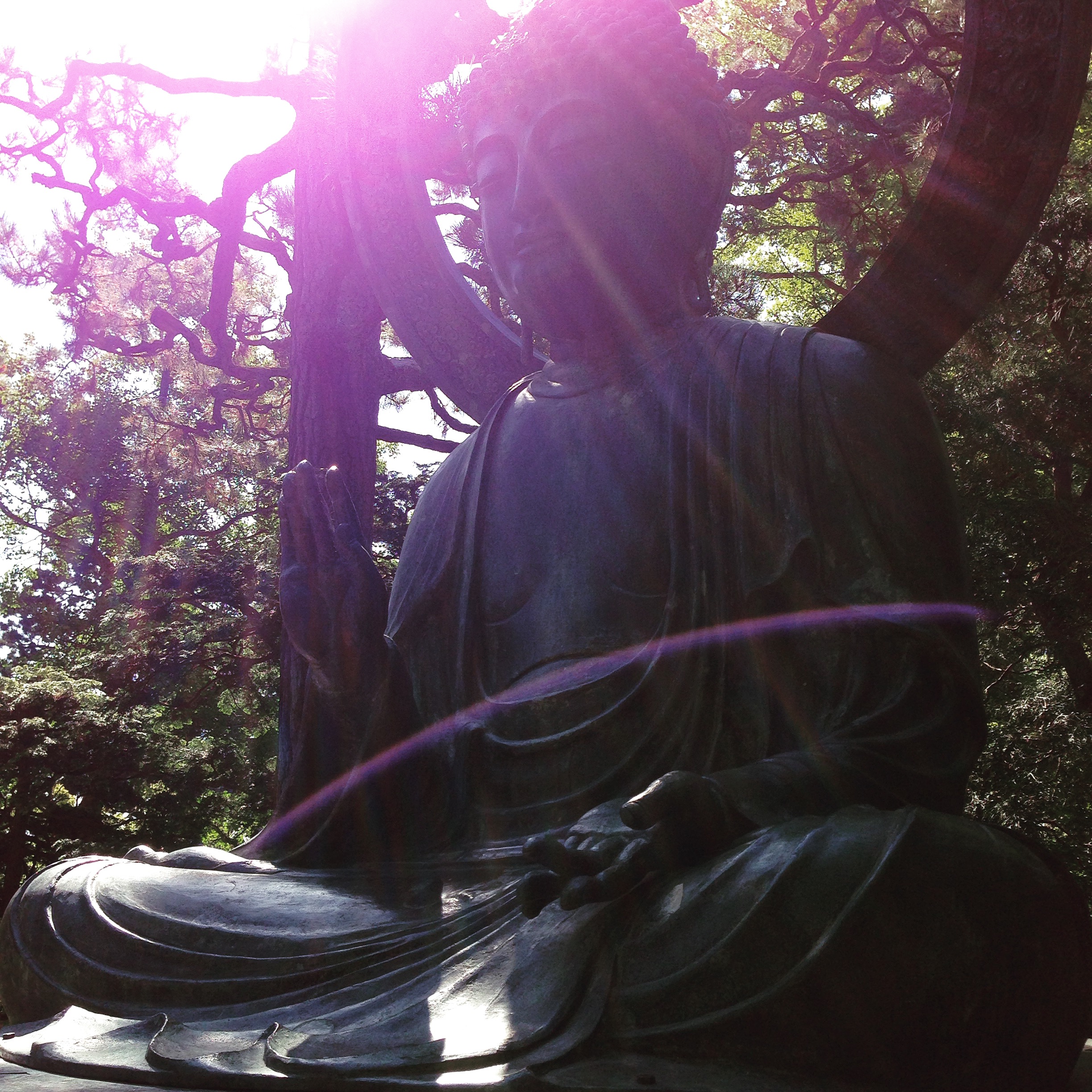
PHOTO: Buddha bathing in sunlight at the Japanese Tea Garden at Golden Gate Park. It seems inseparable these days, yoga practice and life. Even during my break from practice, the trajectory was all to familiar: the balance of the Japanese garden, the use of elements to draw one into meditation, the discourse the ongoing journey to find the self in equanimity. Makes me smile. There is no real break from real practice.

Hidden Alleyways

The ashtanga system is known for its succinctness. The practice itself strips things down to the most basic of units, the precision of movement, the inhale and exhale, and beyond, well…something…call it stillness, or peace, or some manifestation of the divine. It is simply there, these hidden alleyways, and there is no need to seek it. The moment that we do, we end up on a diverging road and we are lost.

It is so simple and yet so ridiculously hard to focus our seeking hearts and minds, to commit to meeting ourselves on the mat without judgement, to do our wholehearted effort without any desire for external gain, and yet in those rare moments when these acts align, we simply melt down, ease into such secret sacred places, which we ultimately realize are neither narrow nor hidden.

My time here in San Francisco working in Mysore SF with Magnolia Zuniga–an incredible guide in this practice–has been about self-study as much as teaching. The more I study the ashtanga system, the more I see how the practice when reduced to it’s purest condensed form is incredibly expansive. And while most of us who maintain a daily practice, of course, know this experientially already, to see it in minute detail, well, it is incredible. I find myself just “geeking out” on it.

There is so much to distract us, in our lives, and yes, even in our yoga practice. “Yoga, the industry,” the crazy unwieldy presence that it is becoming, is in itself massively distracting. Return to the basics. Come to your mat and breathe. Reduce it, allow it to reduce you. And breathe at the incredible space that is.

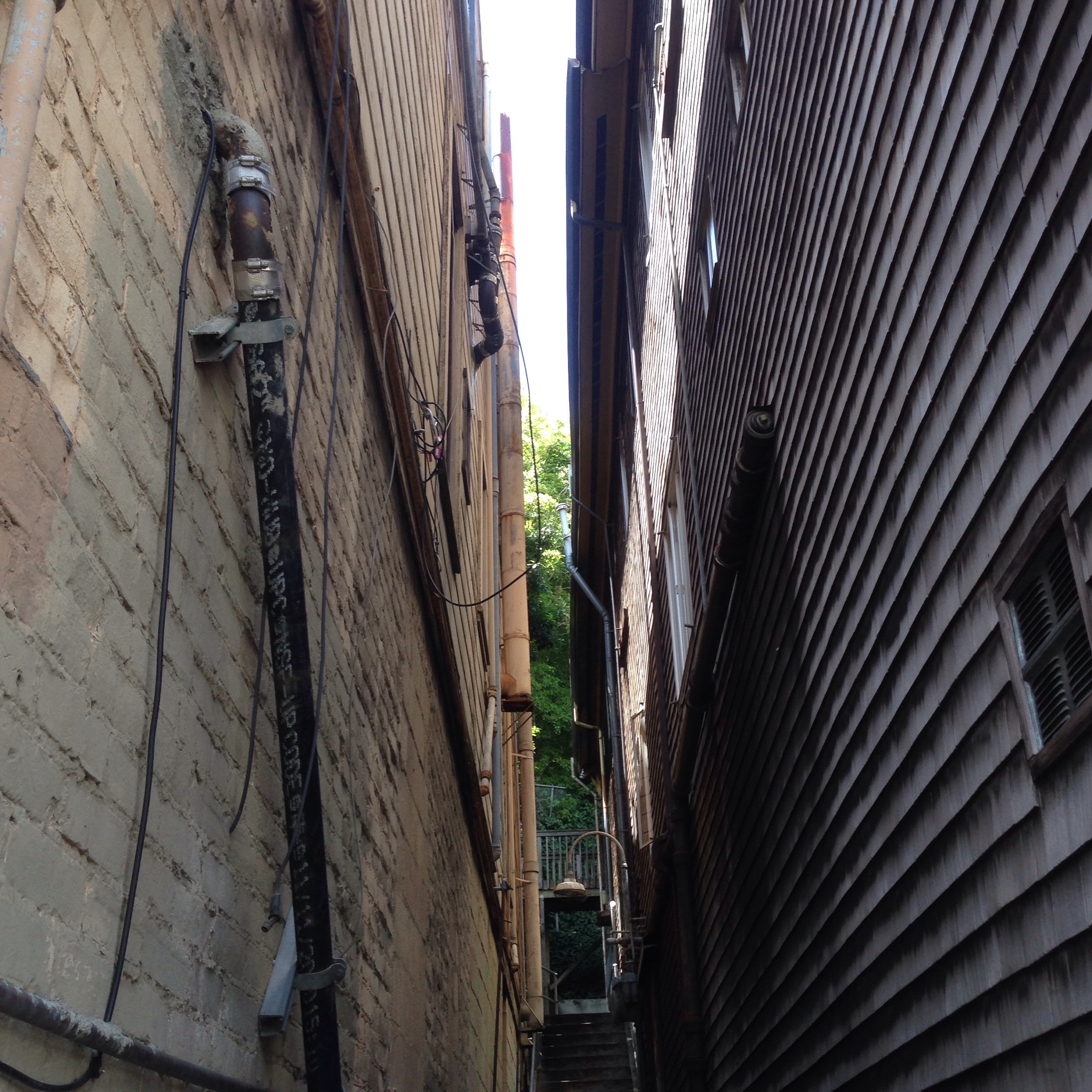
PHOTO: One such physical hidden alleyway in Sausalito, Marin County, California. When I was passing this little passage, over a month ago, I could not help but photograph it, feeling that practice felt like that–for me, at that precise moment. This scene must have some iconic feel to it–whilst writing this article, I searched “alleyways” in Google, only to find pop up immediately a photo of this exact alley on Wikipedia. How funny and small the world is, how it all boils down to the same places.

The Container

IMG_4226

A room is a just a room, right?

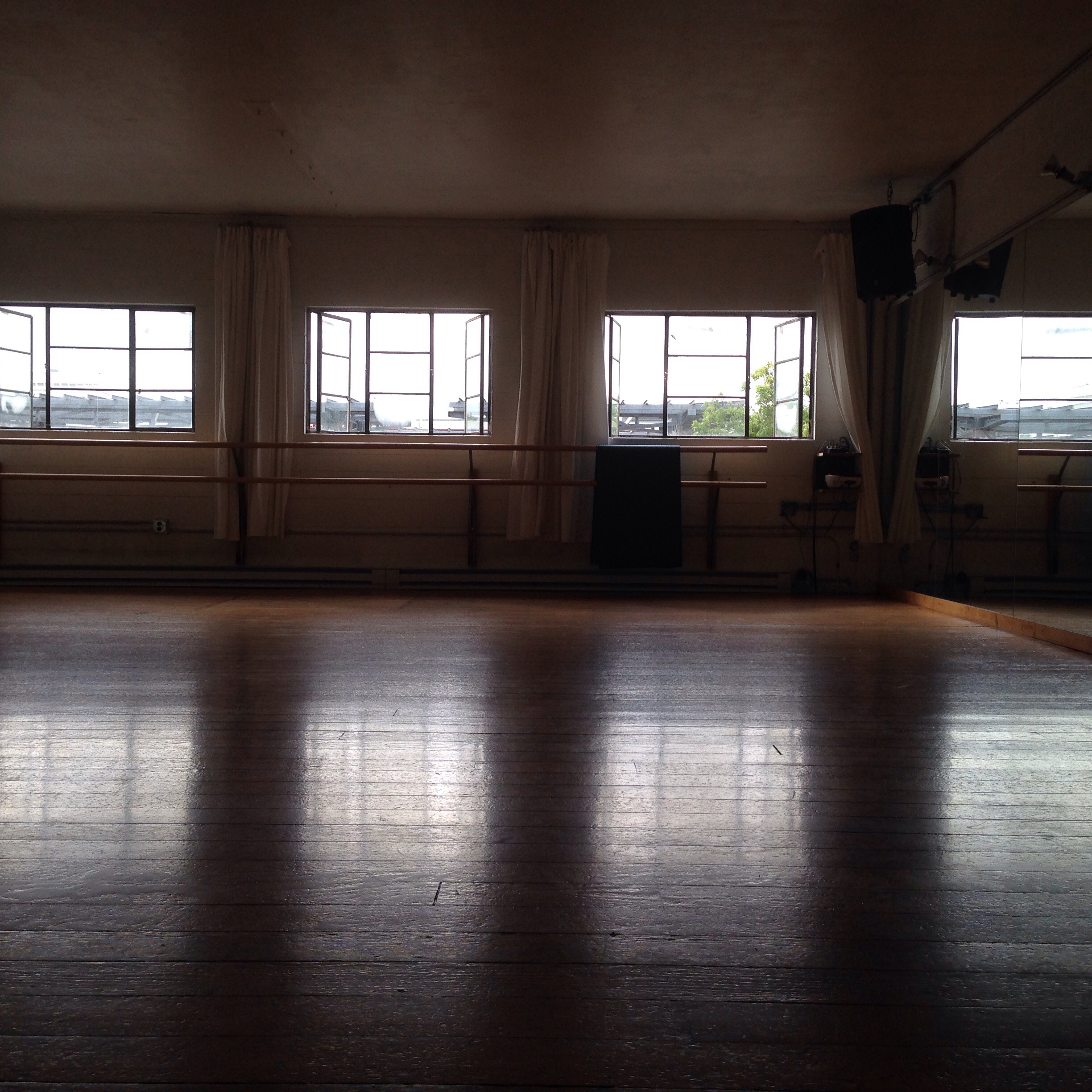
In the evenings, this studio space is occupied by dancers, who tell a story through a series of movements.

In the early morning, the curtains are drawn careful to softly diffuse the light which wants to pour into the room. The floor is partitioned off in rectangular parcels of all different colors and textures. On each of these mats is a person, a one-act-play or an epic story, a dailogue or a monologue, the act of going to church or performing an exorcism.

I am awe and wonder to work in such a room, not because the room is any more special than other rooms. It is just a room. But somehow, out of a stroke of good luck and a combination of just the right conditions, it has become the container of this indescribable process.

On one level, people move and breathe here. There is sweating. And some cardio, yes, fitness. Beneath that, or rather, through that, there is the finding of our edge, the grinding against our fears, the celebrating of our victories…

The room is a container where we are allowed to happen.

PHOTO: It continues to be a daily pleasure to come into–how I even call it–“work” each morning, to enter this alchemical space, powered by a devotion to practice. Should you have an interest in joining the magic here: http://www.mysoresf.com.

Light Crossroad

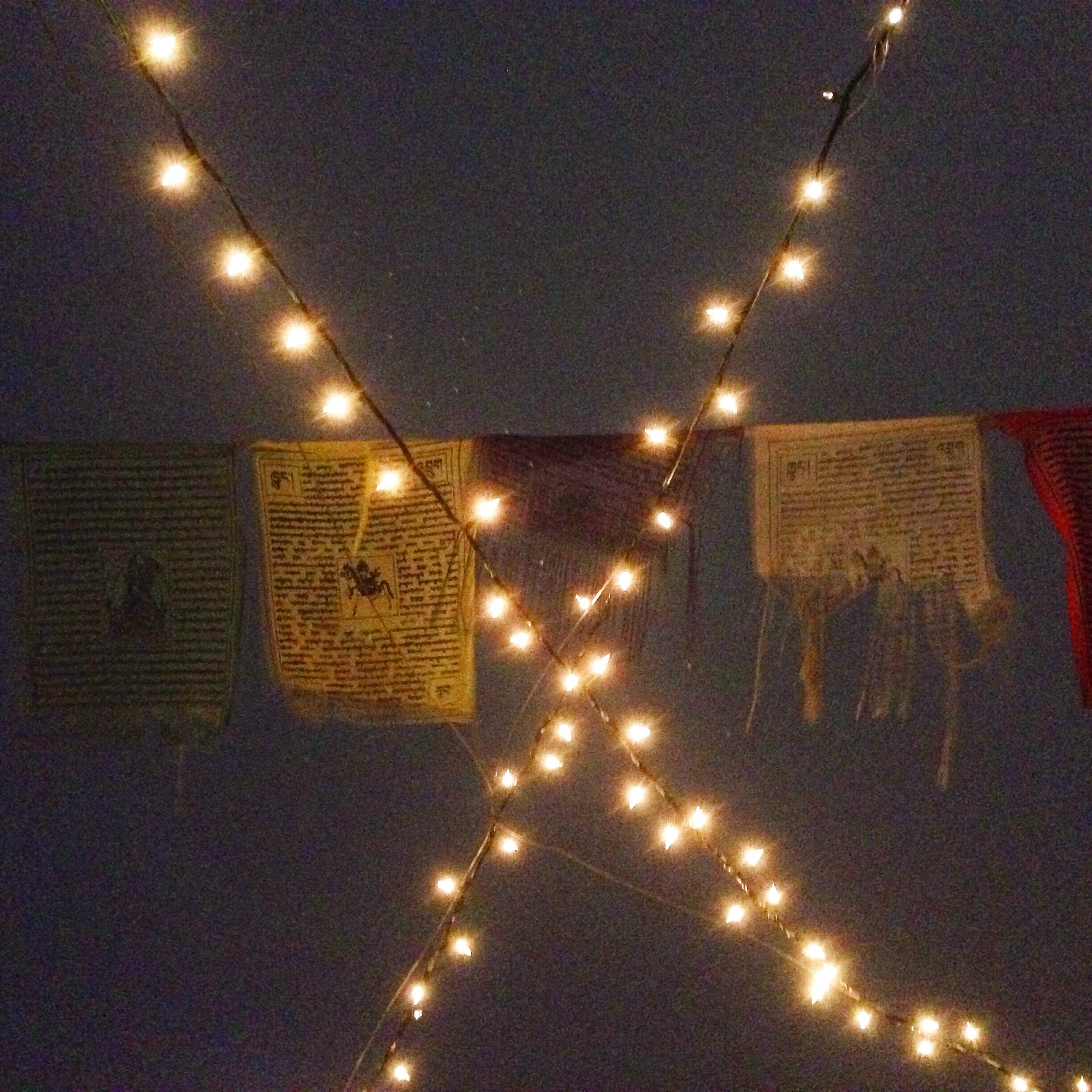
The light crossroad where intentions and the magic of practice meet. Above our heads: fairy lights and prayer flags taking wind.

To think! A million or so possibilities. Probably more. All things, meetings, happenstance, accidents, hard work, chances and blessings that assemble us under such bright stars.

PHOTO: Above: lights and prayer flags. Below: a potluck celebrating the 4 years anniv of Mysore SF; the certification of Magnolia Zuniga, making this strong lady the only certified Ashtanga teacher in San Francisco; and the new teacher…me. Thrilled to be joining both the teacher and the community.

Another World: Mysore SF

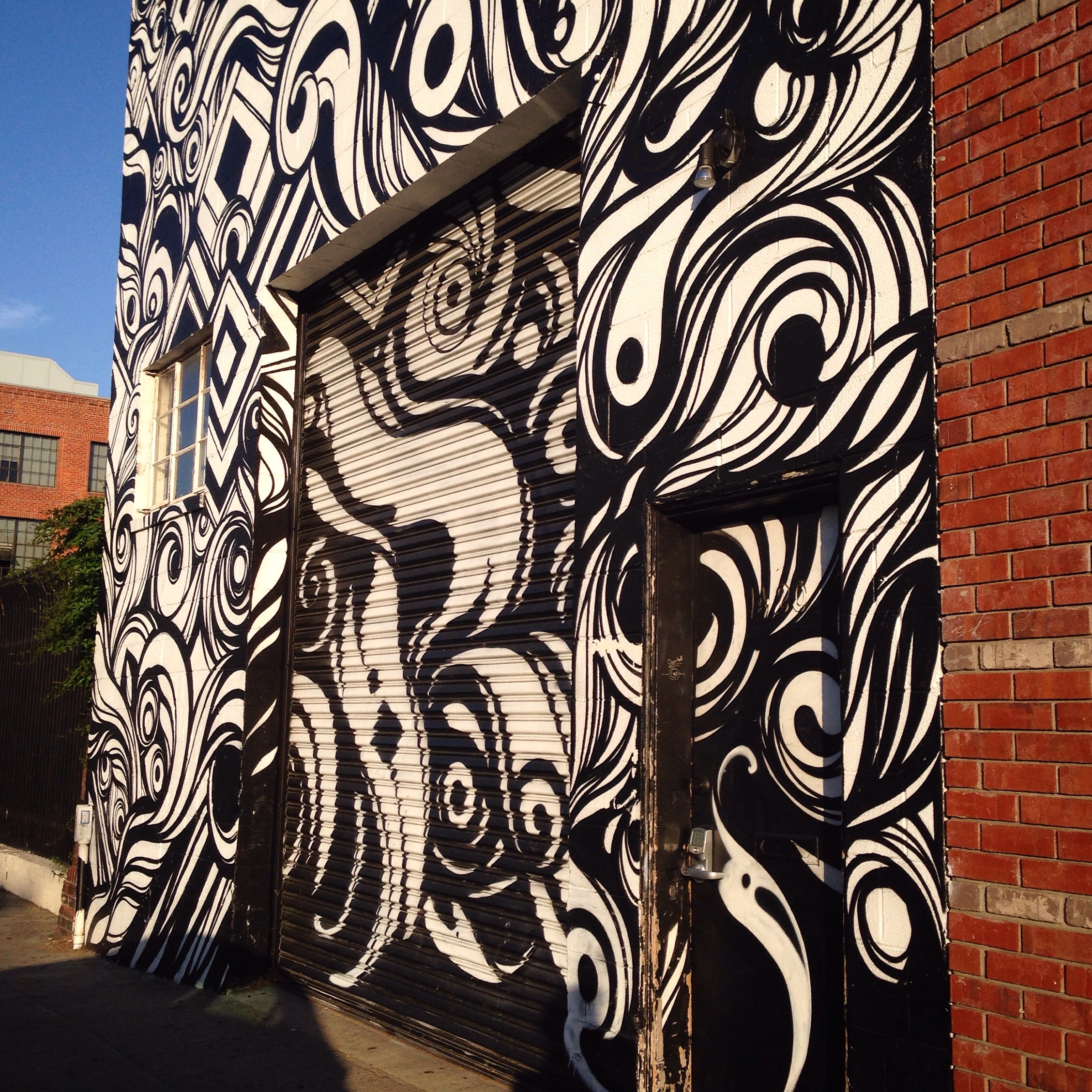
There are no signs here. No glitzy window dressings or clear glass where one might peek through and see yoga bodies. There is no merchandising. There is a door with a push-button code. Ok, the building, a dance annex, isn’t exactly non-descript, but the eye-catching yet abstract design that swirls and flows on the edifice mysteriously pulls one in—just like the practice that is going on upstairs in the early hours of the morning. This is Mysore SF.

Many Mysore spaces that I’ve visited has that in common. It’s low key. Usually not affiliated with a mainstream yoga corporation. It doesn’t dress up the practice. oys got its own energy, attitude. There is usually a great deal of condensation on the windows. The feeling of shanti or peace is not accomplished by burning incense or the sweet tones of new aged devotional chanting; it happens through consistent daily practice, a lot of patience, hard work, and on occasion a healthy dose of struggle just to remind you that you are alive and still well up for fighting the good fight. It is a room where people breathe and move. And if you stick with it, it’s a place where a kind of alchemy starts to happen.

I am always impressed and in awe of how practice evolves and translates in different countries, in different cities and spaces, and in the hands of different teachers–who, especially when they are teaching authentically, are all pretty unique. How distinct it feels and yet how it remains constant and true to the essence of Ashtanga yoga. So it is here, the same as everywhere, and yet also different. 

Like the fog here in San Francisco, students surely but quietly roll in, unfurling their mats like wings, breathing and moving, fogging up the windows, then rolling up their mats, returning the next morning to repeat the process. There is a steadiness to it, it’s substantial but also light. Like the morning fog rolling into the city, you can count on it. For me, coming into work these days is like watching the day break, seeing the world waking.


For more information, visit: http://www.mysoresf.com.

Turning Wheels

Things go round and round. It is a constant, this wheel of life, constantly, surprisingly changing. And yet, there is a cycle to it all. Some motif that repeats, a reminder or a landmark, which often gives us a certain context: this is where we were, this is where we are, this is where we are going.

In many ways, practice is like a wheel in movement. It is the constant in a changing self-scape. It is also the vehicle physically moving us from one shape to another, but also moving us from one state to another.

There seems to be innumerable “wheels” and such out there, tools for transport, for self-exploration, for greater understanding. San Francisco, where I have landed–or, rather, where I am still landing at–feels like that kind of place for me. I arrived here at the age of 10 as a young immigrant with my family. I returned as a university student at Berkeley. Some years ago, I arrived quite lost, an accidental tourist with the sole intention of securing a ten-year visa to India to study yoga, which at that time was all I could think of. And now, here I am again. This time, to do what I love, which is sharing from the rich yoga tradition that has both changed me in so many countless ways and has made me more tuned into who I really am.

It is a sight. When we see these wheels turning. That is a great part of the joy of teaching for me: to see glimpses of other people’s wheels in action through their practice. But to see it one’s life, to observe it, to feel driven by it, and to eventually also take the wheel…

A great part of this new turning is me coming to teach with Magnolia Zuniga at Mysore SF. For more information: http://www.mysoresf.com