Being a Student

IMG_8506

The last three weeks in New York has been a special time to simply be a student. To relish the experience of the morning ritual, the anticipation of standing before one’s mat, to bow down and be guided by one’s teacher.

It’s been a joy to experience this in various ways.

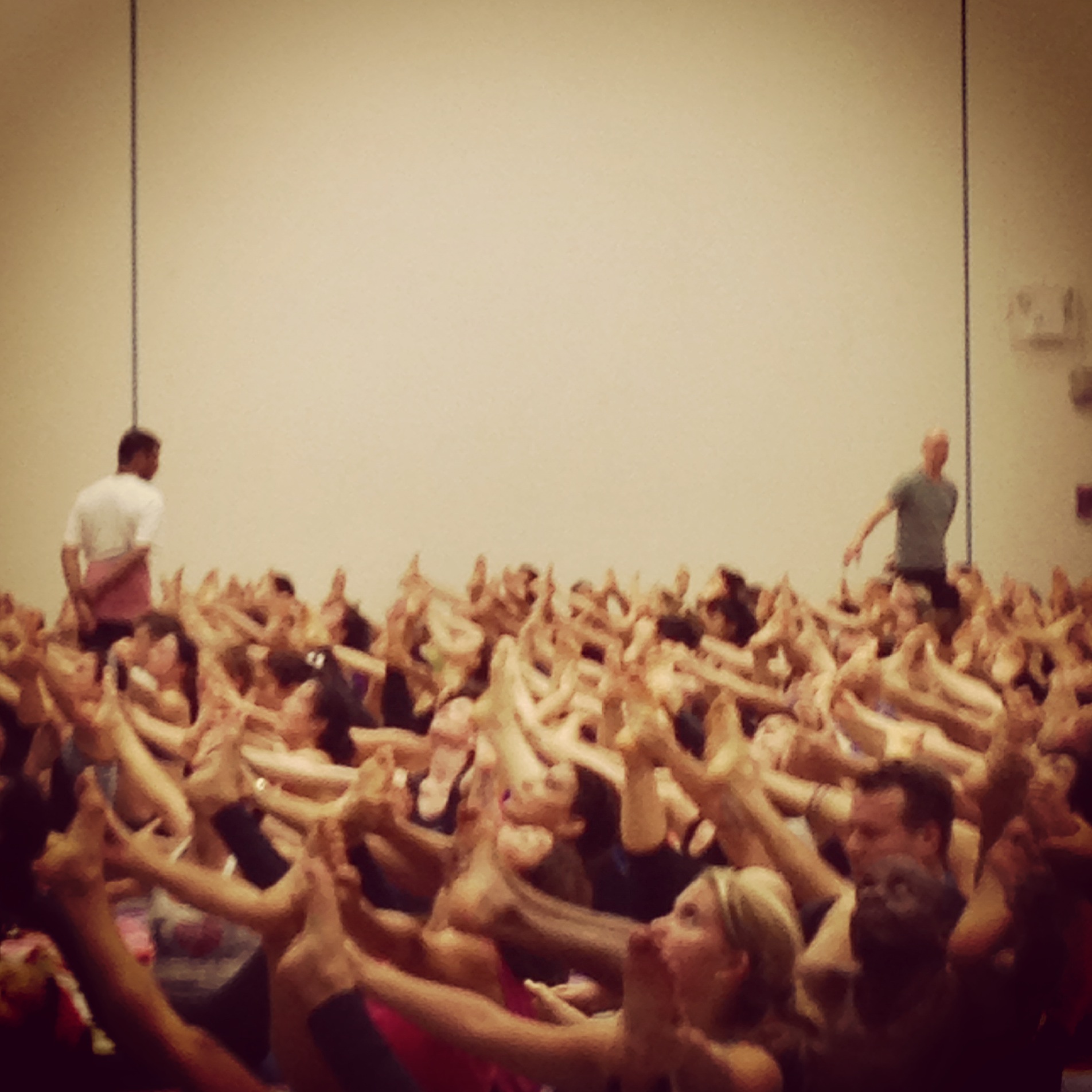
With my teacher Sharath Jois as his US tour swept through New York for a week of led intermediate classes. Where my body, used to a self-paced practice, was pushed to move through intermediate in crisp unison to a symphony of asana postures counted to the beat of such a master conductor.

With a final week, practicing at Ashtanga Yoga New York at Broome Street, where I enjoyed the treat of practicing with others, with the support of such experienced teachers, with the rich history of ashtanga yoga on the walls, and with the blessings of the Hindu deities housed in the space which also doubles as a temple.

And with my sister and family in the week in between, foregoing practice for the rigors of wedding schedule. It was a different kind of sweet surrender, that week of intense and beautiful family gatherings celebrating my sister’s forthcoming nuptials, and finally with witnessing my sister exchange vows with an equally beautiful person.

There are many ways to practice, many different kinds of unions, many different opportunities to be a student.

Be willing, when you are called. Surrender to it. Study well and learn from each and every experience.

IMG_8511 IMG_8702

Egypt, Return to the Desert

IMG_2468

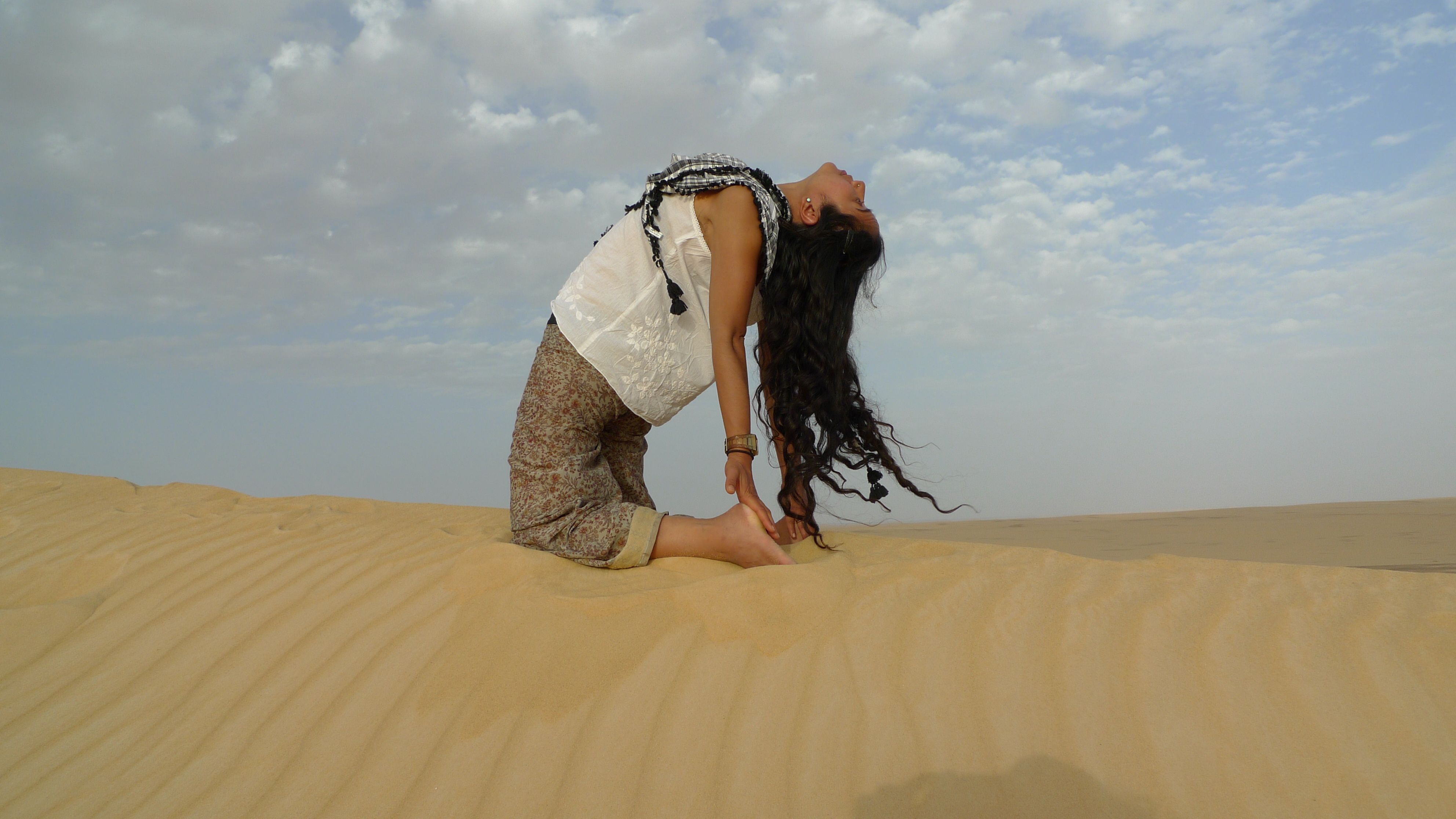
Ushtrasana, Camel Posture in the sand dunes of the White Desert last April 2014.

Landing in Egypt today marks a return to work. Here are some of the exciting things lined up for the next couple of months:

* October Classes at The Shala & Ashtanga Yoga Egypt
* October 30-November 2 Ashtanga in Aswan w/ Iman Elsherbiny at Fekra Cultural Center
* November 9-14 Nun Center Detox & Yoga Retreat
* November 19-23 Siwa Yoga Adventure w/ Iman & Freedom Travelers 

More are in the pipeline. Will post info as soon as.

If you would like to join or would like more information, email at kaz.castillo@gmail.com.

Aditya Hrdyam: Shine Your Light

20140829-105538-39338963.jpg

This morning before class, the sky was like a gray soup; the air unusually chilly. Hours later, the sun shines, melting the early autumn coolness. Once again, it is summer.

The power of the sun. Energizing. Warming. Nourishing us with light.

Today’s satsang topic, Aditya Hrdayam, the Heart of the Sun, is all about this. How when we shine the light of presence and awareness, we are able to dispel the shadows, so that we might see ourselves in our fullness.

How it is with such light that we are able to destroy our own egoic demons, just as Rama does the 10-headed demon Ravana, by calling on the powers of the sun.

Over the last week, leading up to the satsang today, I have been chanting this hymn at the start of each class. And some students have commented that they feel something different when they hear it.

I too feel something when I chant this. It’s like a clearing of the clouds in my mind and my heart, and having the warm sun shine on my face.

Even in the foreign Sanskrit, the hymn has the power to move, touch, inspire–without even knowing the words or meaning.

Perhaps the Aditya strikes an internal chord, we recognize in its vibrations our own heart and history, we recall some deep memory that we too, like the sun, are light beings destined to shine.

Aditya Hrdayam.
The Heart of the Sun.

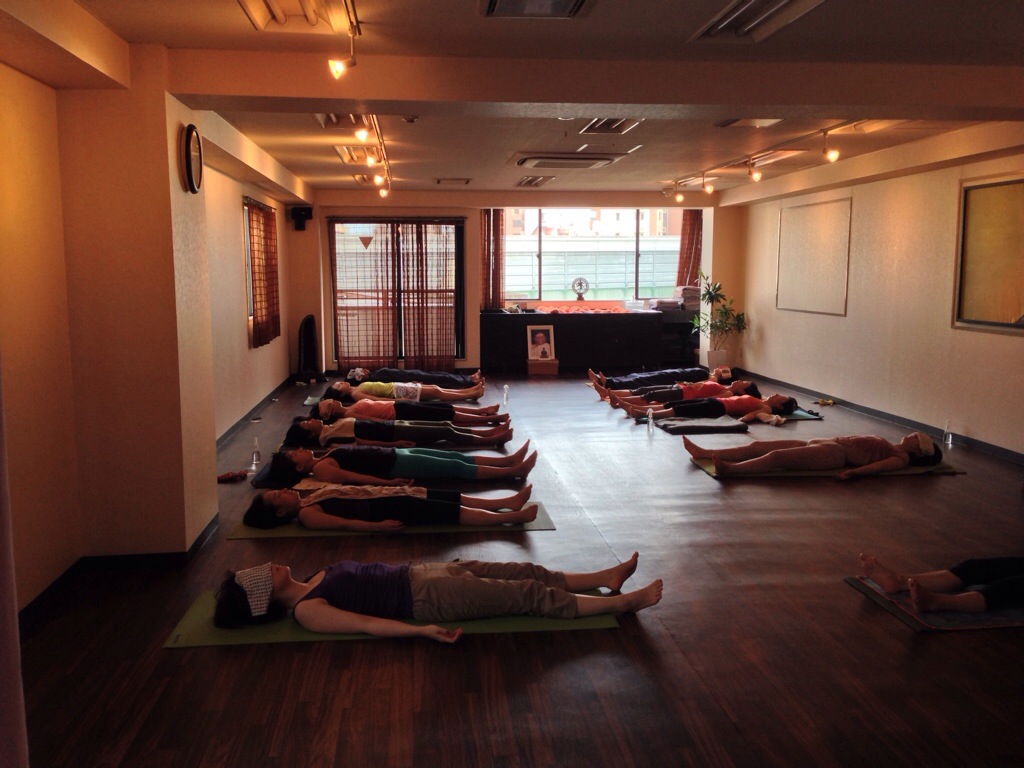
PHOTO: Rest and shine. Students taking rest after led primary. It was a pleasure to share a part of the Ramayana with the students today. Excited that some have expressed an interest in learning the Aditya and reading the Ramayana! This makes me happy.

Found in Translation: Surrender

P1250814

Osaka, Japan. More than one month down, less than one month to go.

Being in Japan, wandering the streets, unable to access the overabundance of information, which translates into–for a foreigner like myself, anyway–white noise, reminds me of Bill Murray in Sofia Coppola’s “Lost in Translation.” How he navigates Tokyo with a charming sort of disconnect.

Despite the language barrier, teaching here, reminds me how universal the language of yoga is. And thank goodness, because my embarrassingly rudimentary Japanese just barely includes instructions on breath and straightening knees.

My moments of Lost In Translation, well, they’re not too bad. If anything, they’ve been great opportunities for greater understanding .

Two weeks ago, during Satsang, we looked at the word “surrender”–quite possibly one of the most overused and often misunderstood words that pours forth from the mouths of yoga teachers. I admit, I am a fan of this word! It works so well at capturing the spirit of letting go, of relaxing into the moment.

In Japan, however, the word doesn’t translate so well.

Telling a Japanese student to surrender can be a little confusing, especially when it translates to “kofuku” or “to give up fighting.” Translated thus, surrendering seems like a strange suggestion. Give up?! But why?!

Another word, I’ve been told, that fits better is “yutaneru,” which means “to let it go.” In the yoga context it is the letting go of our tension and of our expectations and attachments; it is allowing for flow.

In Satsang that Friday, I explained that surrendering is letting go of the ideas and the patterns that do not serve us–that we give up, not a fight, but all the things that limit us, that keep us from expanding.

Truth: understanding surrender isn’t easy for any culture, for any person. We all have our holding patterns. It hasn’t been easy for me personally either. Surrendering is a constant challenge; and learning it has been at the core of my own yoga practice and life journey. Maybe that’s why student/teachers like myself keep going back to it. We know that’s what needs to be done, we also know that it’s pretty damn hard to really do it. We are all just learning.

I always remind myself that surrendering (like yoga) is a process. It’s not about achieving an end goal, but just allowing ourselves to embody the action, allowing ourselves to let go little by little and to flow more and more. Like Guruji said, “Practice, practice all is coming.”


Grateful for the lessons in surrender here in Japan. Thank you to teacher and fab assistant Tomomi Takeuchi for sharing her spot-on translation of “surrender” in Japanese. 

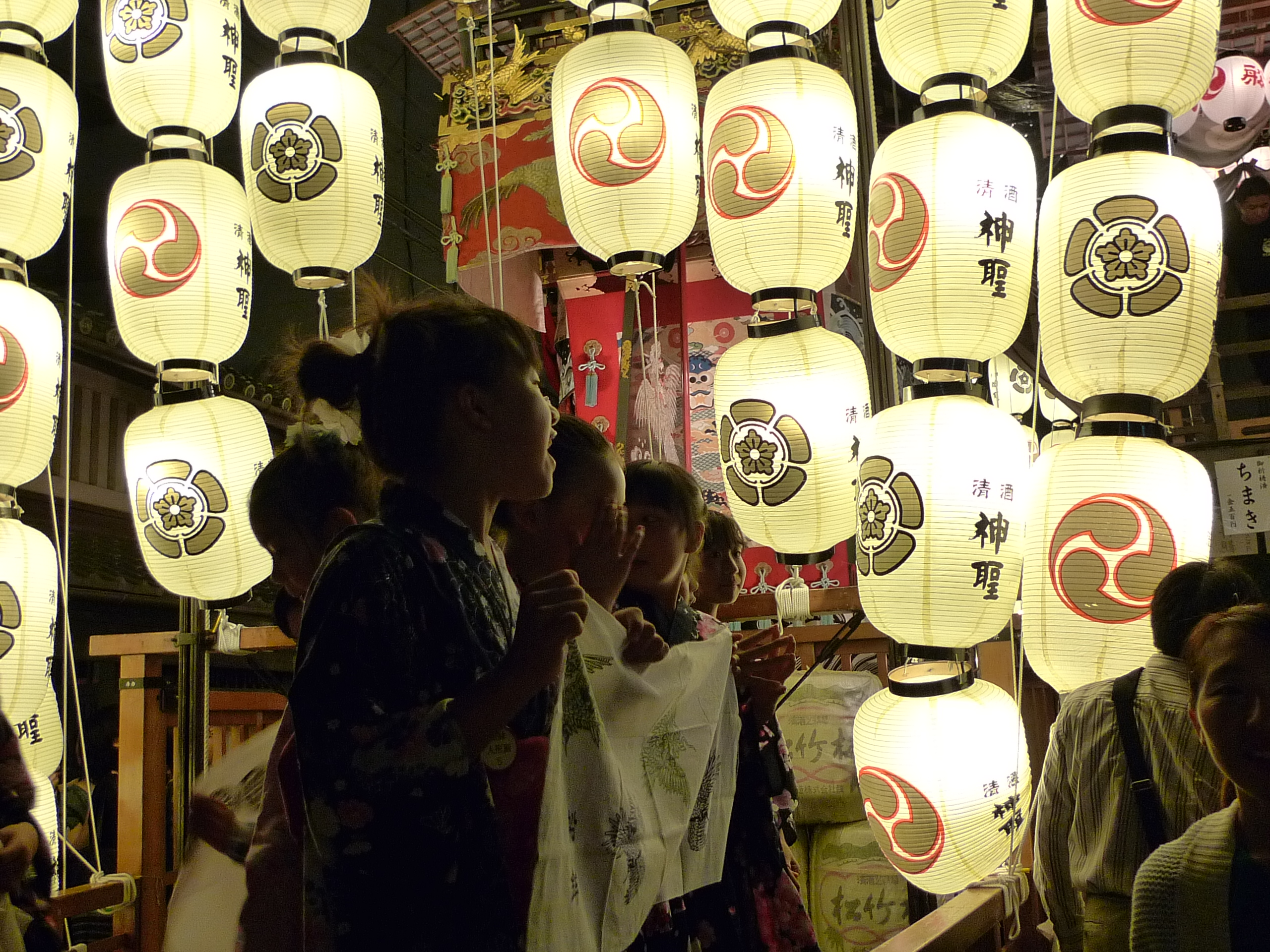
PHOTO: Gion Matsuri, Kyoto, Japan.

Sky Is the Limit

20140803-055917-21557797.jpg

Often, we look at practice as a physical form. We are in the body. We perceive ourselves in both our expanding abilities and our physical limits.

We get stuck, more often than not, in the asana and we identify with the boundaries of our body. We frustrate ourselves. And that “stuckness” spreads into our mind and into our hearts.

We forget that the real challenge is not within the body but to go beyond the body. That true expansion comes through self-compassion, love and acceptance, by learning that the so-called limits of the body are lessons for the soul and the spirit. That going deep within is as much a journey of expanding outside ourselves, breaking down all the walls of separation. 

Like the photo above, the practice is seeing beyond the limits. It is seeing the sky that goes on and on and on…and being struck by the wonder and miracle of it as it transforms dramatically moment to moment.

PHOTO: Sunsets, a beautiful metaphor of the unending cycle that is life and practice, always amazes me. Kyoto, Japan. 

Mysore Meeting Place

photo-2IMG_5677


There may be no words, no looks. No exchange of names. No memories other than bodily shapes in space, movement, and breath. Yet, this is where we meet.

This place where there is no dress code, no make up, there are no formalities. We are allowed to be ourselves, different and at the same time feel as if we are in perfect harmony, no matter what culture we hail from, what body type we have, what age group we belong to, whatever our range of flexibility might be, whatever our skill or talent or experience.

We meet here: in this sacred space of unifying energy, sadhana, practice.  

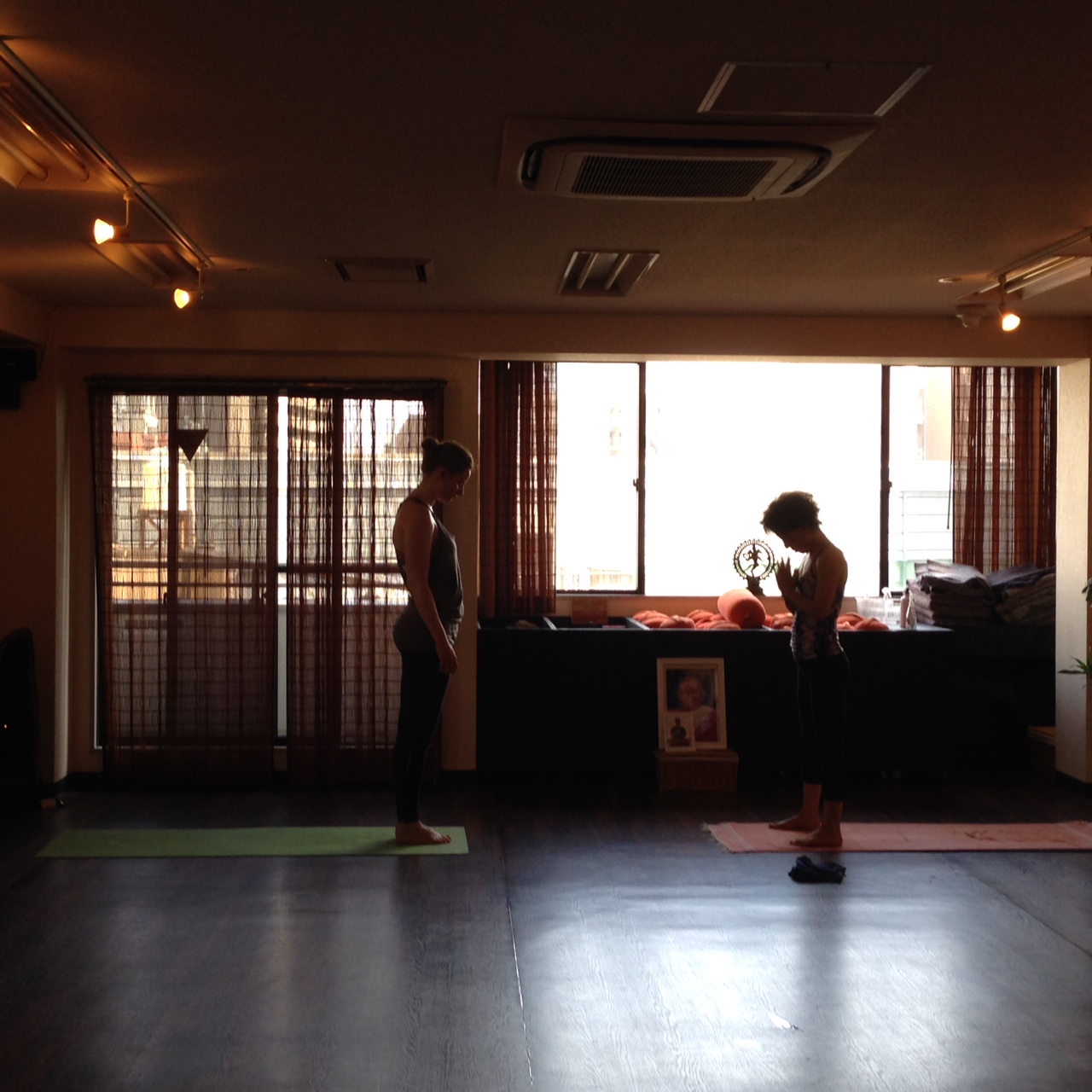
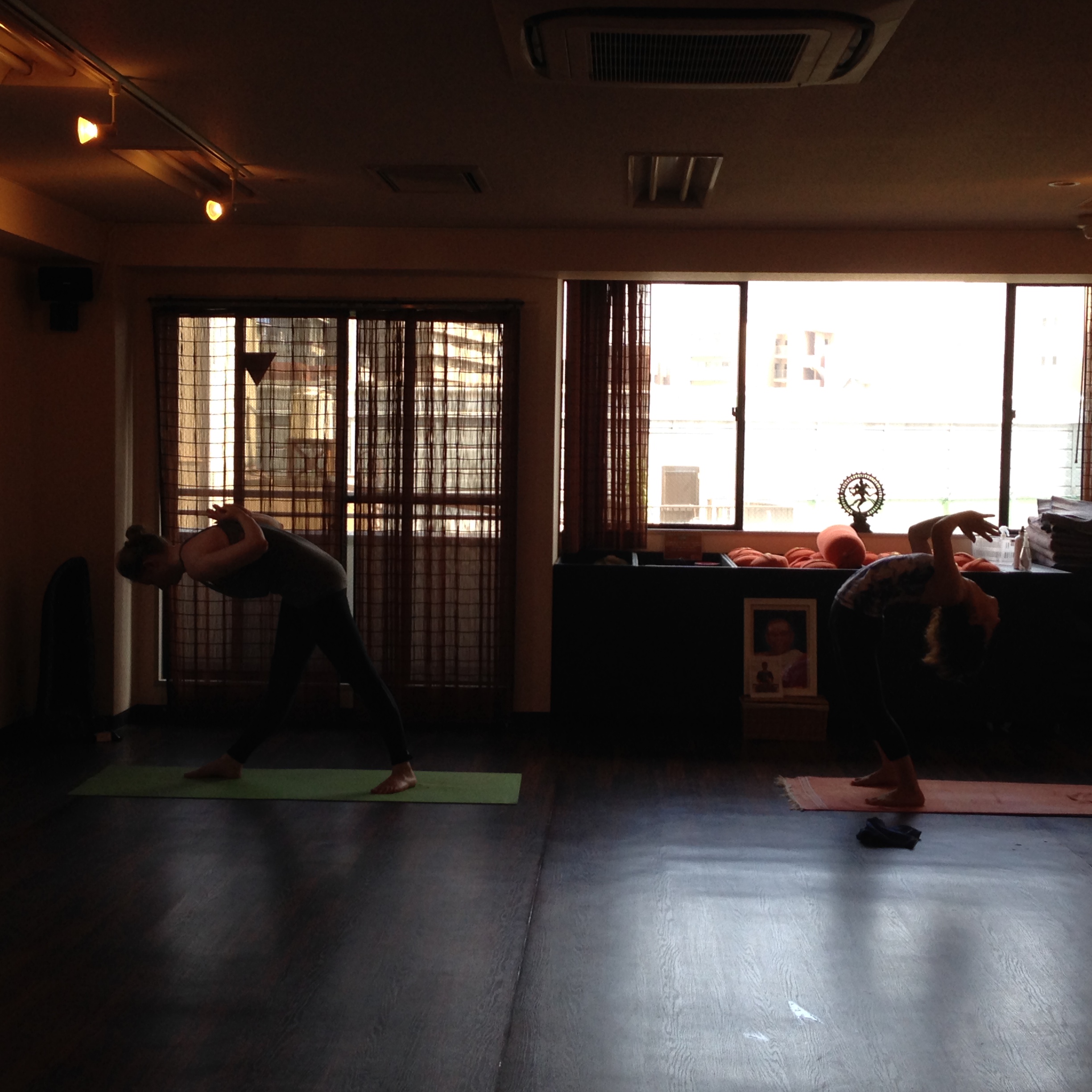
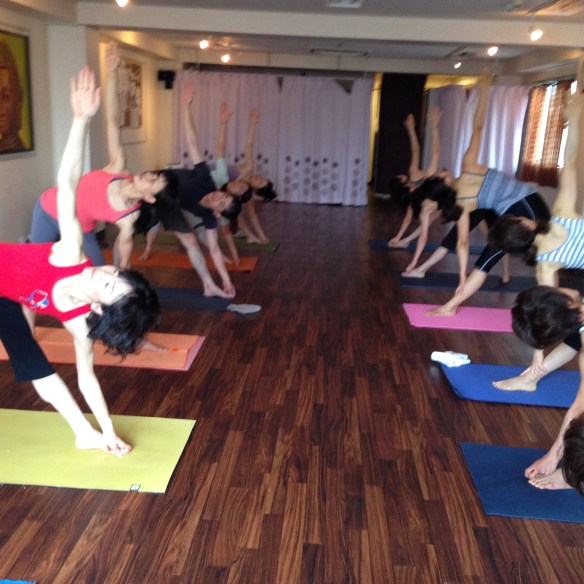
PHOTOS: Spirit Yoga Osaka, Morning Mysore. These images of Melissa and Naoko practicing remind me of the profound unifying energy of practice. The poetry of what happens in a mysore room. 

Soaking up the inspiration here in Osaka! I am in my second and last month of covering for Veronique Tan here in Spirit Mysore Osaka. Mysore Morning schedule in August: Sunday 7:30am, Monday to Thursday, 6:30-10am. Friday 6:45am Led Primary, followed by Satsang. 

Gambatte! Do your Best!

IMG_5108

Friday morning led class is followed by Satsang here in Spirit Yoga Osaka. This is a time when the Mysore group can meet to practice other aspects of ashtanga yoga, whether it’s chanting or discussing yoga philosophy. Yesterday, July 4, 2014, was my first Friday here. It was a full power led primary; and I actually had fun counting the vinyasa-s! I particularly looked forward to discussing the Japanese word “ganbatte,” often translated as “Do your Best!” — which I realize can differ slightly in meaning depending on context. I wanted to explore “ganbatte” in the context of yoga and how I mean it when I say it in class. Here is a written expansion of yesterday’s talk.

I ask the circle of students (with the help of Naoko-san translating) gathered after Friday’s led class what they feel when someone tells them: “Ganbatte.” Many nod in agreement that it is a motivation, a cheer to go on, to do better. Hiroko-san, sitting across from me, nods too but also adds that depending on the context it can also come with a lot of pressure.

The Japanese are renowned for their work ethic and discipline, it is deeply ingrained in the culture–and beautiful to see when applied to the yoga practice. When taken to an extreme, it has a dark side. In Japan, karōshi, 過労死, or death from work, is legally recognized as a cause of death. People in their thirties have strokes or heart attacks due to working long hours and suffering from extreme stress–they’re just doing their best, right?!

This, of course, would not happen with the skillful yoga students here attending class and practicing with great awareness. Still, it begs the question: What does it mean to do your best in the yogic sense? What does ganbatte mean for the yogi?

Ganbatte is an encouragement, often translating to Do your Best! or Do well! or Be courageous!

It is supposed to inspire courage. In her famous TedTalk on Vulnerability, my favorite researcher/storyteller Brene Brown speaks about how the root of the word courage comes from the Latin “cor,” which is the heart. That in its early form, to be courageous was to speak from one’s heart.

These days we look at courage as bravery, having guts or gumption, daring to do what is difficult. All well and good. But to be truly courageous we must act according to what is true to our hearts as well, and from that place of authenticity we are able to act with greater awareness and equinimity. When we are true to ourselves, then we are in satya, one of the five yamas, the foundation of Patanjali’s ashtanga, or 8-limbs.

Now: what is best exactly? We often confuse what is best for what we think of as what is perfect. We often look towards some future ideal or goal. In our yoga practice, we often think of perfection as the final expression of the posture the way we see it in some yoga video, on YouTube or on Instagram.

Patanjali’s first sutra in the Yoga Sutras is “atha yoganusasanam.” Yoga is happening now. It does not look towards the future. It exists in the present moment.

Never does Patanjali outline the particularities of what an asana looks like, he doesn’t go into degrees or alignment, but rather on each individual’s feeling in the pose. “Sthira sukha asanam,” The posture is both steady and easy. And this will depend on the truth of each and every person, as they discover the balance between strength and flexibility, steadiness and comfort.

So wherever you truly are in your practice, so long as your put the right effort into finding that “sthira” and “sukha,” the right presence and awareness, no matter what the asana looks like, it is perfect for that particular moment.

So: Gambatte! Gambatte!!! Practice with true courage, practice from the heart! That is already the best practice.

PHOTO: Friday’s Led Class here at Spirit Yoga Osaka.



Do Your Homework

Image

Kaz Castillo assists Veronique Tan at Spirit Yoga Morning Mysore

Kaz Castillo and Veronique Tan with the dedicated practitioners at Spirit Yoga Morning Mysore.

Last week, Veronique Tan, whose program I am covering here in Osaka, distributed a sheet explaining “homework” to each regular student. I was with her, as she explained to each student what she recommended they work on over the next two months that she is away in Mysore. And how I would be here to help.

On Thursday, one student, Akemi-san noticed that I had my own sheet–actually, sheets plural! A neat stack stapled together, on each page was the profile of two students, each a regular Mysore pass holder, their current posture, their work in progress, their challenges and their “homework.” She pointed with delight and laughed!

“Yes,” I smiled and laughed too, explaining that I also had my own “homework” from Veronique-sensei!

And so work begins. Homework in tow, I will be going to Spirit tomorrow morning, my first day of a two month covering stint here at Spirit Yoga Osaka.
The Mysore program here is not new to me. Past teachers that have taught here are friends. The first to hold the program, Ursula Scott was instrumental in inspiring me to make my first ever trip to Mysore, India. Then, last year, I became the interim covering teacher here between August and September. Returning now after nearly 9 months of teaching in Egypt and in Spain, of traveling and having what I can best describe as an epic romantic adventure with myself, I feel a little like I’m returning to the classroom after having done quite a bit of homework myself.

Sure, it’s been a little “off book.” There’s been a lot of practice–but a lot of the prime yoga  experiences lately have happened off the mat. Self-study is not an isolated activity that is happening at home, it is happening all the time in life.

One never really knows what to expect or what our practice will be like or what the class will bring each morning. And it’s best not to have any expectations. But we certainly can come to class, to our mats, to our lives a little more prepared each and every morning…

The Schedule of Morning Mysore: Monday-Thursday 6:30-10:00am. Friday 6:45-8:45am Led. Sunday 7:30-10am.

PHOTO: Spirit Yoga Morning Mysore. Photo by: Veronique Tan.

Oh, My! How They Grow!

Image

IMG_4748I recently came home to Manila after a year of travel and teaching. The most striking of changes were seeing my nieces and godchildren, two of whom were newborns when I left the Philippines. I was shocked and delighted to see them walking, talking (though the words are not formed yet).

Returning to Osaka after nearly nine months, I feel a little similar, seeing how things have changed and how the program has grown.

It was a beautiful and easy re-entry to Spirit Yoga last week, as I assisted Veronique between Tuesday and Thursday. I loved seeing some of the older students with whom I had worked with grow deeper in their practice. And I was thrilled to see how many new faces there were also. It is a real joy to see one’s practice evolve. It is likewise so heart warming to see a whole program become bigger, more robust.

It’s a real pleasure to be back. It’s an honor to hold this space once again, in the teacher’s absence, this time Veronique Tan, who has been guiding the program here since October 2013. I feel blessed and inspired to see how much a program can grow!

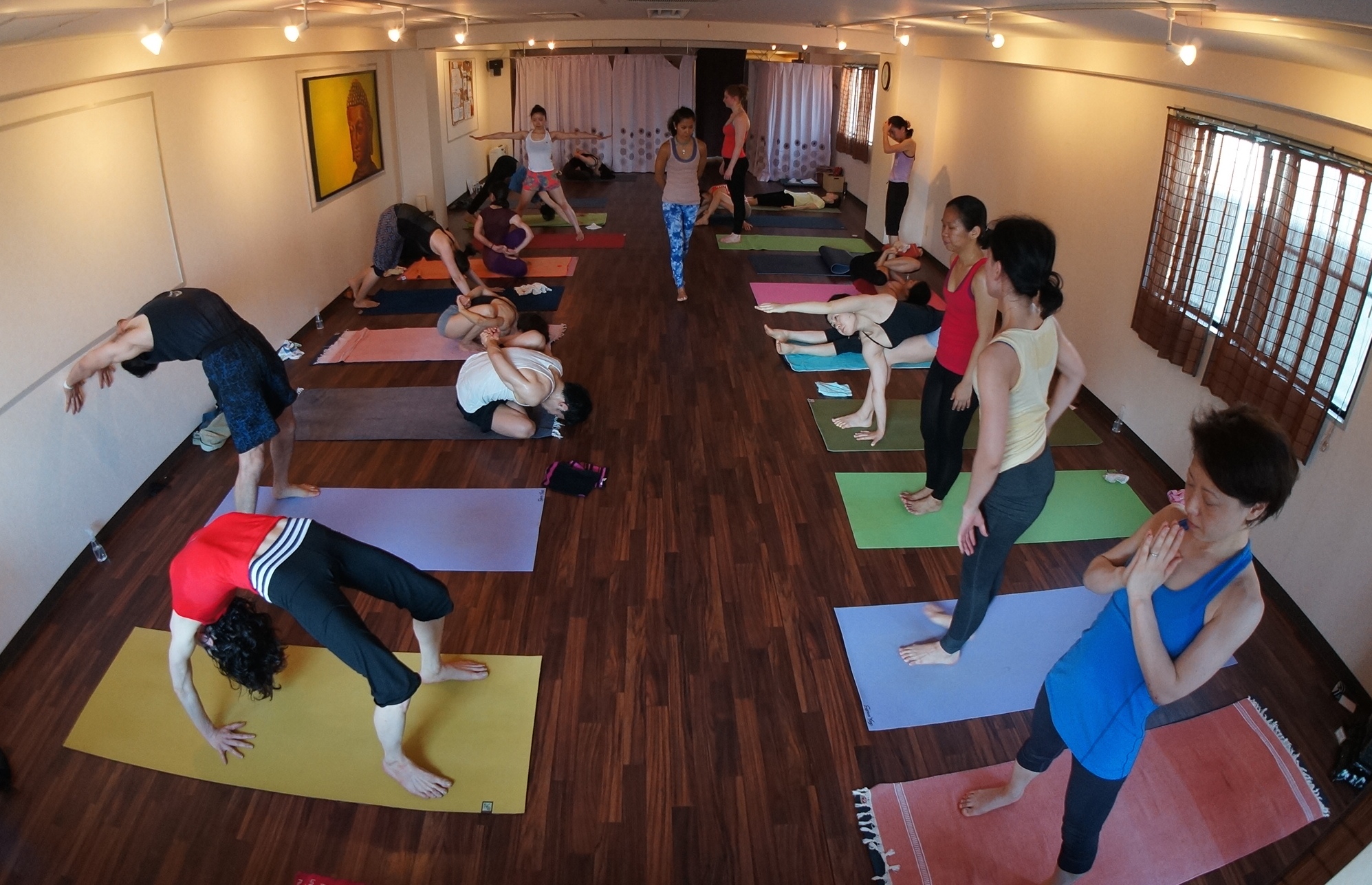
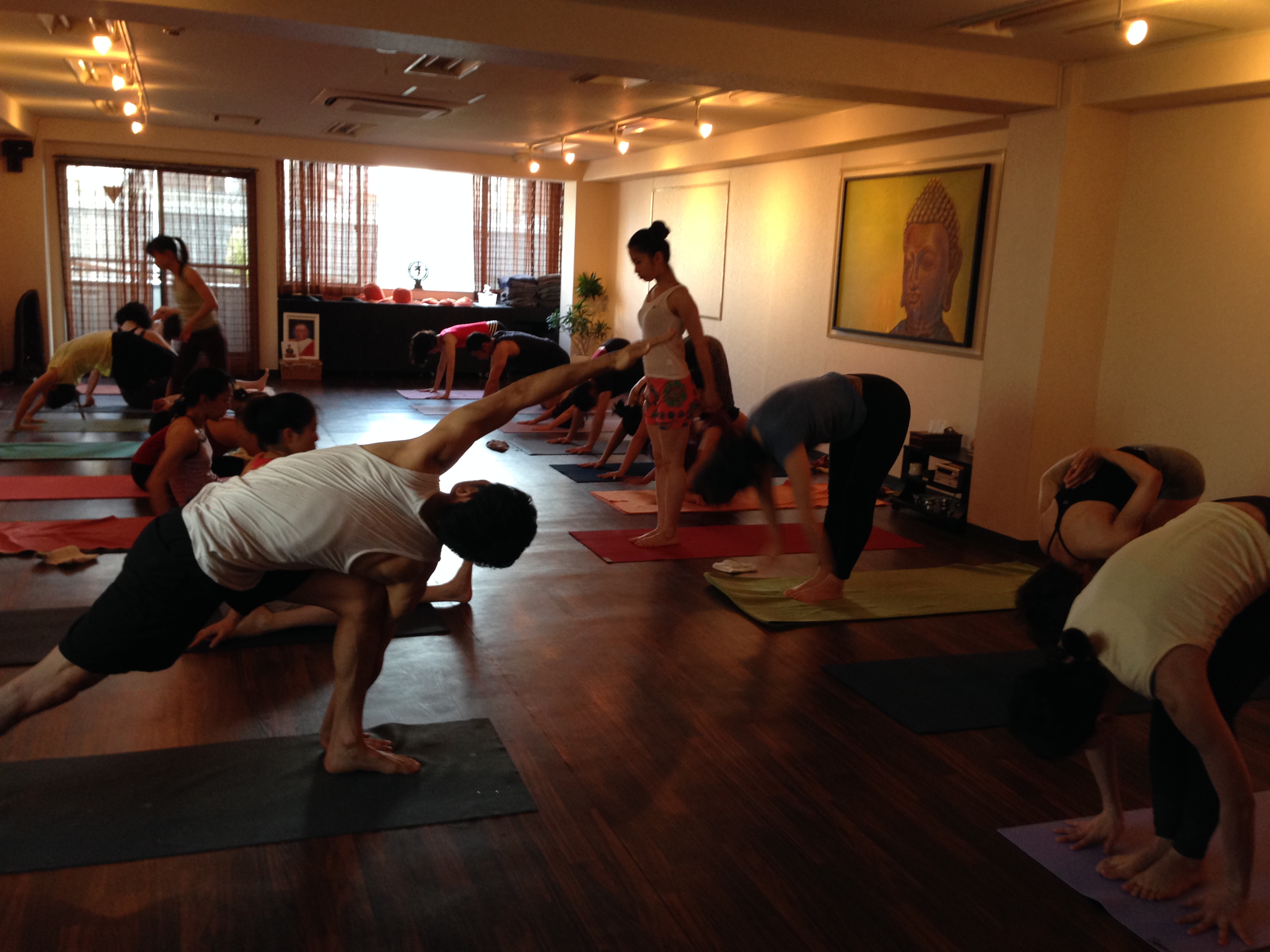
PHOTO: Thursday’s class was an all time high: 27 practitioners. We had to draw open the curtains to the changing area to make space for people to finish. I love the enthusiasm I see here in Japan. Could clearly see how happy the students were to send Veronique off so she could herself study with her teacher. I start leading the Mysore mornings tomorrow, Sunday, June 29.