Natural Reflection

Image

IMG_7245

After two months in monster city like Cairo, Aswan is a breath of fresh air–literally as well as figuratively.

This morning, waking up to my hut dappled in sunlight then practicing on the terrace of the main building in Fekra Cultural Center, to my left was the rising sun and to my right was the blue Nile River (I couldn’t decide which I wanted to salute towards more, so it was a draw!), I remembered how important it is too be in the elements, to be in nature.

I felt how my practice in this setting is very different. I took my time. My breaths were long. I wasn’t in any hurry. I also felt my body differently. I noticed the build up of urban/work tension in a way I hadn’t previously.

Nature allows us to tune into the nature within, it reflects back at us how close or how far we are from that nature. It is a keen mirror, allowing us to reflect deeply on ourselves.

Feeling blessed to be able to share this very special place with 17 retreat participants. We start today’s program at 4pm with an opening circle. The second Ashtanga in Aswan Retreat will be on 24-27 December. There are still places. Message me kaz.castillo@gmail.com to join. 

Photo: Island reflection on the Nile. This is the view of a place often referred to as the back of a dragon across Fekra’s grounds.

So…Self Practice

1481223_10151764066661714_417407481_n

Self Practice: a wild beast, appearing like an inconceivable task for the student used to guided classes or mysore spaces held by teachers. It can seem daunting and difficult to go through the practice on one’s own with no assistance, no adjustments, no corrections, not even the watchful gaze that keeps us on the breath, keeps us intentionally in the zone in which yoga happens.

With me preparing to leave Cairo and with my friend Iman still studying in India, there is a short gap of time in which there will be no present teacher for the Ashtanga Yoga Egypt students and the choice to self-practice will arise.

I can only hope that most will choose this path for the short term–it is a wonderful opportunity to connect with the guru within, to get to know yourself, to grow with your practice.

I cannot stress enough the importance of having a teacher with whom you deeply resonate with and with whom you are willing to trust your body and your process. But in the times when there is no teacher, when there is no mysore space to rely on, the responsibility of practice falls into the hands where the practice of yoga belongs to the most in: your own.

It’s true, a solo mat practice has its challenges but its rewards are incalculable.

In my own experience, over the last 7 years, I have been blessed with instructors who passed through where I was living; they would come and they would go, but always leaving me with so much. In 2010, I then started practicing in India with Sharath Jois, who I now consider my main teacher. Since then, I have been in the presence of my teacher for three months out of the year, and then I am on my own again and self practice is often the only option.

It’s ok, because there’s plenty of “homework” –lots to cultivate, to practice until the next time. This time of self study (svadyaya) can be a wonderful experience of integrating the practice into the system, into the body and the mind.

These gaps have been very rich. They have allowed me to take responsibility for my own practice, they have taught me to be independent, to be inquisitive and discerning. I have learned the difficulties of self-motivation. And, yes, I have at times stumbled and lost my flow. I’ve also felt the joy of returning to practice, how my body rejoices at the breath and movement, how my mind stills and empties, how grounding it is, how expanding.

More than anything, self practice establishes the relationship between you and your own practice, that whether your teacher is present or not, your practice is yours–recognizing this is so very important.

Sunday is my last class in Cairo. The first Aswan retreat starts on December 19 (to the 22), the second on the 24-27 December. Spaces are still available in the second batch.
& Iman Elsherbiny will be returning to Ashtanga Yoga Egypt from a very fruitful Msyore, India season in February.

Photo by Zeinab Lamloum. Bakasana during my own self-practice after teaching.

Meeting in the Mysore Space

Image

IMG_6636

One class day to go here in Cairo. The countdown, I have to be honest, makes me sentimental. While my stay here has just been shy of two months and I recognize that in many aspects I have just been skimming the surface, there is such a great depth built into this work, into this practice of ashtanga yoga.

As we breathe and move in space, taking shapes with deliberate awareness and attention, we embody this process called yoga.

The mind and its trappings come into play, our issues and injuries–physical or otherwise–come to the surface. Our desires and attachments bubble up…and then the practice attempts to burst them.

The practice shines a light on the shadows: tension in the body often reflecting tension in the heart or mind, the dark of the ego lurking in the corners…

Teaching in a Mysore space is like getting to know someone very intimately without any context–and without any judgement. It’s like knowing nothing about a student’s life story yet observing personal symptoms of life and signposts of living.

The joy, particularly, is seeing how it gets physically worked out through this incredible whittling down process, sometimes with grace and ease, while other times, let’s face it, it’s a shit fight!

Sharing in this quiet personal process makes people who practice together incredibly close, sometimes without any of the usual friendly exchanges. We feel each other’s struggles and we celebrate each other’s victories on the mat, which is really a metaphor for our lives.

As for being the “teacher”, I feel incredibly blessed to take part in this process. Often, I do little other than being there. And there are times I need to admit to myself that there is nothing I can do other than to back up and give someone space.

Then there are the little moments that amount to so much: jump starting someone’s practice, moving someone in a different direction, aligning the body to feel secure and spacious, holding someone in a difficult posture…

Understanding and trust are built on this straightforward physical exchange and a very special relationship is formed between a teacher and a student.

I love meeting like this, in such a space that is both so real, so organic, so surprising; this is a space where yoga happens.

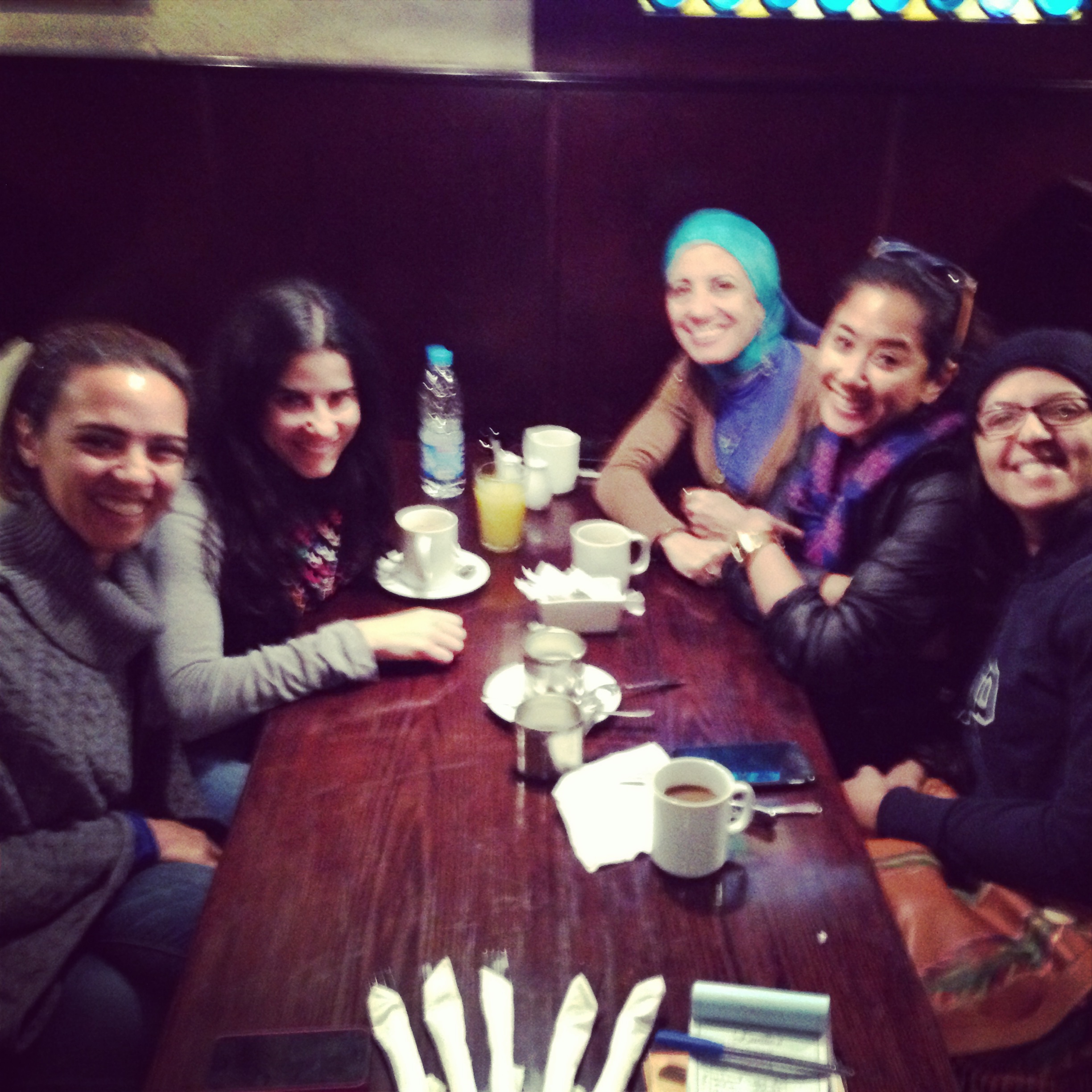
Photo: We ease into each other’s company with fluidity that comes with breathing in the same pace. The regular practitioners (Ashtanga Yoga Egypt, La Zone, Maadi) and I engage in the most common post-practice practice: having breakfast fit for champions at Lucille’s on Road 9.

Night & Day

Image

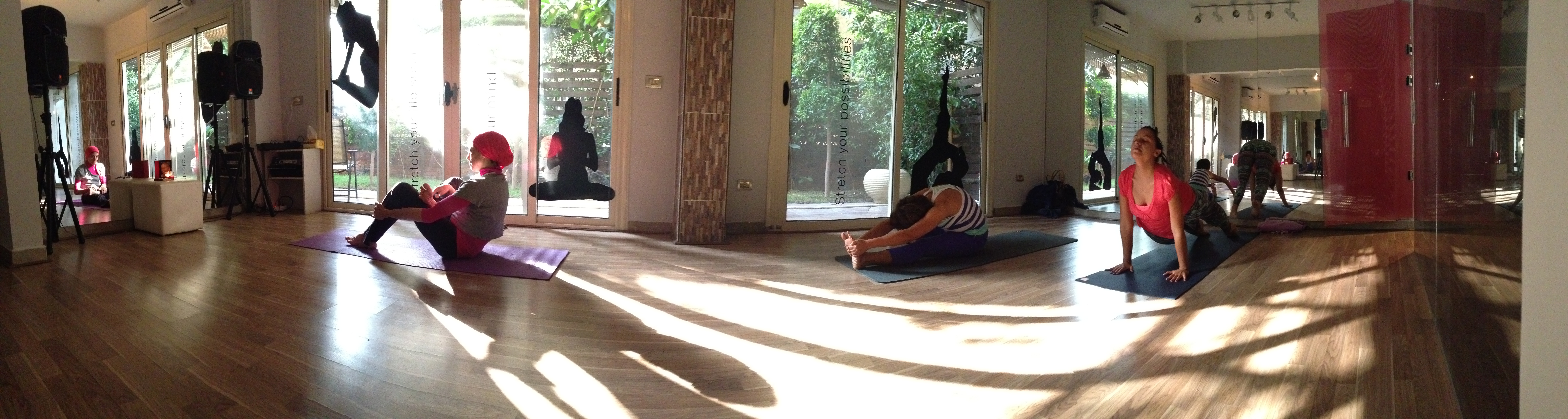
ImageAshtanga Yoga Egypt in La Zone, Maadi, Morning Mysore Program 7-10am

Image

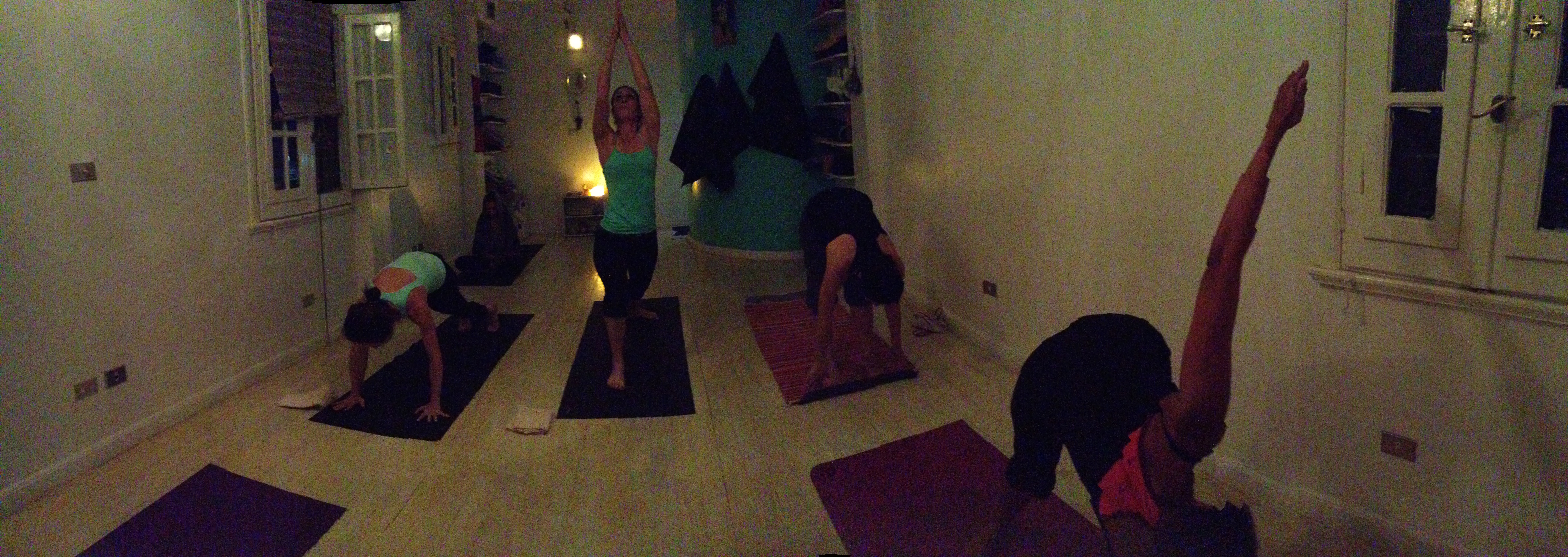
Ashtanga Yoga Egypt in Ashtanga Yoga Cairo, Zamalek, Evening Mysore Program 6:30pm

Practicing in the morning and in the evening are as different as night and day–or, rather, day and night.

The body is different. Having woken up from a night of sleep, the morning body is a little more stiff, sometimes: a lot! But then there’s a freshness in the morning practice. In the early evening, the body is warm, more flexible, but also more tired. There’s a certain depth to stretching and willingness to surrender after a full long day.

The mind is different, too. The morning mind is less cluttered, emptying out during sleep. In the evening, the mind can be churning from a day of activity, stress, work, etc…The opposite can also be true, the anticipation at the beginning of the day can also create turbulence in the mind, while the tired mind can at times relax more easily.

The energy, of course, is different depending on whether it is the start of the day or the end of the day. Morning is a jump start while evening is a wind down.

And while practice is most ideal in the morning–very early morning, as the sun rises (aghast! totally unreasonable, I know!), and the air is fresh and vibrant, prana (vital life energy) is up–it’s more important to just practice, to find the time to show up on your mat for your own personal well-being whether it’s in the morning, at noon or at night…


Classes in Zamalek and Maadi continue until December 15. I will be heading to Aswan for 2 yoga retreats, December 19-22 and 24-17 (there are still spots for the second retreat) at Fekra Cultural Center, followed by a stint teaching at Deep South at Marsa Alem to ring in New Year 2014. 

Sun Powered Practice

20131208-131359.jpg

Usually, I am a fan of “controlled” environments for yogasana practice. Enclosed spaces that are safe from the wind and other elements.

But on occasion the call to practice in the outdoors is irresistible. And there is something lovely about breathing through the surya namaskara with the warmth of the sun in your face.

I bow to the light of the sun, I feel gratitude for the warmth and the energy it gives, for the illumination and the nourishment…

Photo: The sun beaming above my rooftop practice today.

Practice Everywhere

Image

IMG_6556

We love sacred spaces. We seek out places that vibrates with energy, where it is easy to get into the zone. We travel to such spots. Sometimes, long distances: the shala in Mysore, India; to favorite teachers, who have put a lot of love in their teaching spaces; to exotic locations around the world.

The real challenge, however, is to practice anywhere. To be able to lay your mat down wherever you land, whatever space is available.

Then, there’s the “practice” that the practice prepares you for. The one that happens in gridlock in the middle of a commute, in the middle of a crazy work day, or amidst a rowdy bunch of party-goes or protesters or people in general.

Always, we find ourselves in the middle, sandwiched between opposing forces, the occasion challenging/inspiring us to breathe, to steady ourselves, to find our center. And practice happens. It comes naturally, a reflex, a response system. Real life, day-to-day yoga.

Photo: My friend’s Maadi rooftop converted into a makeshift yoga space.

The Energetic Room

Image

IMG_6084

There are different factors that make up the energy of a mysore space: the attitude of the students, the number of practitioners, the architecture of the room, the artwork and accoutrements. Even the other uses for the space outside of class hours can contribute to the feel of a room, what vibe it gives. Then, there’s the teacher.

Over the last few years, I’ve spent a good chunk of time practicing in a too-crowded room so hot that steam collects on the windows and ceiling. I love it, practicing alongside die-hard ashtangis, beginner or advanced practitioners, devoted enough to take time out of their lives to travel to a small city in India to practice with one teacher.

The shala in Mysore has history. The students that go bring a lot into the mix. But it’s teacher Sharath Jois who is the lynchpin, it is his energy that directs the practice and facilitates these mental and physical shifts. Sharath, grandson of Sri K. Pattabhi Jois and director of KPJAYI, holds the space–quietly, powerfully, and beautifully.

Even in a smaller scale, this is true. These months, traveling and teaching, stepping into other teachers’ existing mysore programs and spaces has been very interesting in that respect.

Each teacher imparts a certain quality to their students’ practice. Everyone has a unique teaching style, varied experience and their own vast wealth of knowledge. Each teacher has a distinct personality that feed into first their personal practice then their teaching. The teacher’s hand is visible in the practices of their students.

And then when a visiting teacher, like myself, comes into the mix, I notice it brings a shift too. New ideas get introduced and there is a different focus on techniques and methodologies. A new teacher comes with a fresh set of eyes, and a whole different way of seeing things. But even more important than the details that come with teaching, it’s the new energy in the room that propels the practice. It is a total sum of yoga and life experiences (one’s yoga journey, consistency of self practice, life style/life choices, struggles and victories, love for the practice itself, etc…) that holds the space, that directs the efforts and energies in the room.

It’s exciting, the things, the events, the people that move the practice. I know that when I go and when Iman “Amy” Elsherbiny returns to her students after months of deep and soulful studying in Mysore, she too will have a renewed and vibrant energy to share with her students.

It is so subtle and surprising this relationship between teachers and students. There’s a lot of magic between transmission of teaching.

I feel particularly blessed teaching now because I recognize that the relationship is a two way street, as I am equally nourished by the effort, dedication and love that students put into their practice. Their movements, their internal and external shifts, inform my own understanding of ashtanga yoga.

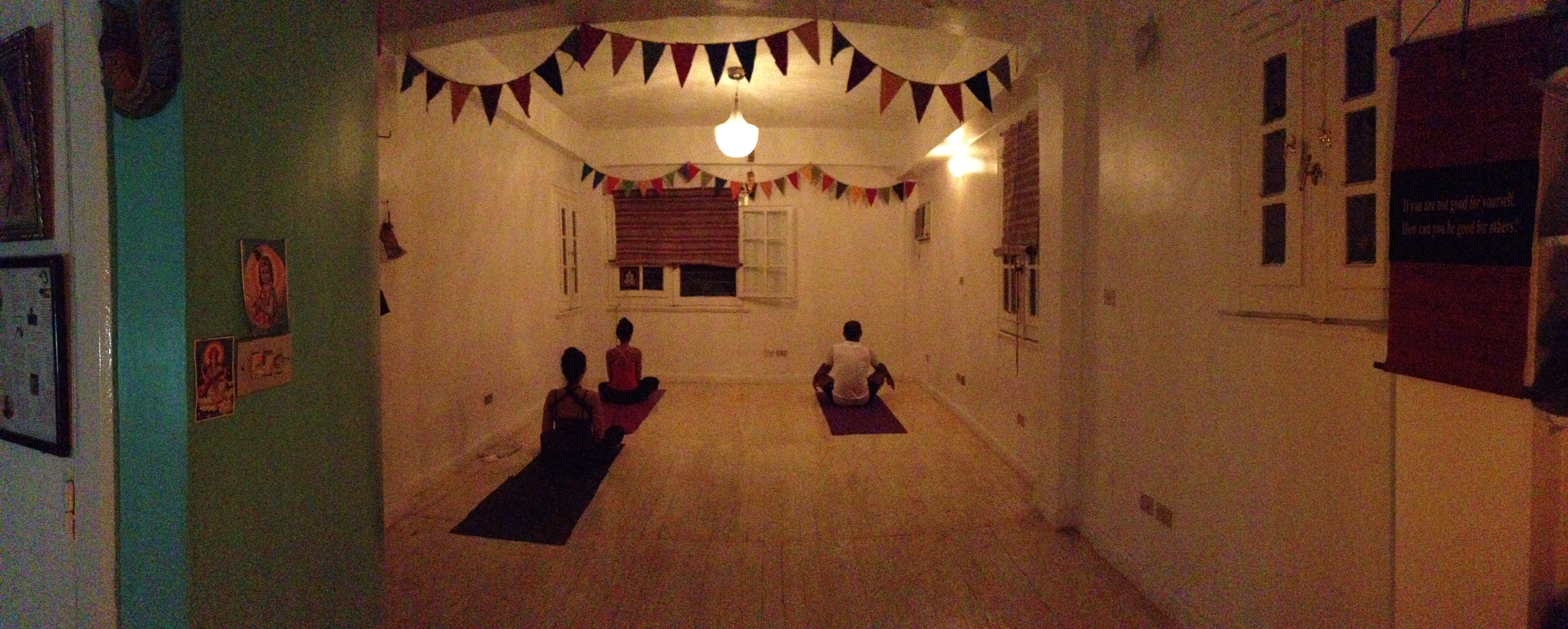
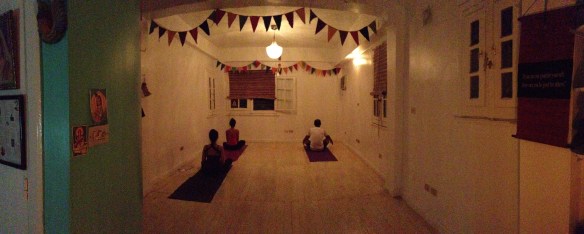
Photo: Start of evening mysore at Ashtanga Yoga Cairo in Zamalek.
Mindful Mindlessness

IMG_6033

We are thinking creatures. And have been blessed to be so. We are able to think, to process, to be conscious living beings.

Having beautiful complex brains also means thinking. A lot. Sometimes the mind is like a riot of thoughts, noisy demonstrations for all sorts of causes. It can be distracting, to say the least.

I can’t help but hear my teacher’s voice in my head, “Too much is thinking is there…”

In our yoga practice, we often sometimes aim to “get out of the mind,” to quiet the thoughts in order to find peace and stillness within.

But what does that mean really “getting out of mind” when our main tool for doing so is the mind itself?

Our mind, the faculties of the mind, are important to finding equanimity. We cannot just simply get out of our head. But we can focus our thoughts, our efforts into one stream as we practice. And that mindful awareness makes us more present.

The result is a robust mental experience, where one’s focus moves in one flowing direction, and other extraneous thoughts either fall away or are absorbed into this one stream.

This is yoga. A balance of opposites. The fullness of thought, the practice of attention, creates spaciousness in the mind. And in such fullness, the mind is not so much empty, but definitely more quiet.

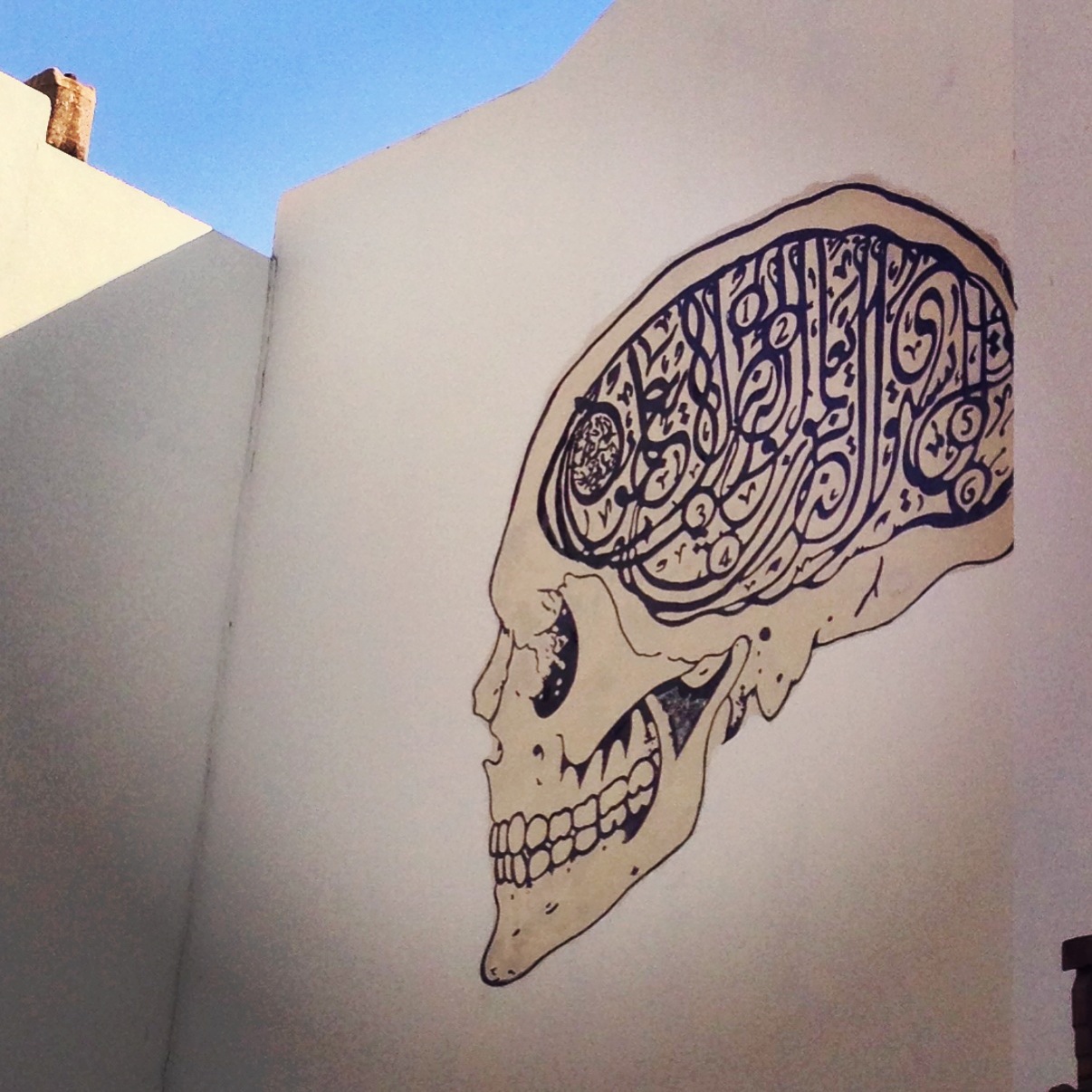
Photo: Darb 1718 in Old Cairo. I will be sharing inner dance and ashtanga workshops in the yoga space near here soon! Watch out for announcements.

Posture Perfect

Image

Posture Perfect

We strive for perfection. That’s built into us by our schooling, our upbringing, our culture and society. We come in to class and pour our bodies into shapes we’ve seen in magazines, posters, in youtube videos, and in the demonstrations by teachers we look up to. And we want our postures, asana, to be perfect!

But when it comes to yoga, what does it mean to have a perfect posture or asana?

Everyone’s bodies are built differently. We have different proportions, different ranges of motion. Some of us are stronger and have sturdier muscles. Some of us are softer and are more flexible. Our bodies have different gifts and along with that: different challenges.

There are certain issues of alignment, certain goals with each posture, and we must proceed with awareness of how to place the parts of the body in a way that is nourishing and supportive. We move to work certain areas, to open and balance. These principles are important to observe and practice.

Perfection, however, is not in the posture but in the practice. If you practice with presence, with love and awareness, if you breath full and even breaths, if you create the opportunity for the body to feel itself steady and easy, then no matter what your posture looks like at that moment, it is already perfect.

The truth is that what the posture looks like doesn’t matter as much as the effort in which we hold and move ourselves. And as our bodies change, what is perfect changes too. Such is practice, such is life.

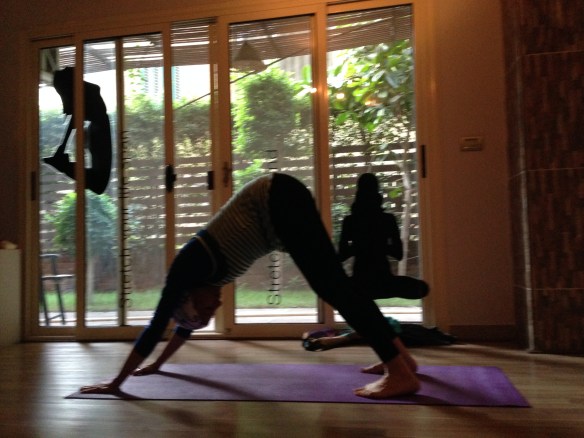
Photo: Hala in downward facing dog, La Zone, Maadi, Cairo.